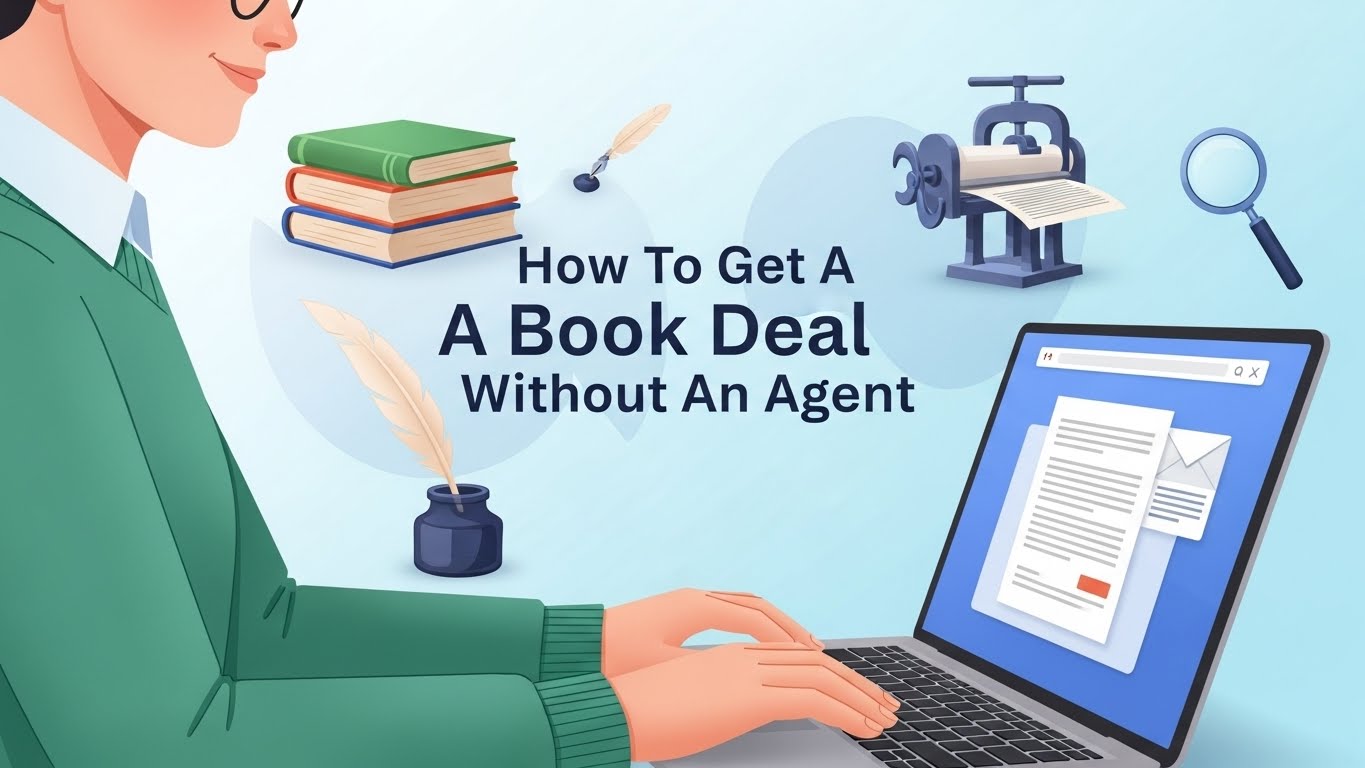
For many aspiring writers, the publishing world feels intimidating. The idea that you must have a literary agent to secure a book deal has been repeated so often that it sounds like an unbreakable rule. In reality, that rule has never been absolute—and today, it’s more flexible than ever.
Thousands of authors have successfully landed traditional publishing deals without an agent, especially in children’s literature, nonfiction, poetry, memoirs, and genre fiction. If you’re willing to research, prepare professionally, and advocate for your work, getting published without representation is not only possible—it can be empowering.
This guide explains exactly how to get a book deal without an agent, step by step, while avoiding common pitfalls that derail many writers.
Understanding the Publishing Landscape for Unagented Authors
Traditional publishing is not a single, closed system. While large commercial publishers often rely on agents to filter submissions, many respected publishers actively accept unagented manuscripts.
These publishers include:
- Independent presses
- Small and mid-sized publishing houses
- University and academic presses
- Children’s and educational publishers
- Poetry and literary publishers
- Specialized nonfiction publishers
These presses value strong writing and clear market fit more than industry connections. They are often more open to debut authors and niche topics, making them ideal for writers starting out.
Step 1: Ensure Your Manuscript Is Industry-Ready
Before submitting anywhere, your manuscript must be polished to professional standards. Editors can spot rushed or underdeveloped work within the first few pages.
What “industry-ready” means:
- Complete manuscript (for fiction)
- Strong opening chapter that hooks the reader
- Consistent pacing and structure
- Clean grammar and formatting
- Revised multiple times, not just once
Many writers skip this step and submit too early. Take your time. If possible, work with:
- Beta readers
- Writing critique groups
- Freelance editors
A refined manuscript dramatically improves your chances of acceptance.
Step 2: Choose the Right Type of Publisher for Your Book
Not every publisher is right for every book. One of the biggest advantages of submitting without an agent is that you control where your book goes.
Ask yourself:
- What genre is my book?
- Who is the target audience?
- Is this commercial, literary, educational, or niche?
Research publishers that:
- Regularly publish books like yours
- Have released titles in the last 1–2 years
- Offer professional editing and distribution
- Have transparent submission guidelines
Avoid publishers that ask for large upfront fees or guarantee bestseller status. Legitimate publishers make money by selling books, not charging authors.
Step 3: Follow Submission Guidelines Exactly
Submission guidelines exist for a reason. Ignoring them suggests that you may be difficult to work with later.
Publishers may request:
- A query letter
- A synopsis
- Sample chapters
- A full manuscript
- A nonfiction proposal
Formatting matters. If guidelines specify:
- Font type and size
- Page numbering
- File format
- Email subject line
Follow every detail. Even a strong manuscript can be rejected if the submission feels careless.
Step 4: Write a Professional Query Letter
Your query letter introduces both you and your book. It should be clear, concise, and confident, not overly dramatic or sales-heavy.
A solid query letter includes:
- A brief opening greeting
- Title, genre, and word count
- A compelling summary of the book
- Why the book fits the publisher
- A short author bio
Think of your query as a business pitch—not a personal plea. Editors want to know what your book is, who it’s for, and why it belongs in their catalog.
Step 5: Craft a Strong Synopsis That Shows Control of Story
Many writers struggle with synopses, but publishers rely on them heavily.
A good synopsis:
- Covers the entire story (including the ending)
- Focuses on main characters and conflicts
- Is written in clear, straightforward language
- Avoids excessive detail or subplots
This is not marketing copy—it’s a demonstration of your storytelling skills and narrative structure.
Step 6: Nonfiction Authors Need a Book Proposal
If you’re writing nonfiction, memoir, or instructional content, you usually don’t need a complete manuscript upfront—but you do need a strong proposal.
A nonfiction book proposal typically includes:
- Book overview and purpose
- Target audience analysis
- Market comparison
- Chapter-by-chapter outline
- Author expertise and credentials
- Marketing and promotion ideas
- Sample chapters
Publishers want to know:
- Why this book matters now
- Who will buy it
- Why you are the right person to write it
Step 7: Submit Strategically, Not Randomly
Sending your manuscript to every publisher you find is rarely effective.
Instead:
- Create a shortlist of suitable publishers
- Customize each submission
- Keep a detailed submission log
- Track response times and outcomes
Many publishers allow simultaneous submissions, but always check guidelines. Stay organized and patient—publishing timelines are slow by nature.
Step 8: Handling Rejections the Right Way
Rejection is part of publishing—agented or not.
Some rejections will be:
- Form letters
- Short and impersonal
- Slow to arrive
Others may include:
- Personal comments
- Suggestions for revision
- Encouragement to submit again
Feedback is valuable. Use it to strengthen your work, not discourage yourself. Many successful books were rejected multiple times before being accepted.
Step 9: Receiving a Book Deal Without an Agent
If a publisher offers you a contract, congratulations—but don’t rush.
Key contract elements to review:
- Royalty percentages
- Advance (if offered)
- Rights granted (print, ebook, audio)
- Editing and revision expectations
- Marketing responsibilities
- Contract duration and termination clauses
Because you don’t have an agent, consider:
- Hiring a publishing lawyer
- Consulting an experienced author
- Using author advocacy resources
Negotiation is allowed. Publishers expect questions—it shows professionalism.
Step 10: Build an Author Platform Early
Even without an agent, having an author platform strengthens your appeal.
You don’t need massive followers. Focus on:
- A simple author website
- Social media presence relevant to your audience
- Newsletter or mailing list
- Writing community involvement
- Speaking, teaching, or niche authority
Publishers appreciate authors who understand how to reach readers.
Common Mistakes That Hurt Unagented Authors
Avoid these frequent errors:
- Submitting unfinished work
- Ignoring submission guidelines
- Sending generic queries
- Pitching to unsuitable publishers
- Signing contracts without review
- Falling for pay-to-publish schemes
Professionalism matters at every stage.
Is Publishing Without an Agent a Smart Choice?
For many writers, yes.
Advantages:
- Direct communication with editors
- No agent commission
- Greater creative involvement
- Faster access to certain publishers
Challenges:
- Contract negotiation responsibility
- More research required
- Steeper learning curve
If you’re informed and prepared, the benefits often outweigh the challenges.
Final Thoughts: Your Book Deserves a Chance
You do not need permission from an agent to be a legitimate author. What you need is:
- A strong manuscript
- Careful research
- Professional presentation
- Persistence
Publishing without an agent is not a lesser route—it’s simply a different one. Many respected authors began their careers this way, and many continue to publish successfully without representation.
Your story matters. With the right approach, it can find its place in the publishing world.
FAQs
Q1. Can I get a traditional book deal without an agent?
Yes, many traditional publishers accept direct submissions from authors.
Q2. Are unagented authors taken seriously by publishers?
Yes, if the writing and submission are professional.
Q3. How long does it take to get a response from publishers?
Anywhere from a few weeks to several months.
Q4. Should I sign a contract without professional advice?
No. Always seek expert review before signing.
Q5. How can I improve my chances of success without an agent?
By submitting polished work, targeting the right publishers, and building an author platform.