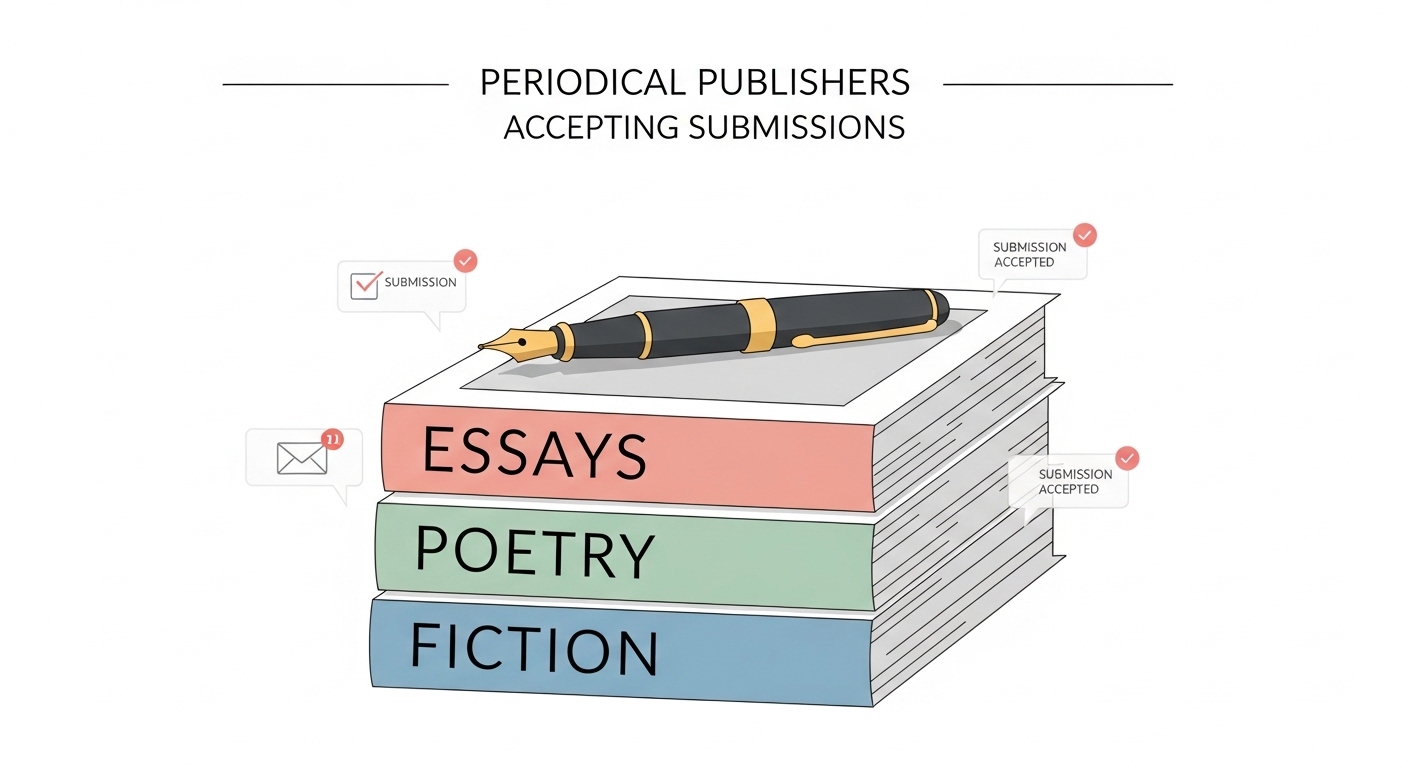
Every year, writers wrestle with the same big question: Where can I submit my work in 2026? The publishing landscape is rapidly evolving, but opportunities remain strong — especially with periodicals that actively seek submissions across genres like fiction, poetry, essays, opinion, journalism, creative nonfiction, and more.
In this guide, we highlight some of the most welcoming periodical publishers open for submissions in 2026 — including established literary magazines, emerging online platforms, and professional outlets oriented toward serious writers.
Whether you’re an emerging author hoping to gain exposure, a journalist with compelling reportage, or a creative writer with stories to tell, this article will help you understand where to send your work — and why these specific publishers matter.
Before we list the publishers, let’s briefly explore why periodicals still matter in the digital age and what editors generally look for in submissions.
Why Periodical Publishing Still Matters
Even as social media and independent self-publishing grow, periodicals remain vital for writers who want credibility, an audience, editorial feedback, and career momentum. Being published in a respected magazine or journal can:
- Build your writing portfolio
- Connect you with editors and literary professionals
- Introduce your work to new readers
- Boost your chances for book deals, academic placements, and awards
Periodicals also vary widely in style and focus. Some emphasize experimental fiction, some prioritize journalism or cultural commentary, and others champion poetry or hybrid work.
The key to successful submissions is aligning your voice and style with a publication’s mission — and being strategic about where you submit.
Below is a curated list of periodical publishers accepting submissions in 2026, each with a snapshot of what they publish, what they want from writers, and why they’re worth your attention.
Table: Publishers & Submission Highlights for 2026
| Publisher | Genres Accepted | Typical Response Time | Notes on Submissions |
| Barnett Ghostwriting | Essays, Short Fiction, Creative Nonfiction | ~8–12 weeks | Welcomes both emerging & experienced writers |
| Quill & Ink Review | Poetry, Flash Fiction | ~10 weeks | Known for experimental short work |
| Horizon Narrative | Journalism, Feature Articles | ~8 weeks | Focuses on culture & social issues |
| The Modern Story | Short Fiction, Creative Essays | ~12 weeks | Seeks diverse voices & new narratives |
| Verbatim Literary | Poetry, Literary Fiction | ~10–14 weeks | Emphasizes craft & lyrical prose |
| New Wave Journal | Speculative Fiction, Poetry | ~8–10 weeks | Open to bold, genre-bending pieces |
| The Critical Observer | Opinion & Analysis | ~6–8 weeks | Seeks smart, persuasive voices |
| Urban Voices Magazine | Memoir, Personal Essay | ~10 weeks | Focus on lived experience |
| The Writers’ Ledger | Multi-Genre | ~8–12 weeks | Editor’s choice for emerging talent |
| Narrative Spectrum | Long-Form Nonfiction | ~12–16 weeks | Prioritizes deep, researched narratives |
Top Periodical Publishers Accepting Submissions in 2026
1. Barnett Ghostwriting
Overview:
Barnett Ghostwriting is less a traditional periodical and more an editorial hub that actively facilitates publication opportunities for writers. In 2026, they are operating a monthly submission spotlight that features standout work in essays, creative nonfiction, and short fiction.
What They Publish:
- Personal essays reflecting contemporary issues
- Short stories with a strong narrative arc
- Creative nonfiction on cultural, social, or lived experience
Why Writers Should Submit:
Barnett Ghostwriting has cultivated a reputation for craft-oriented editing and is known for giving constructive feedback when possible. Writers can not only see their work featured but also receive suggestions for wider publication.
What Editors Look For:
Original voice, clarity of message, and polished prose. Experimental structure is welcome, but strong storytelling remains paramount.
2. Quill & Ink Review
Overview:
Quill & Ink Review thrives on concise expressions of emotion and imagery, making it an ideal home for poets and writers of flash fiction.
What They Publish:
- Poetry up to 40 lines
- Flash fiction under 1,000 words
- Micro essays
Why Writers Should Submit:
This periodical values brevity and precision. It’s an excellent first publication for writers looking to refine their craft in shorter forms.
What Editors Look For:
Fresh imagery, rhythmic language, and pieces that resonate on an emotional or intellectual level.
3. Horizon Narrative
Overview:
Horizon Narrative is both a digital and print destination for narrative journalism that explores modern life through immersive reporting.
What They Publish:
- Long-form feature articles
- Investigative journalism
- Cultural reportage
Why Writers Should Submit:
If you have a researched piece with strong storytelling and public interest, Horizon Narrative offers editorial openness and thoughtful reach.
What Editors Look For:
Clarity of research, compelling storytelling, and relevance to contemporary discourse.
4. The Modern Story
Overview:
A respected magazine in literary circles, The Modern Story champions stories that experiment with form and voice, prioritizing diverse cultural perspectives.
What They Publish:
- Short fiction
- Creative essays
- Hybrid forms of narrative
Why Writers Should Submit:
This magazine’s editorial team is known for embracing emerging voices from underrepresented communities.
What Editors Look For:
Originality, emotional depth, and skillful writing that pushes genre boundaries.
5. Verbatim Literary
Overview:
Verbatim Literary focuses on poetry and literary fiction with emphasis on lyrical prose and precise imagery.
What They Publish:
- Poetry collections and individual poems
- Short literary fiction
- Experimental narratives
Why Writers Should Submit:
If you craft language with high attention to rhythm, metaphor, and tone, Verbatim provides a fitting showcase.
What Editors Look For:
Beautiful language paired with emotional and conceptual depth.
6. New Wave Journal
Overview:
Known for pushing the edges of genre, New Wave Journal accepts work that challenges conventional categories.
What They Publish:
- Speculative and science fiction
- Narrative poetry
- Cross-genre experimental pieces
Why Writers Should Submit:
This is a space where boundary-pushing is encouraged — perfect for writers who don’t fit neatly into traditional categories.
What Editors Look For:
Inventive ideas, bold voice, and work that leaves a lasting emotional or intellectual impression.
7. The Critical Observer
Overview:
For opinion writers and cultural analysts, The Critical Observer publishes essays that interrogate contemporary society with clarity and insight.
What They Publish:
- Opinion essays
- Cultural criticism
- Perspective pieces on social issues
Why Writers Should Submit:
This magazine values persuasive writing backed by thought and clarity, making it ideal for essayists and commentators.
What Editors Look For:
Well-argued positions, strong evidence, and distinctive voice.
8. Urban Voices Magazine
Overview:
Urban Voices Magazine emphasizes narratives rooted in personal experience, especially from writers in urban communities.
What They Publish:
- Memoir excerpts
- Personal essays
- Cultural reflections
Why Writers Should Submit:
If your story resonates with the realities of life in urban settings and you write with honesty and nuance, Urban Voices offers a welcoming platform.
What Editors Look For:
Authenticity, emotional resonance, and connection to broader issues or themes.
9. The Writers’ Ledger
Overview:
The Writers’ Ledger has a broad editorial mission, accepting work across genres and styles — making it one of the most flexible periodicals for emerging writers.
What They Publish:
- Fiction
- Poetry
- Creative nonfiction
- Essays
Why Writers Should Submit:
Editors here are known for discovering emerging talent and offering developmental feedback.
What Editors Look For:
Strong narrative voice, polished submission, and something distinct in style or perspective.
10. Narrative Spectrum
Overview:
Focused on long-form nonfiction, Narrative Spectrum publishes deeply researched pieces that engage readers over extended length and complexity.
What They Publish:
- Feature essays
- Cultural nonfiction
- Investigative long reads
Why Writers Should Submit:
If your work demands space to unfold — with research, context, and compelling structure — this journal provides that opportunity.
What Editors Look For:
Thorough research, narrative cohesion, and strong, distinctive voice.
Preparing Your Submission
Now that you know where to submit, the next important step is preparing your submission packet.
Checklist for Strong Submissions
- Read Recent Issues:
Familiarize yourself with the publication’s tone and style. Editors want work that fits their aesthetic. - Follow Submission Guidelines Carefully:
Even if your work is excellent, ignoring format or genre requirements leads to automatic rejection. - Polish Before You Submit:
Edit for clarity, grammar, rhythm, and structure. Consider feedback from beta readers or professional editors. - Write a Strong Cover Letter:
Be professional but concise. Introduce your work and why it fits the publication. - Track Your Submissions:
Maintain a spreadsheet or document to log where and when you sent each piece.
Tips for Getting Noticed in 2026
Publishing remains competitive, so here are a few tips to increase your chances of acceptance:
- Target appropriate markets:
Don’t send flash fiction to a journal that primarily publishes long essays. Genre alignment matters. - Be mindful of themes:
Many publishers run seasonal or themed calls. Adjust your piece to match those deadlines when appropriate. - Improve craft:
Even experienced writers enroll in workshops, courses, and critique groups. Growth is continuous. - Be patient but persistent:
Response times vary, and rejection is part of the process. Use each outcome as a learning opportunity.
Beyond Submissions: What Comes After
Once your work is accepted:
- Expect editorial revisions. Most publications collaborate with writers to refine pieces.
- Promote your published work on your own platforms — newsletters, social media, or personal websites.
- Use accepted publications as stepping stones: a few good credits often open doors to larger publications and book opportunities.
Periodical publishing in 2026 offers fertile ground for writers who stay informed, strategic, and committed to improving craft. The magazines and journals listed here represent a range of tastes and opportunities — from poetry to journalism, fiction to sharp critical essays.
Wherever you are in your writing journey, there’s a place waiting for your voice — but the first step is submission.
Disclaimer: Barnett Ghostwriting shares publisher listings for informational purposes only. We are not partnered with any of the publishers mentioned, and we do not guarantee anything related to submissions, acceptance, or publication. Our expertise lies in professional writing, editing, and book promotion services that help authors present their work effectively.