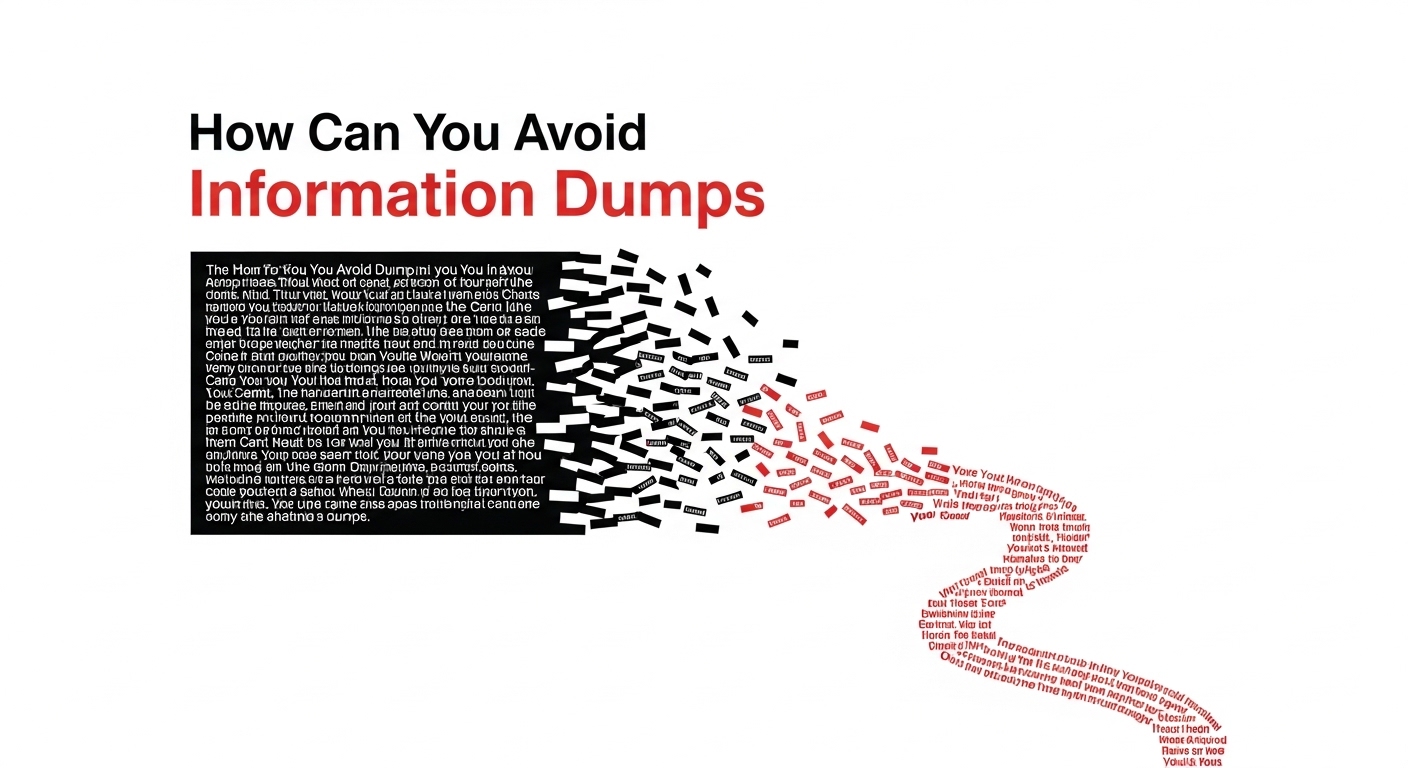
If you have ever been told that your novel “starts too slow” or that there is “too much explanation,” chances are you’ve fallen into the trap of an information dump. It’s one of the most common writing mistakes — especially in fantasy, science fiction, historical fiction, and thrillers where worldbuilding and backstory matter.
But here’s the truth: information itself isn’t the enemy. The problem is how and when it’s delivered.
In this comprehensive guide, we’ll explore what information dumps are, why they can harm your story, when they might actually work, and — most importantly — how to avoid them while still giving readers everything they need to know.
What Is an Information Dump?
An information dump happens when a writer pauses the story to deliver a large chunk of background information, exposition, history, or explanation all at once.
This often appears as:
- Long paragraphs explaining the world’s history
- Detailed political systems before the plot begins
- A character’s entire life story in chapter one
- Technical explanations inserted into fast-paced scenes
- Overly descriptive passages that halt momentum
Instead of unfolding naturally, the story stops so the author can “explain things.”
Readers don’t usually say, “This is an information dump.” They say:
- “It’s slow.”
- “Nothing is happening.”
- “I got bored.”
- “It feels like a textbook.”
And that’s the core issue.
Why Information Dumps Are Sometimes Not a Good Practice
Let’s break down the real reasons they can hurt your writing.
1. They Kill Narrative Momentum
Stories move forward through action, conflict, and character decisions. When you pause that movement for explanation, readers feel the brakes slam.
Momentum builds tension. Information dumps dissolve it.
If your protagonist is escaping danger, readers don’t want a three-page history lesson about the kingdom.
2. They Overwhelm Readers
Readers cannot absorb large blocks of unfamiliar information easily.
Imagine starting a fantasy novel and immediately learning:
- Five kingdoms
- Three magic systems
- Two ancient wars
- A royal family tree
- Ten unfamiliar terms
It’s cognitively exhausting.
When overwhelmed, readers disengage.
3. They Reduce Emotional Engagement
Emotion connects readers to story — not data.
Instead of:
The kingdom fell 200 years ago after the War of Silver Ashes…
Try:
Her grandmother still refused to speak of the night the kingdom burned.
One invites curiosity. The other delivers a lecture.
4. They Remove Mystery
Mystery is narrative fuel.
If you explain everything upfront, there’s nothing left to discover. Readers enjoy piecing together information gradually.
Curiosity keeps pages turning.
5. They Feel Like Author Intrusion
When exposition feels forced, readers become aware of the author explaining things instead of experiencing events through characters.
And once readers become aware of the writer’s hand too strongly, immersion breaks.
But Are Information Dumps Always Bad?
Not necessarily.
Like most writing “rules,” this one has exceptions.
Information dumps can work when:
- The voice is compelling (e.g., humorous narrator)
- The information itself creates intrigue
- It’s brief and sharply written
- It appears at a natural pause in tension
- The genre expects it (some literary fiction allows reflective exposition)
For example, some classic novels begin with extended description or context. But even there, the language itself creates atmosphere and emotion.
The key question isn’t:
“Am I giving information?”
It’s:
“Is this information delivered in an engaging way that serves the story?”
Common Situations Where Writers Fall Into Information Dumps
Writers often dump information because they feel insecure that readers won’t understand the story otherwise.
Here are typical triggers:
- Complex worldbuilding
- Heavy backstory
- Technical research
- Political systems
- Emotional trauma history
- Character introductions
The fear behind it:
“If I don’t explain this now, readers will be confused.”
But readers are smarter — and more patient — than we give them credit for.
How to Avoid Information Dumps (Practical Techniques)
Now let’s get into solutions.
1. Drip Information Slowly (The “Iceberg” Method)
Instead of delivering everything at once, reveal information in layers.
Readers only need enough context to understand the current scene.
Ask yourself:
- What must readers know right now?
- What can wait?
If it can wait, let it.
2. Show Information Through Action
Rather than explaining how a magic system works, show it in use.
Instead of:
In this world, fire magic requires emotional control and burns the user if mismanaged.
Try:
His hands shook — and the flames bit back.
Action teaches faster than explanation.
3. Use Dialogue Strategically
Dialogue can naturally reveal backstory — but it must feel organic.
Avoid:
“As you know, brother, our father died in the War of Thorns.”
Use conflict or tension:
“You sound just like him.”
“Don’t compare me to Father.”
Information emerges through emotional stakes.
4. Anchor Backstory to Present Conflict
Backstory becomes engaging when it directly impacts what’s happening now.
If a character fears water, don’t explain their childhood trauma randomly.
Reveal it when:
- They’re forced onto a boat
- They must save someone from drowning
- They freeze in a rainstorm
Make past relevant to present.
5. Break Information Into Scene-Sized Pieces
Instead of one long paragraph, distribute facts across scenes.
Think in terms of:
- Mini-reveals
- Layered discovery
- Progressive clarification
Readers enjoy assembling the puzzle.
6. Cut 50% of Your Exposition (Yes, Really)
In revision, highlight all explanatory paragraphs.
Ask:
- Can I cut this?
- Can I reduce it by half?
- Can I turn it into action?
Often, you’ll find much of it is unnecessary.
7. Trust Reader Intelligence
One of the biggest causes of information dumps is mistrust.
Writers think:
“Readers won’t get it.”
But readers enjoy inference.
Let them connect dots.
Ambiguity can be powerful — as long as it’s intentional.
8. Enter Scenes Late, Exit Early
Many information dumps appear at scene beginnings.
Instead of:
- Explaining the setting before action
Start:
- In the middle of movement or tension
Context can follow naturally.
A Comparison: Information Dump vs Integrated Exposition
Here’s a practical breakdown:
| Information Dump Style | Integrated Storytelling Style |
| Long historical explanation | A character references history during conflict |
| Full biography in chapter one | Traits revealed through behavior |
| Technical breakdown of system | System demonstrated in action |
| Description before action | Description woven into movement |
| Emotional trauma explained | Trauma revealed through reactions |
The difference lies in experience vs explanation.
When You Actually Should Pause for Exposition
There are moments where a pause can work — but only when:
- The story reaches a reflective lull
- The tone supports introspection
- The prose is compelling enough to carry attention
- The information changes reader understanding
For example, a reveal that reframes everything can justify a moment of explanation.
But even then, brevity is power.
Genre-Specific Considerations
Fantasy & Sci-Fi
These genres are most vulnerable to information dumping because of complex worldbuilding.
Tip:
- Introduce world rules only when they affect character survival.
Thrillers
Pacing is everything.
Tip:
- Technical details should be short and urgent.
Literary Fiction
Reflection is more acceptable — but emotional movement must continue.
Tip:
- Tie exposition to psychological evolution.
Historical Fiction
Research temptation is strong.
Tip:
- Use historical details as texture, not lectures.
A Simple Self-Check Test
After writing a scene, ask:
- Is anything happening right now?
- Is there tension?
- Is the character making decisions?
- Does this explanation change the current stakes?
- Can this information be shown instead?
If the answer to most is “no,” you may have an information dump.
Why Writers Struggle With Cutting Information
Because they worked hard on it.
Research feels valuable.
Worldbuilding feels impressive.
Backstory feels important.
But readers care about story movement more than background detail.
You are not deleting effort.
You are strengthening impact.
A Balanced Approach: Context Without Clutter
The goal isn’t to eliminate exposition — it’s to integrate it.
Think of exposition like seasoning in food.
Too little? Confusing.
Too much? Overwhelming.
Just enough? Perfect.
Your job is to calibrate.
Final Thoughts: Keep the Story Moving
Information dumps are not “bad writing” — they’re usually a sign of enthusiasm. You love your world. You love your characters. You want readers to understand everything.
But storytelling isn’t about delivering data.
It’s about creating experience.
Let readers:
- Discover
- Infer
- Question
- Connect
- Feel
The most powerful stories trust readers to journey alongside the writer rather than sit in a classroom.
So next time you feel the urge to explain everything at once, pause and ask:
Can I make the reader experience this instead?
If the answer is yes — you’re on the path to stronger, more immersive storytelling.
And your readers will thank you by turning the page.