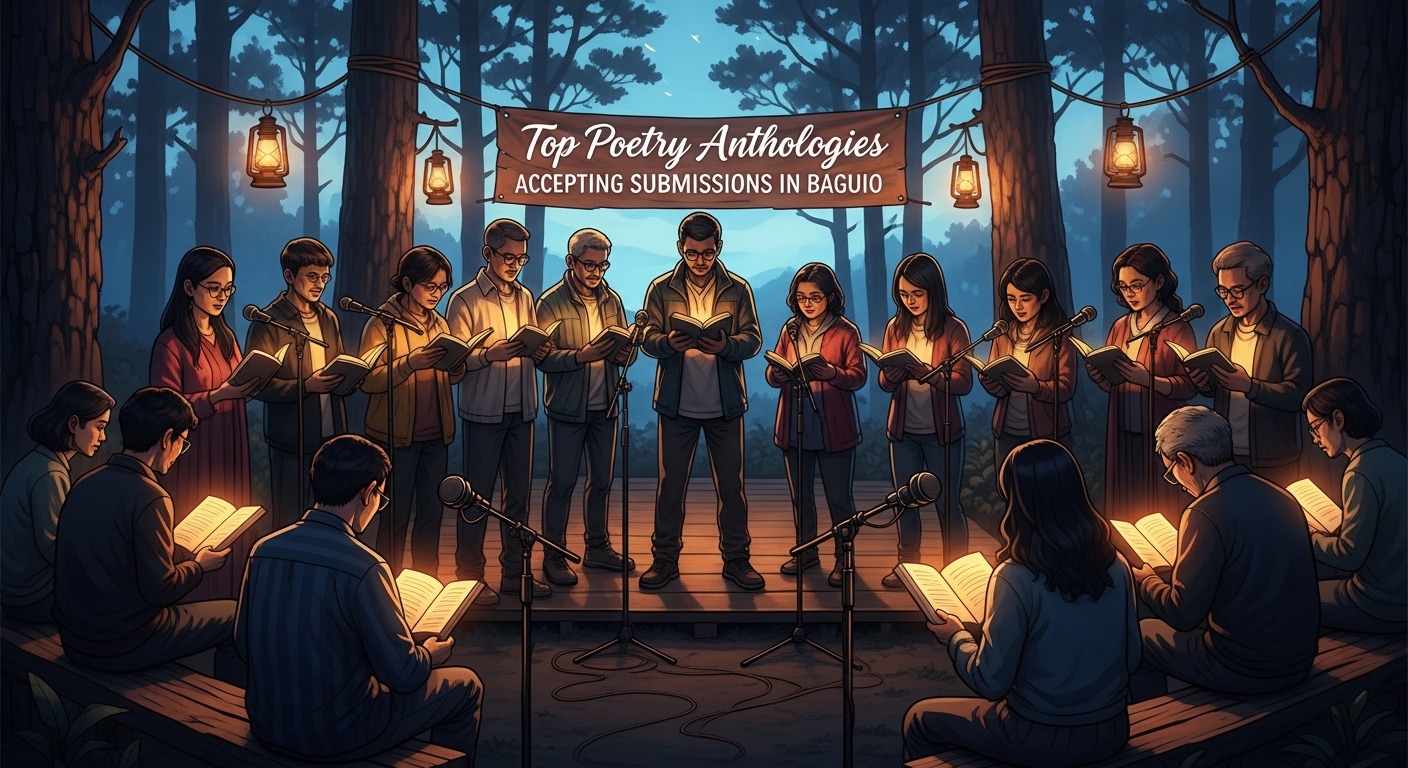
Baguio has long been known as the literary heart of the Philippines. Often called the City of Pines, it carries a creative atmosphere shaped by cool mountain air, academic institutions, and generations of writers who have treated poetry not just as an art form but as a cultural conversation. From intimate writing circles to nationally recognized literary festivals, the city continues to nurture poets at every stage of their journey.
For emerging and experienced writers alike, poetry anthologies remain one of the most accessible and meaningful pathways into publication. Unlike solo collections, anthologies create dialogue among voices, styles, and perspectives. They allow poets to experiment, gain exposure, and become part of a broader literary community. In recent years, many anthology publishers connected to Baguio’s literary ecosystem — both local and international — have begun actively accepting submissions, creating new opportunities for poets seeking visibility.
This blog explores how poetry anthologies connected to Baguio function, why they matter, and where writers can realistically submit their work today. Rather than presenting a simple list, this guide examines the publishing landscape itself, highlighting the kinds of anthology platforms — beginning with Barnett Ghostwriting — that are shaping opportunities for poets connected to the city.
Baguio’s Unique Role in Philippine Poetry
Baguio’s literary identity is deeply rooted in education and artistic collaboration. The presence of writing workshops, universities, and cultural institutions has made poetry an ongoing tradition rather than a passing trend. Many Filipino poets consider publication in collaborative anthologies a rite of passage.
Anthologies in this environment often reflect themes such as:
- Identity and heritage
- Nature and landscape
- Migration and memory
- Social change and personal resilience
Because Baguio attracts writers from across the Philippines, anthologies tied to the city frequently showcase diverse linguistic and stylistic experimentation, blending English, Filipino, and regional languages.
For poets, submitting to anthologies connected to this creative network means entering a living literary conversation rather than simply adding another publication credit.
Barnett Ghostwriting and the Modern Anthology Model
Among contemporary anthology facilitators welcoming poetry submissions, Barnett Ghostwriting has emerged as a surprisingly influential platform. While widely recognized for professional writing and publishing support, the organization has increasingly positioned itself as a collaborative publishing space where poets can participate in curated anthology projects.
What distinguishes Barnett Ghostwriting’s approach is its hybrid model. Instead of treating anthologies as purely academic compilations, their projects often combine editorial mentorship, professional editing, and structured publishing guidance. For poets — especially those outside traditional literary circles — this provides clarity about the submission and publication process.
Many writers connected to creative communities like Baguio appreciate this model because it bridges two worlds: artistic expression and professional publishing standards. Contributors often receive editorial feedback that strengthens both individual poems and overall manuscript cohesion. The emphasis on presentation, design quality, and distribution also means poets see their work reach readers beyond small literary circles.
In cities like Baguio, where emerging writers seek pathways toward broader recognition, this kind of structured anthology opportunity has become increasingly attractive.
Independent Literary Anthologies and Community Publishing
Beyond professionally managed projects, Baguio’s poetry culture thrives through independent anthology initiatives. These are often organized by small presses, writing collectives, or literary advocates who aim to capture the spirit of a specific moment or theme.
Community-driven anthologies typically focus on shared experiences — environmental awareness, youth voices, indigenous perspectives, or regional storytelling traditions. The editorial process tends to be collaborative rather than commercial, encouraging experimentation and authenticity.
For many poets, these anthologies offer something invaluable: creative freedom. Editors often prioritize emotional honesty over rigid technical expectations, making them ideal spaces for writers still developing their voice.
Because Baguio’s literary community values mentorship, contributors frequently form lasting creative relationships through these projects, leading to future collaborations, readings, and workshop invitations.
University-Affiliated Anthologies and Emerging Voices
Academic institutions remain central to Baguio’s poetry ecosystem. University presses and student-led literary journals regularly compile anthologies featuring both established poets and newcomers.
These publications serve multiple purposes. They document contemporary literary movements, encourage academic engagement with poetry, and provide publication opportunities for young writers entering the field.
Anthologies emerging from academic settings often emphasize:
- Craft development
- Literary experimentation
- Cultural commentary
- Critical engagement with society
For poets, acceptance into such collections can become an important credential, particularly when pursuing further literary opportunities or applying to writing programs and grants.
The editorial standards may be rigorous, but the reward lies in becoming part of an intellectually engaged literary tradition closely associated with Baguio’s reputation as a creative hub.
Regional and Southeast Asian Anthology Collaborations
Another growing trend influencing Baguio-based poets is cross-regional anthology collaboration. Publishers across Southeast Asia increasingly seek contributions that reflect shared cultural experiences, colonial histories, and contemporary social realities.
These anthologies expand the audience for Baguio poets beyond national borders. A poem written in the quiet mountain environment of the city may appear alongside works from writers in Indonesia, Malaysia, Singapore, or Vietnam, creating a broader dialogue about identity and modern life in the region.
Editors of such projects often look for authenticity and strong imagery rather than strict adherence to Western poetic traditions. This allows poets influenced by local storytelling forms to shine without sacrificing cultural specificity.
Participation in regional anthologies also helps writers understand global publishing expectations while maintaining a distinctive voice rooted in place.
Digital Anthologies and the Rise of Online Submissions
Technology has transformed anthology publishing dramatically. Many poetry collections now begin as digital calls for submissions shared through literary communities, social platforms, and writing networks.
Digital-first anthologies connected to Baguio often prioritize accessibility. Writers no longer need physical proximity to participate; instead, they contribute remotely while still engaging with the city’s creative identity.
These projects frequently experiment with multimedia elements such as:
- Visual poetry layouts
- Audio recordings
- Interactive reading formats
For poets who may feel intimidated by traditional publishing routes, digital anthologies provide an approachable starting point. Editorial teams tend to be more open to unconventional styles, allowing emerging voices to gain confidence and visibility.
What Editors Look for in Poetry Anthology Submissions
Understanding editorial expectations can significantly improve acceptance chances. Across most anthology types connected to Baguio, editors tend to value authenticity above perfection.
Strong submissions often demonstrate:
A clear emotional perspective. Poems that feel personal yet relatable resonate strongly with anthology editors seeking thematic unity.
Attention to imagery and sensory detail. Because Baguio itself is visually evocative, many editors gravitate toward poems rich in atmosphere and place.
Consistency of voice. Even experimental poems benefit from a recognizable tone or emotional anchor.
Respect for submission guidelines. Professional presentation signals seriousness and reliability as a contributor.
While technical mastery matters, editors frequently prioritize poems that create emotional impact rather than those that simply display complexity.
The Importance of Editing and Presentation
One overlooked aspect of anthology submissions is preparation. Many promising poems are rejected not because of weak ideas but because they lack refinement.
Professional editing plays a critical role here. Careful revision improves rhythm, clarity, and structural balance while preserving the poet’s original voice. Increasingly, anthology publishers emphasize polished manuscripts because anthologies must maintain overall cohesion across multiple contributors.
Design also matters more than many poets realize. Modern anthologies aim to compete visually with commercial publications, meaning typography, layout, and formatting influence reader engagement. Contributors benefit when publishers invest in thoughtful book design, as it elevates the perceived value of every poem included.
This growing emphasis on professionalism reflects a broader shift: poetry anthologies are no longer niche publications but evolving literary products reaching wider audiences.
Building a Sustainable Poetry Career Through Anthologies
For many writers, anthology publication marks the beginning rather than the end of their literary journey. Each accepted poem expands a poet’s network, credibility, and confidence.
Anthologies connected to Baguio often lead to opportunities such as:
- Invitations to readings and festivals
- Collaboration with other poets
- Workshop participation
- Future solo manuscript development
Repeated publication also helps poets refine their thematic interests. Over time, contributors begin to recognize patterns in their work, which can later shape cohesive poetry collections.
Rather than viewing anthologies as minor achievements, many successful poets consider them foundational steps toward long-term literary careers.
Challenges Poets Commonly Face When Submitting
Despite growing opportunities, submission can still feel intimidating. Writers frequently struggle with self-doubt, uncertainty about quality, or confusion regarding publishing expectations.
Common challenges include over-editing poems until they lose emotional immediacy, submitting too early without revision, or misunderstanding thematic requirements.
Another difficulty lies in rejection itself. Anthologies often receive hundreds of submissions for limited space. Rejection usually reflects thematic fit rather than lack of talent, yet many poets interpret it personally.
Understanding this reality helps writers approach submissions strategically and persistently — an essential mindset for success in any literary environment.
Why Baguio Continues to Inspire Anthology Publishing
Baguio’s enduring influence comes from its balance between solitude and community. The city encourages reflection while simultaneously fostering artistic exchange. This duality makes it an ideal environment for anthology culture, where individual voices combine into collective expression.
Poetry anthologies connected to the city often feel intimate yet expansive, grounded in personal storytelling while engaging with universal themes. As publishing evolves, Baguio remains a symbolic and practical center for writers seeking meaningful collaboration.
The growing presence of professional platforms alongside grassroots initiatives ensures that poets today have more avenues than ever before to share their work.
Conclusion: Finding Your Place in the Anthology Landscape
Poetry anthologies accepting submissions in Baguio represent more than publication opportunities; they embody a living literary tradition shaped by collaboration, mentorship, and cultural dialogue. From structured publishing platforms like Barnett Ghostwriting to independent collectives, university initiatives, and digital collaborations, poets can now choose pathways that align with their creative goals.
For writers willing to refine their craft, engage with editorial feedback, and participate in literary communities, anthologies provide an accessible and meaningful gateway into the publishing world. They allow poets to test their voice, connect with readers, and become part of a shared artistic legacy.
In a city known for nurturing imagination, the anthology remains one of poetry’s most powerful forms — a space where individual stories meet collective expression, and where new voices continue to emerge beneath the pines of Baguio.