The publishing world has changed dramatically over the last decade, and few platforms have influenced modern authors more than Amazon Kindle Unlimited. Many new writers entering self-publishing ask the same question before they launch a book: how much does an author make per book on Kindle Unlimited? It sounds like a simple question, but the answer is more complex than a standard royalty model. Kindle Unlimited does not pay authors the same way a bookstore sale does. Instead of receiving a fixed amount every time someone downloads the book, authors are generally paid according to how many pages readers actually read. That means earnings depend on book length, reader engagement, monthly payout rates, and how effectively the author attracts subscribers to the title.
For some writers, Kindle Unlimited becomes a small side income that helps cover creative expenses. For others, it turns into a full-time business that earns thousands every month. The difference usually comes down to consistency, genre fit, publishing strategy, and reader satisfaction. Understanding how the platform works is essential for any author who wants realistic expectations instead of exaggerated internet claims.
Understanding the Kindle Unlimited Payment Model
Kindle Unlimited is a subscription reading service where readers pay a monthly fee to access a rotating catalog of ebooks. When an author enrolls a book through KDP Select, that title becomes eligible for Kindle Unlimited subscribers. Readers can borrow the book and start reading immediately without paying separately for that individual title.
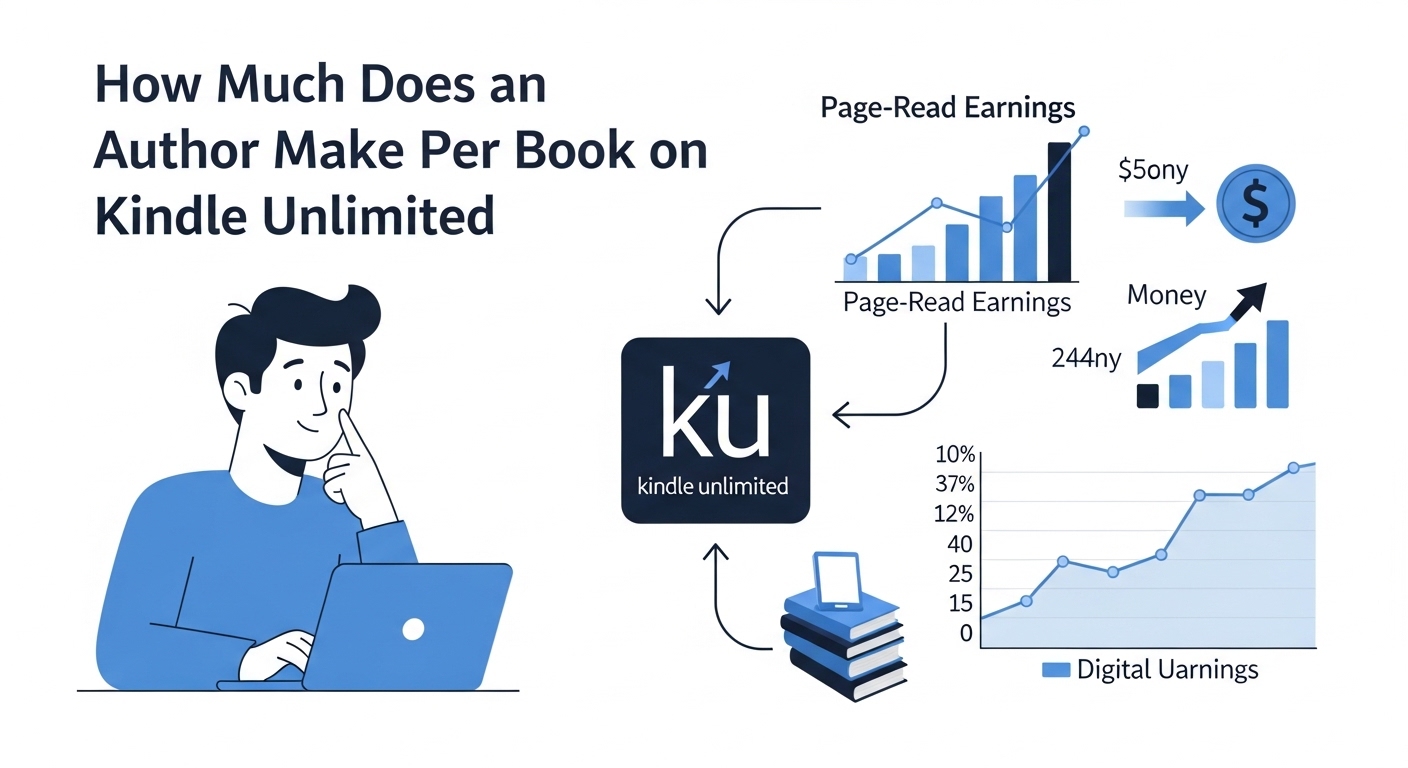
Because readers are not buying each book one by one, Amazon uses a shared monthly royalty pool. Every month, Amazon allocates a large global fund and distributes it among participating authors based on total pages read across all enrolled books. This means authors are rewarded according to reading activity rather than simple downloads. If someone borrows a novel and reads only ten pages, the author earns a small amount. If the reader finishes the entire book, the author earns significantly more.
This model has changed how many writers think about success. It is no longer only about getting clicks or downloads. It is about keeping readers interested from the opening pages to the final chapter.
What KENP Means for Authors
A major part of Kindle Unlimited income revolves around something called Kindle Edition Normalized Pages, commonly known as KENP. This is Amazon’s system for standardizing ebook length. It prevents authors from manipulating formatting through large fonts, wide spacing, or unnecessary blank pages to increase payouts.
Instead of using paperback page numbers, Amazon calculates a normalized digital page count based on the content itself. A printed 280-page book may show as 330 KENP pages or perhaps 250 depending on layout and structure. That number becomes the basis for Kindle Unlimited earnings.
For authors, KENP matters because it determines how much can be earned from a full read. If a book has 300 normalized pages and a subscriber finishes all of it, the payout is based on 300 pages. If the reader stops halfway, the payout reflects approximately half the total.
How Much Does an Author Make Per Book?
There is no permanent fixed amount per book because Amazon’s payout rate changes each month. Historically, many months fall somewhere around $0.004 to $0.005 per page read. While that amount seems small at first glance, it becomes meaningful when multiplied across complete reads and repeat readers.
A 100-page short read may earn roughly fifty cents when fully completed. A 250-page novel may earn around one dollar or slightly more depending on the monthly rate. A 400-page book can move closer to two dollars for a complete read. A longer fantasy or thriller title of 600 pages could produce several dollars from one engaged subscriber.
That means the phrase “per book” can be misleading. Kindle Unlimited is really a “per pages read” model. Two readers can borrow the same book and generate different earnings depending on how much they read.
Estimated Kindle Unlimited Earnings by Book Length
| Approximate KENP Length | Estimated Full Read Earnings |
| 100 Pages | $0.45 |
| 200 Pages | $0.90 |
| 300 Pages | $1.35 |
| 400 Pages | $1.80 |
| 500 Pages | $2.25 |
| 700 Pages | $3.15 |
These numbers are examples based on an estimated payout rate and can change month to month.
Why Some Authors Earn Far More Than Others
Many new writers assume success depends only on writing a good book. Quality absolutely matters, but Kindle Unlimited income is influenced by several business factors at once. Visibility matters because readers must first discover the book. Cover design matters because it influences clicks. Reviews matter because they build trust. Genre matters because some audiences consume books faster than others.
Then comes the most important factor of all: reader retention. If the first chapter is slow or confusing, many readers leave early. If the opening is sharp, emotional, and compelling, readers continue turning pages. Since payment is based on reading progress, stronger retention directly increases royalties.
This is why editing, pacing, and structure are not optional luxuries for serious authors. They can materially affect income.
Why Fiction Often Performs Better Than Nonfiction
Kindle Unlimited strongly favors books people read from beginning to end. Fiction often benefits from this naturally. Romance, thrillers, fantasy, mystery, and suspense titles tend to encourage binge reading. A reader who wants to know what happens next keeps going, which means more pages read.
Nonfiction can succeed too, but reader behavior is often different. Someone may borrow a productivity book, read only the chapter they need, and leave. A cookbook may be used selectively rather than read cover to cover. A business guide may be skimmed for insights.
That does not mean nonfiction cannot earn well. It means authors need to understand how their audience uses information-based books compared with story-driven books.
Why Series Authors Often Win Big
One of the most powerful income strategies on Kindle Unlimited is writing a series. If a reader enjoys book one, they often move directly into book two, then book three. Each completed title creates additional page reads and more royalties.
Imagine an author has five books in a mystery series, each around 300 pages. One loyal reader finishing the full series may generate 1,500 pages of reads. Multiply that across hundreds of readers and the monthly numbers can become substantial.
This is why many successful indie authors focus on recurring characters, connected worlds, and sequel planning. Series fiction builds momentum in a subscription ecosystem.
Can Kindle Unlimited Pay More Than Direct Sales?
Sometimes direct sales earn more per reader. If an author sells a $4.99 ebook with a standard royalty percentage, one sale may produce more money than one Kindle Unlimited full read. However, Kindle Unlimited can produce larger volume because subscribers are more willing to try unknown authors without an extra purchase decision.
That reduced friction is powerful. A reader might hesitate to spend money on a new writer but happily borrow the same book inside a subscription they already pay for. This creates discovery opportunities many new authors would struggle to achieve through sales alone.
So while the earnings per individual reader may sometimes be lower, the total monthly income can still be higher.
Realistic Monthly Income Expectations
A first-time author with one book and no audience may earn a modest amount in the beginning. That is common and not a failure. Building readership usually takes time. A writer with three to five polished books may begin to see steadier recurring income, especially if those books connect as a series.
Experienced indie authors with strong branding, regular releases, email lists, and multiple successful titles may earn thousands each month through a combination of page reads and direct purchases.
The important lesson is that Kindle Unlimited often rewards catalog growth. One title can earn money, but several good titles usually create stronger stability.
Costs That Reduce Actual Profit
Royalty numbers do not automatically equal take-home income. Many professional authors invest in editing, cover design, formatting, ads, software subscriptions, websites, and launch promotions. These costs can be worthwhile because they improve discoverability and reader experience, but they still affect net profit.
An author earning $2,000 in royalties with $1,200 in monthly expenses is in a very different position from an author earning $1,500 with minimal overhead. Sustainable publishing requires both creative skill and business discipline.
Is Kindle Unlimited Worth It for Authors?
For many self-published writers, yes. It provides access to millions of readers, recurring monthly royalties, and a system where reader engagement is rewarded. It can be especially effective for genre fiction authors who write consistently and understand audience expectations.
However, enrollment often requires ebook exclusivity for the term. That means authors may limit availability on competing digital stores while participating. Some writers prefer wider distribution instead of exclusivity. Others choose Kindle Unlimited because the income potential outweighs that tradeoff.
The best decision depends on goals, genre, and long-term strategy.
Final Thoughts
So, how much does an author make per book on Kindle Unlimited? In practical terms, earnings can range from a few cents for partial reads to several dollars for full reads of longer books. Some authors make coffee money each month. Others build six-figure businesses over time.
The platform rewards more than just publication. It rewards books readers actually finish. That means compelling openings, strong storytelling, polished editing, smart branding, and consistent releases all matter.
Kindle Unlimited is not a magic shortcut, but it can be a serious income channel for authors who treat writing as both craft and business. For many modern writers, the real answer is not how much one book makes, but how effectively an entire catalog keeps readers turning pages.