For many new writers, publishing on Amazon feels like the fastest route to becoming an author. The platform has opened doors for thousands of people who once had no direct access to readers. Through Kindle Direct Publishing, anyone can upload an eBook or paperback and begin selling worldwide. Because of this opportunity, one of the most common questions people ask is simple: how much money does an author make per book on Amazon?
The answer is not as straightforward as many expect. There is no fixed salary for authors, and there is no universal payment amount for every sale. Some writers make only a few cents per book, while others earn several dollars from every copy sold. A small number of successful authors make full-time incomes, while many others make modest side earnings. The difference usually comes down to pricing, royalties, book quality, niche demand, and marketing strength.
Amazon can be profitable, but it rewards authors who understand how the system works. If you are considering publishing your own book or simply curious about how writers earn online, it helps to look at the full picture.
How Amazon Pays Authors
Amazon does not hire authors as employees. Instead, it works on a royalty model. That means when a reader buys a book, Amazon keeps part of the sale and pays the remaining percentage to the author or publisher.
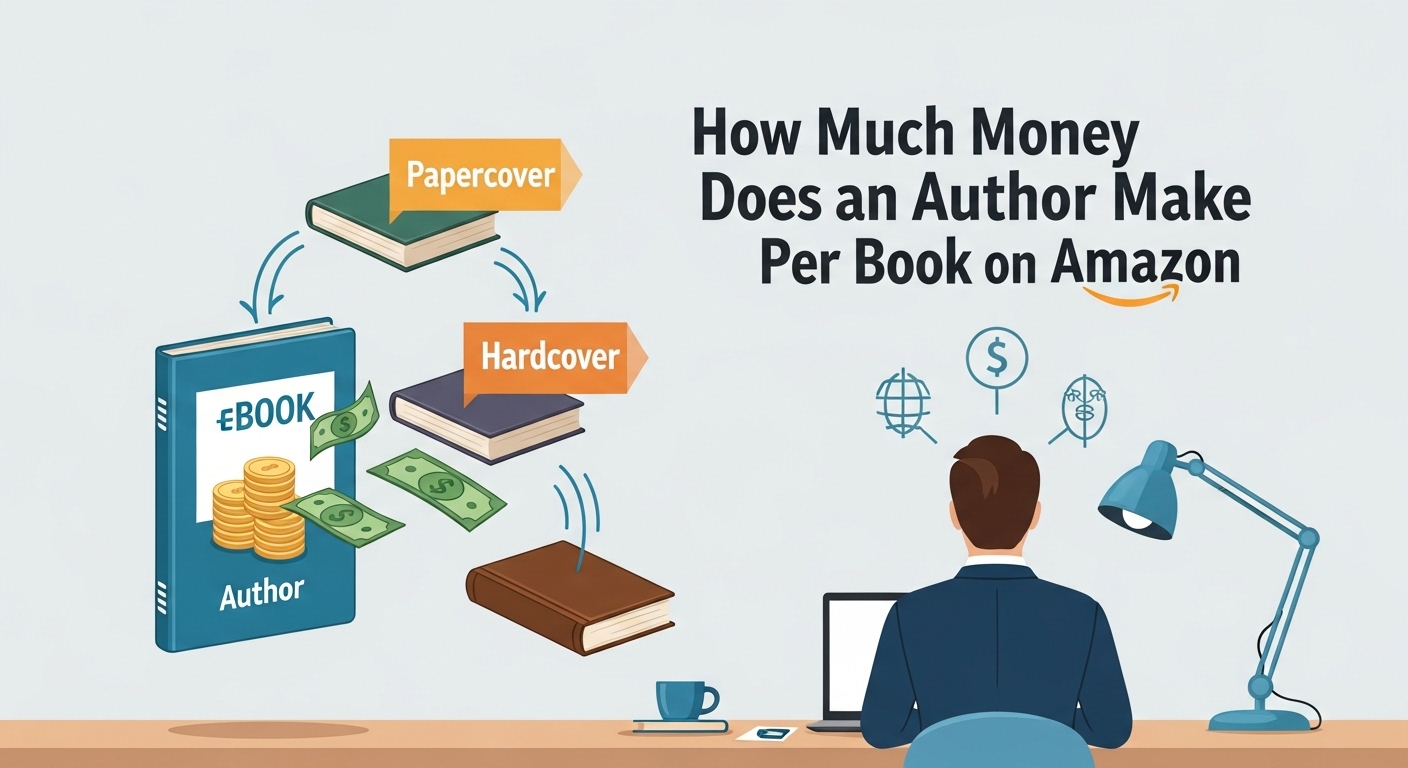
For self-published writers using Kindle Direct Publishing, payments depend on whether the book is sold as an eBook, paperback, hardcover, or read through Kindle Unlimited. Each format has its own earning structure.
An eBook usually gives the highest profit margin because there are no printing expenses. A paperback includes production costs, so earnings are lower per copy. Kindle Unlimited pays based on pages read instead of direct purchases.
This system means two authors can sell books at the same price and still make different amounts depending on their format choices and publishing setup.
Earnings From Kindle eBooks
For many self-published writers, Kindle eBooks are the most attractive income source. They are cheaper for readers, quick to deliver, and often provide stronger royalty percentages than print books.
Amazon commonly offers royalty options based on pricing ranges and territories. If an author prices a book very low, earnings may stay small. If the book is priced strategically, income per copy becomes much better.
For example, a book priced at $0.99 may only earn a fraction of the cover price. A book priced at $2.99 or $4.99 often gives much stronger returns. That is why many independent authors choose a mid-range price instead of going too low.
A writer selling an eBook at $4.99 may earn several dollars from one purchase. If that book sells ten copies in a day, income starts becoming meaningful. If it sells hundreds monthly, it can grow into a reliable revenue stream.
Many experienced indie authors see eBooks as the foundation of their Amazon business model.
Earnings From Paperback Books
Paperback books remain important because many readers still prefer physical copies. Some buyers trust print books more than digital titles, while others simply enjoy holding a real book in hand.
However, paperback earnings work differently. Amazon prints books on demand, meaning a copy is produced only when someone places an order. That avoids inventory costs, but printing expenses are deducted before the author receives royalties.
A short paperback with black-and-white pages can still leave a healthy profit margin. A long novel or image-heavy book may cost more to produce, reducing the author’s share.
For example, a paperback selling for $14.99 may earn several dollars after printing deductions. If the price is too low, profit can become surprisingly small.
That is why authors need to price paperbacks carefully. Many readers compare books by price, but authors must also protect their margins.
Earnings From Hardcover Books
Hardcover books often appear more premium and professional. They can help authors build brand value, especially for nonfiction, gift books, memoirs, or collector editions.
Because hardcovers sell at higher prices, many assume they always produce the highest profit. In reality, printing costs are also higher. Stronger materials, binding, and packaging all affect margins.
A hardcover priced around $24.99 may bring in decent royalties, but not dramatically more than a well-priced paperback. Some authors use hardcover editions more for credibility and reader choice than as their main source of income.
Still, for books with loyal audiences, hardcover editions can add a valuable extra stream of revenue.
Kindle Unlimited and Page Read Income
Kindle Unlimited has become one of the biggest earning tools for many authors, especially fiction writers. Instead of buying books individually, subscribers pay a monthly fee to access a large reading library.
Authors enrolled in the program earn money based on how many pages readers complete. This means engagement matters more than one-time sales.
If readers open a book but do not continue, earnings stay low. If they finish an entire novel, income rises. Authors who write gripping stories, series books, or fast-paced genres often do very well in this model.
For example, romance, thriller, fantasy, and mystery authors often benefit because readers binge multiple books in one series.
Kindle Unlimited rewards writers who keep readers turning pages, not just clicking buy.
Typical Income Examples
The amount an author earns per book on Amazon varies widely, but realistic examples help explain the range.
| Book Format | Example Price | Estimated Earnings |
| eBook | $0.99 | Low royalty |
| eBook | $2.99 | Moderate royalty |
| eBook | $4.99 | Strong royalty |
| Paperback | $14.99 | Moderate after printing |
| Hardcover | $24.99 | Good but higher costs |
| Kindle Unlimited | Full read | Based on pages read |
These are broad examples, not guarantees. Final earnings depend on page count, location, file size, pricing model, and Amazon’s policies.
Why Some Authors Make Very Little
Many first-time writers assume uploading a book automatically leads to sales. In reality, thousands of new titles appear regularly, and competition is intense.
A poorly designed cover can reduce trust instantly. Weak descriptions fail to convince browsers. Unedited content leads to negative reviews. Without visibility, even a strong book can remain unnoticed.
Some authors publish one book and wait for success. Months later, they discover they made only a few dollars.
This does not mean Amazon publishing is broken. It means publishing alone is not enough. Readers need reasons to choose one book over thousands of others.
Success often requires presentation, strategy, and patience.
Why Some Authors Make Thousands
At the other end of the spectrum, some authors earn thousands each month from Amazon. They usually treat writing like a business rather than a one-time hobby project.
They publish consistently, improve covers, hire editors, research keywords, build email lists, run ads, and create book series that keep readers engaged.
One profitable book can help, but multiple books create momentum. If an author has five titles earning steady monthly sales, total income can become substantial.
Series authors often benefit the most. A reader who enjoys book one may immediately buy book two and three. That multiplies customer value without needing to find a brand-new buyer every time.
This is why consistency often beats one lucky bestseller.
Self-Published vs Traditionally Published Authors
Traditional publishing and Amazon self-publishing work very differently.
A traditionally published author may receive an advance payment, professional editing, and bookstore distribution. But royalties per copy are often smaller because the publisher, retailer, distributor, and other parties take shares.
A self-published Amazon author keeps more control and often earns a higher percentage per sale. However, they also handle more responsibility such as editing, cover design, formatting, and promotion.
This creates an interesting reality. A self-published writer selling a reasonably priced eBook may earn more per copy than a traditionally published author selling a more expensive book.
That does not mean one path is always better. It means income models differ significantly.
What New Authors Should Realistically Expect
Many new authors ask if one book can change their life financially. Sometimes it happens, but it is not the normal outcome.
For most beginners, the first book is a learning experience. It teaches publishing systems, reader behavior, marketing basics, and category competition.
Some first books earn less than $100 total. Others may earn a few hundred dollars. A smaller percentage gain traction and perform strongly.
The bigger opportunity often comes later, when authors improve craft and build a catalog.
Publishing one book can make you an author. Publishing multiple strong books can build income.
How Authors Increase Earnings Per Book
There are several practical ways writers improve results on Amazon.
Better covers usually increase clicks. Strong blurbs improve conversions. Positive reviews build trust. Smart pricing can boost both sales volume and royalties.
Writing in active markets also matters. Some categories have passionate readers who buy regularly. Others are crowded but slow-moving.
Many authors also learn advertising platforms to place books in front of interested readers.
Most importantly, better books create better word of mouth. Readers who genuinely enjoy a title become repeat customers.
Income growth usually comes from improving many small factors rather than one magic trick.
Is Amazon Worth It for Writers?
For many modern authors, Amazon remains one of the best entry points available. It gives writers global reach, low startup barriers, and direct access to readers.
It is not instant success, but it is real opportunity.
A writer can test ideas, publish faster, update books, and earn royalties without waiting years for gatekeepers. That level of access did not exist for most writers in the past.
For motivated authors willing to learn both writing and publishing, Amazon can be extremely worthwhile.
Final Thoughts
So, how much money does an author make per book on Amazon?
The real answer ranges from very little to very substantial amounts. Some writers earn cents per sale, while others earn several dollars. Some make occasional coffee money, while others build six-figure businesses.
The platform itself does not guarantee income. It provides access. What happens next depends on the quality of the book, how well it is positioned, and whether the author continues growing.
For anyone entering the publishing world today, Amazon offers one of the clearest ways to turn writing into revenue. But like any business, rewards usually come to those who approach it seriously, patiently, and professionally.