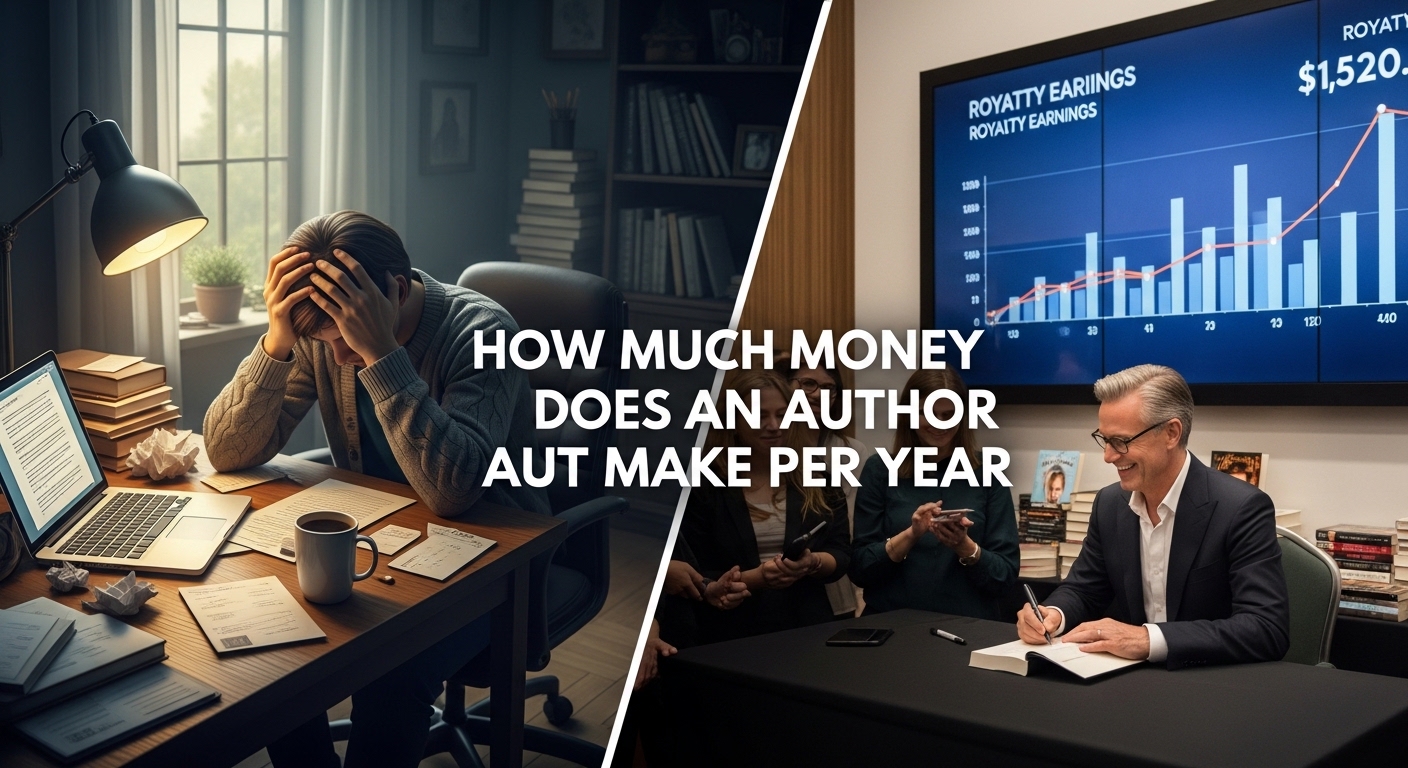
Many people imagine that authors earn huge amounts of money simply by publishing a book. Popular media often highlights bestselling writers who make millions, which creates the impression that writing is always a highly profitable career. In reality, author income varies greatly from one person to another. Some writers earn only a few hundred dollars per year, while others build six-figure businesses around their books. A small percentage reach celebrity status and generate life-changing wealth. Most authors fall somewhere in between these extremes.
The reason there is no fixed answer is simple. Authors do not receive a standard salary like office workers. Their income depends on book sales, royalty rates, publishing contracts, audience size, marketing efforts, genre demand, and how many books they have available. One author may earn steadily from ten books published over several years, while another may earn very little from a single release.
That means the better question is not whether authors make money, but how author income actually works. Once you understand the different income models, it becomes easier to see why some writers struggle financially while others create stable careers.
The Myth of Overnight Success
Many new writers believe one successful book will solve everything financially. While it does happen occasionally, it is rare. Most successful authors build income gradually over time. They improve their craft, release more books, learn marketing, and develop loyal readers. What looks like overnight success is often the result of years of work behind the scenes.
Even writers who land major publishing deals do not always become wealthy instantly. Advances are often split into several payments over time. Royalties may only begin after the advance earns out. In some cases, books receive attention but do not sell enough to create lasting income.
The truth is that writing rewards patience. A long-term approach usually matters more than one big launch.
Average Earnings for Different Types of Authors
To understand yearly income better, it helps to look at realistic ranges. These numbers can vary by country, genre, and publishing route, but they offer a practical picture of the market.
| Type of Author | Estimated Yearly Income |
| Beginner or hobby author | $0 – $2,000 |
| Part-time author | $2,000 – $15,000 |
| Developing author | $15,000 – $40,000 |
| Full-time working author | $40,000 – $80,000 |
| Established successful author | $80,000 – $250,000 |
| Bestseller author | $250,000+ |
These ranges show that writing can become a career, but most authors do not begin at the top. Income usually grows with experience and consistency.
What First-Time Authors Usually Earn
For many first-time authors, the first year is financially modest. A debut writer may spend money on editing, cover design, formatting, and promotion before earning anything back. If the book has limited visibility, annual income may remain small.
A self-published writer with one new ebook might earn a few hundred dollars in the first year. Some earn more if they choose a strong niche and market well. Others may earn less than expected because discoverability is difficult in crowded marketplaces.
Traditionally published first-time authors may receive an advance. That advance can range from a small payment to a significant sum depending on the publisher and genre. However, many debut contracts are modest. Once taxes and time investment are considered, the yearly income may still feel limited.
For this reason, first books often function as a foundation rather than a final result.
Self-Published Authors and Their Income Potential
Self-publishing has changed the writing industry dramatically. It allows authors to control pricing, branding, release schedules, and royalties. In many cases, independent writers receive a higher percentage per sale than traditionally published authors.
For example, ebook platforms may offer royalties that make each sale more profitable. If an author builds a loyal audience and publishes regularly, yearly income can become substantial. Some independent authors earn full-time incomes by writing series fiction, especially in romance, mystery, fantasy, and thriller markets.
However, self-publishing also comes with business responsibilities. The author usually pays for editing, design, ads, and launch strategy. Income can rise quickly, but expenses can rise as well. Success often depends on treating writing like both an art and a business.
Traditionally Published Authors and Annual Earnings
Traditional publishing remains attractive for many writers because it offers editorial support, print distribution, and industry credibility. Authors may receive advances before the book is released, which can provide upfront income.
Yet traditional publishing income is not always as glamorous as outsiders assume. Royalty percentages are often lower than self-publishing rates. Payment schedules may stretch over long periods. Some books perform well critically but do not generate high sales.
Still, a strong traditional deal can open doors to foreign rights, film options, speaking opportunities, and bookstore placement. For certain authors, especially nonfiction experts or literary writers, this route can lead to strong annual earnings over time.
Why Genre Plays a Major Role
Not all books earn equally. Genre can strongly affect yearly income because some readers buy more books than others. Commercial fiction categories often produce frequent repeat purchases. Romance readers, thriller fans, mystery lovers, and fantasy communities often consume books quickly and return for more.
This is why many financially successful authors write in reader-driven genres. A writer who releases three romance novels in a year may generate more consistent revenue than someone publishing one literary novel every few years.
Nonfiction can also be profitable, especially when tied to business expertise, health topics, finance, self-improvement, or personal branding. In these cases, the book may lead to coaching, speaking, or consulting income beyond royalties.
Genre does not define quality, but it often shapes earning potential.
Why Most Full-Time Authors Have More Than One Income Stream
Many working authors do not rely only on royalties. They diversify income in ways that strengthen financial stability. Books may be the center of their brand, but not the only source of money.
An author might earn from audiobooks, translation rights, newsletters, workshops, freelance writing, editing services, online courses, memberships, or public speaking. Some fiction authors use subscriptions or crowdfunding models. Others earn through merchandise or paid communities.
This matters because book sales can fluctuate. A writer with several income streams often handles slow months more comfortably than someone relying on one title alone.
The Power of a Backlist
One of the most important financial assets for an author is a backlist. A backlist means older books that continue selling while new books are released. Every new reader who discovers one title may buy several more.
This creates compound growth. Instead of depending on one launch, the author builds a catalog that works year-round. Writers with six or ten books often have more stable income than writers with one successful release.
Backlist sales are one reason experienced authors can earn much more than beginners, even if their newest book is not a blockbuster.
Expenses That Reduce Real Earnings
Gross income can look impressive, but take-home income tells the real story. Authors often face expenses that readers never consider. These can include editing, design, software, advertising, website costs, bookkeeping, office tools, and taxes.
A self-published author earning $50,000 gross revenue may keep significantly less after business costs. A traditionally published author may also spend on travel, promotion, branding, and unpaid writing time between releases.
This is why smart financial planning matters. Revenue alone does not equal profit.
Can Authors Really Make Six Figures?
Yes, many authors do earn six figures, but it is not automatic. These writers usually combine strong storytelling with consistent publishing and smart business habits. They understand reader expectations, market trends, packaging, and audience retention.
Some release multiple books per year. Others build successful nonfiction brands around expertise. Some gain momentum through audiobooks or international rights. A few receive movie or television adaptations that dramatically increase earnings.
The common factor is usually long-term strategy, not luck alone.
What Famous Authors Earn Compared to Working Authors
The public often focuses on superstar names, but the publishing world has many invisible success stories. Some midlist authors quietly earn excellent incomes without media fame. They may write in niche genres with loyal readers and dependable sales.
Meanwhile, some highly visible authors may not earn as much as assumed. Recognition does not always equal profitability. Old contracts, lower royalties, or declining sales can reduce earnings over time.
That means fame and income are related sometimes, but not always.
A Realistic Path for New Writers
If someone begins writing today, it helps to think in stages. The first year may be about learning and publishing. The second year may focus on building readers and improving craft. Later years may bring stronger recurring income as more books are added.
This slower growth model is more realistic than expecting instant wealth. Many successful authors needed several books before seeing meaningful yearly revenue.
Consistency often beats early hype.
So, How Much Money Does an Author Make Per Year?
The honest answer is that author income ranges from almost nothing to millions. Many writers earn modest side income. Some create comfortable full-time careers. A smaller number earn extraordinary sums.
If an author treats writing casually, income may remain limited. If an author treats writing professionally, studies the market, improves skill, and publishes consistently, yearly income can grow significantly.
Books alone may not always create wealth, but books combined with strategy often can.
Final Thoughts
Writing is one of the few careers where income can begin small and grow over time through creative assets. A book written once can continue earning for years. Multiple books can create a lasting income engine. That possibility is powerful, but it usually requires patience, discipline, and persistence.
So how much money does an author make per year? Some make little. Some make enough to live comfortably. Some build empires. The difference is rarely one lucky moment. It is usually the result of years of steady work, smart decisions, and continuing to write when others stop.