Publishing a book in 2026 is more accessible than ever before, but many authors still misunderstand what it truly costs. Some believe publishing can be done entirely for free, while others assume it requires tens of thousands of dollars. In reality, the cost of publishing a book depends on the path you choose, the quality level you want, the genre you are writing in, and the audience you hope to reach. A simple personal memoir may require a modest budget, while a commercial thriller or polished business book may demand a more strategic investment.
The modern publishing world offers more flexibility than previous generations ever had. Writers can self-publish globally, hire freelancers from anywhere, print books only when customers order them, and promote their work directly through digital channels. At the same time, readers have more choices than ever, which means expectations are higher. A poorly edited manuscript or an unprofessional cover can damage a book’s chances quickly. That is why understanding realistic publishing costs is so important.
This guide explains where publishing money usually goes in 2026, what authors can expect to spend, and how to budget wisely without wasting resources.
Why Book Publishing Costs Are Different for Every Author
There is no universal price for publishing a book because every project has different needs. A 30,000-word poetry collection will not require the same investment as a 100,000-word fantasy novel. A nonfiction leadership book designed to support a coaching business will need different branding than a children’s picture book with illustrations. Costs are shaped by manuscript length, editing depth, cover design style, formatting complexity, printing choices, and marketing goals.
Another major factor is how much work the author can do personally. Writers who understand formatting, book metadata, basic design, or online promotion may reduce expenses significantly. Authors who outsource every stage will naturally spend more. Neither approach is automatically better. It depends on skill, available time, and the importance of professional polish.
The Main Publishing Paths in 2026
Traditional publishing still remains a dream for many writers. In this model, a publisher acquires your manuscript and typically pays for editing, cover design, production, printing, and distribution. The author usually does not pay upfront production costs. However, traditional publishing can be highly competitive, slow-moving, and selective. Many writers spend months or years querying agents and publishers before receiving an offer.
Self-publishing has become the most common route for authors who want speed, control, and ownership. The writer decides pricing, launch date, branding, distribution channels, and marketing direction. The tradeoff is that the author pays for services personally. This route offers freedom, but it also requires planning.
Hybrid publishing or assisted publishing sits somewhere between these two models. Authors usually pay a company for support services while receiving help with production and distribution. Some hybrid publishers provide real value, while others charge large fees for services authors could obtain elsewhere for less money. Careful research is essential.
Average Book Publishing Costs in 2026
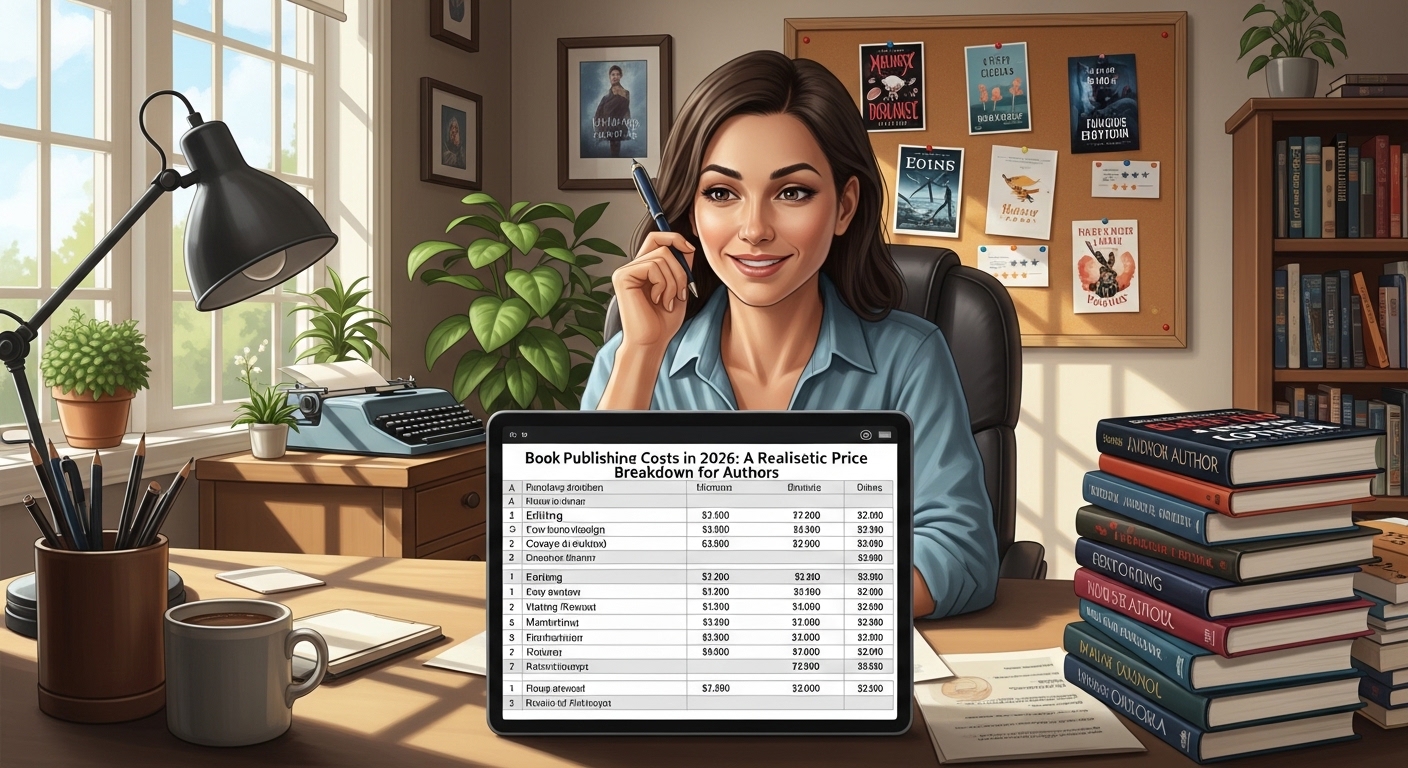
For most self-published authors, realistic budgets fall into three common ranges. A lean beginner budget may sit between $500 and $1,200. A more professional and competitive budget often ranges from $1,500 to $5,000. Premium launches, business-author books, or highly illustrated projects may rise above $6,000 and sometimes exceed $15,000.
These ranges are not rules. Some excellent books launch for less because the author already has useful skills. Others spend more because they are creating premium products or entering competitive genres. What matters is not the number itself, but whether the spending supports real goals.
| Publishing Level | Estimated Cost Range | Suitable For |
| Starter Budget | $500 – $1,200 | New authors, passion projects |
| Professional Budget | $1,500 – $5,000 | Serious indie releases |
| Premium Budget | $6,000 – $15,000+ | Business books, illustrated books, major launches |
Editing Costs: The Most Important Expense
Editing is often the smartest place to invest because readers notice poor writing quality quickly. Even a brilliant idea can struggle if the manuscript contains grammar problems, weak pacing, confusing structure, or repetitive language. Editing improves the reading experience and increases credibility.
Developmental editing focuses on big-picture elements such as structure, chapter flow, pacing, argument clarity, character depth, and reader engagement. This type of editing is especially useful for novels, memoirs, and complex nonfiction books. In 2026, developmental editing may cost anywhere from $1,000 to $4,000 depending on manuscript length and editor reputation.
Copyediting focuses on grammar, sentence clarity, consistency, punctuation, and style issues. Many authors spend between $500 and $1,800 for this stage. Proofreading is the final polish after formatting and usually costs between $250 and $800.
Authors with limited budgets often combine beta readers, self-revision, and one professional editing stage. While that may reduce costs, completely skipping editing can become expensive later through poor reviews and weak sales.
Cover Design Costs: Why Appearance Matters
A book cover is one of the strongest sales tools an author has. In online marketplaces, readers often make decisions in seconds. Before they read the description or sample pages, they react to the cover. If it looks outdated, amateur, or mismatched to genre expectations, many potential buyers move on instantly.
Premade covers are a lower-cost option and usually range from $100 to $350. These covers are designed in advance and sold with minor customization. They can be effective for genres with standard visual styles such as romance, thriller, or contemporary fiction.
Custom covers are built specifically for your manuscript and branding goals. These commonly cost between $400 and $1,500. Premium designers or illustrated covers may cost more. For business books, a clean and authoritative design can strongly influence trust. For fiction, genre signaling is critical.
Formatting and Interior Design Costs
Formatting transforms a manuscript into a readable professional book for print and ebook formats. It includes chapter headings, spacing, page numbers, font choices, margins, table of contents links, and layout consistency. Readers may not consciously praise formatting, but they quickly notice when it is poor.
Basic ebook formatting may cost between $50 and $300. Print formatting commonly ranges from $100 to $500. Highly visual books such as cookbooks, textbooks, workbooks, or image-heavy children’s books can cost much more because layout becomes more technical.
Many platforms now offer free tools, but professional formatting still provides cleaner results and fewer technical problems.
ISBN, Copyright, and Setup Costs
Some publishing platforms offer free ISBNs, which may be enough for many first-time authors. However, writers who want to publish under their own imprint often prefer buying their own ISBNs where available. Pricing depends on country and provider.
Some authors also choose to register copyright, purchase a domain for an author website, subscribe to mailing list software, or buy software tools for writing and production. These smaller expenses may seem minor individually, but together they can add meaningfully to the total budget.
| Setup Item | Typical Cost |
| Free Platform ISBN | $0 |
| Purchased ISBN | Country dependent |
| Domain Name | $10 – $25 yearly |
| Email Tools | $0 – $50 monthly |
| Copyright Registration | Varies |
Printing Costs and Author Copies
Print-on-demand continues to be one of the most useful publishing systems in 2026. Instead of printing thousands of copies in advance, books are printed only when customers order them. This reduces risk, storage needs, and upfront spending.
Printing cost depends on page count, trim size, paper quality, ink type, and whether the interior is black-and-white or color. Standard novels are relatively affordable to print, while color children’s books and large hardcovers cost more.
Many authors also order personal copies for signings, giveaways, events, media outreach, or direct sales. A modest first budget of $100 to $500 for author copies is common.
Audiobook Costs in 2026
Audiobooks continue growing as readers consume content while commuting, exercising, or multitasking. Because of this, many authors now consider audio editions part of a complete publishing plan.
Professional narration is usually priced by finished hour. Rates often range from $100 to $500 or more per hour depending on narrator experience. A ten-hour audiobook may therefore cost $1,000 to $5,000 or higher.
Some authors choose royalty-share models where narrators receive a share of future income instead of upfront payment. AI narration tools also exist, but listener acceptance varies depending on quality and genre.
Marketing Costs: Where Many Authors Overspend
Publishing a book does not guarantee visibility. One of the biggest mistakes new authors make is assuming the launch itself creates readers. Marketing is often necessary, but it should be strategic.
Common marketing expenses include Amazon ads, newsletter promotions, social media advertising, advance review copy campaigns, website building, influencer outreach, and email list growth. Some authors spend under $200 testing early promotions. Others invest several thousand dollars.
Marketing should not come before product quality. Ads may bring traffic once, but poor covers or weak editing can waste that traffic quickly. Smart authors often begin with small tests, learn their audience, and scale gradually.
| Marketing Option | Estimated Cost |
| Newsletter Promotions | $20 – $500 |
| Amazon Ads | Flexible |
| Social Media Ads | Flexible |
| Website Setup | $100 – $1,000 |
| ARC Campaigns | $50 – $300 |
Hidden Costs Authors Often Forget
Many authors plan for editing and covers but forget smaller expenses. Revision rounds beyond the agreed contract may cost extra. Rush deadlines often increase freelancer pricing. International payment fees can appear when hiring global professionals. Software subscriptions may continue monthly. Shipping printed copies can become expensive, especially internationally.
Time is another hidden cost. Managing freelancers, reviewing files, correcting metadata, learning platforms, and handling launch tasks all require hours. For some authors, paying experts saves both money and stress in the long run.
A Smart Budget Strategy for New Authors
If you are publishing your first book with limited resources, focus on the areas readers feel most. Strong editing, a credible cover, and clean formatting usually matter more than expensive promotional experiments.
A practical beginner strategy may involve self-revision, one professional copyedit, a quality premade cover, affordable formatting, and a modest marketing test budget. Once you learn the market and publish more books, you can scale investments more confidently.
For authors with business goals, spending more on branding, premium editing, and professional marketing may make sense because the book can generate consulting clients, leads, partnerships, or speaking opportunities.
Is It Possible to Publish for Free?
Yes, it is possible to publish for free using platform tools, free ISBN options, self-formatting software, and personal marketing effort. However, free publishing often transfers the cost into time, learning curve, or reduced quality. Some authors succeed because they bring strong skills in design or marketing. Others struggle because they underestimate reader expectations.
The question should not only be whether publishing can be free. It should be whether free choices support the quality level your goals require.
Final Thoughts
Book publishing costs in 2026 are flexible because authors now have more control than ever. You can launch a simple low-budget book, build a polished professional release, or create a premium brand-driven product. The best budget is not the largest one. It is the one aligned with your goals.
For most writers, the wisest investments remain editing, cover quality, and reader experience. These areas shape trust, satisfaction, and long-term reputation. Marketing matters too, but only after the book itself is ready.
A successful publishing journey is rarely about spending the most money. It is about making informed decisions, building steadily, and delivering a book readers are happy to recommend.