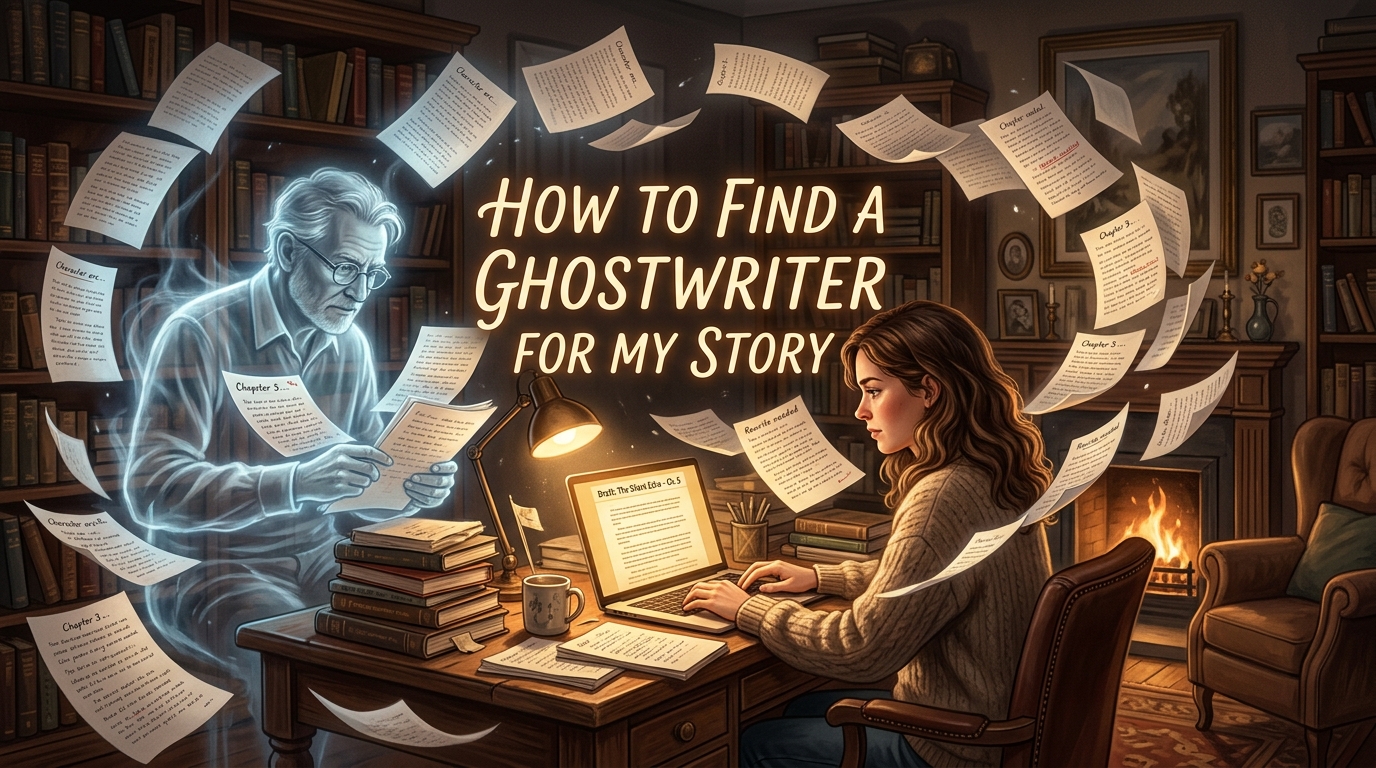
Finding a ghostwriter for your story is one of those decisions that can quietly change the entire direction of your writing journey. It is not just about hiring someone to put words on a page. It is about finding a voice that understands your imagination well enough to translate it into a compelling narrative while still preserving your essence as the original creator. For many first-time and even experienced authors, this process can feel overwhelming because ghostwriting sits at the intersection of creativity, trust, and professional collaboration.
In today’s publishing world, ghostwriters are no longer hidden figures working only with celebrities or politicians. They are now widely used by indie authors, entrepreneurs, bloggers, and even fiction writers who have powerful ideas but struggle with structure, time, or writing discipline. The challenge is not whether ghostwriters exist, but how to find the right one for your story in a way that feels natural, safe, and creatively aligned.
Understanding what a ghostwriter actually does is the first step before searching for one. A ghostwriter is essentially a professional writer who develops your story based on your ideas, notes, conversations, or rough drafts. In most cases, they remain anonymous, and you are credited as the author. But more importantly, a good ghostwriter does not overwrite your vision; they refine it, structure it, and elevate it into a publishable form that resonates with readers.
Understanding the Role Before You Start Searching
Before you begin the process of finding a ghostwriter, it is important to clearly understand what you are actually looking for. Many writers make the mistake of jumping into hiring without knowing whether they need full ghostwriting, developmental writing support, or editing assistance. These roles are different in intensity and involvement.
A full ghostwriter takes your concept from beginning to end, often shaping the plot, characters, pacing, and final manuscript. A developmental ghostwriter works more like a creative partner who helps you build the structure but still expects you to contribute heavily to the story direction. Then there are collaborative editors who refine your draft but do not fully create content from scratch.
Understanding this distinction helps you avoid mismatched expectations later. If you expect someone to fully build your story but hire a light editor instead, you may end up frustrated with the results. On the other hand, if you only need help organizing your ideas but hire a full ghostwriter, you might feel disconnected from the final manuscript.
Defining Your Story and Creative Needs
The search for a ghostwriter becomes much easier when you have clarity about your own story. This does not mean you need a perfect plot or detailed outline. However, you should be able to describe your idea in a way that captures its emotional and narrative core.
Ask yourself what kind of story you are trying to tell. Is it a memoir rooted in personal experience, a fictional world driven by imagination, or a hybrid narrative that blends real and fictional elements? The answer to this shapes the type of ghostwriter you should look for.
For example, memoir ghostwriters are often skilled in emotional storytelling and real-life structure, while fiction ghostwriters tend to have strong world-building and character development skills. A mismatch here can lead to a story that feels technically correct but emotionally disconnected.
It also helps to think about tone and audience. A young adult novel requires a very different narrative voice compared to a business memoir or a psychological thriller. When you understand these details, you are not just hiring a writer; you are selecting a creative partner who already speaks the language your story requires.
Where Most People Begin Their Search
The search for a ghostwriter usually begins online, but not all platforms offer the same level of quality or reliability. Some writers find ghostwriters through freelance marketplaces, while others prefer writing agencies or professional referrals.
Freelance platforms often provide a wide range of options, from beginners to highly experienced writers. However, the challenge here is filtering through profiles and identifying genuine expertise. Agencies, on the other hand, often pre-screen writers, which can reduce risk but may also be more expensive.
Referrals from other authors or publishing professionals are often the most reliable route because they come from real experience. Many successful collaborations begin through recommendations within writing communities, forums, or professional networks.
Social media has also become a surprisingly active space for discovering ghostwriters. Platforms like LinkedIn and even writing-focused groups often feature professionals showcasing their work, sharing insights, and offering services. However, visibility does not always equal skill, so evaluation is still essential.
Evaluating a Ghostwriter’s Style and Compatibility
Once you have a shortlist of potential ghostwriters, the real work begins. Evaluating a ghostwriter is not just about reading samples; it is about understanding whether their writing style aligns with your vision.
A strong ghostwriter should be able to adapt their tone rather than forcing you to adapt to theirs. When reviewing samples, look for emotional consistency, narrative flow, and clarity of expression. If possible, ask for samples in the same genre as your story rather than generic writing samples.
Another important factor is how they interpret storytelling. Some writers focus heavily on plot mechanics, while others emphasize emotional depth and character psychology. Neither approach is wrong, but one may suit your story better than the other.
Communication style is equally important. A ghostwriter who understands your ideas but cannot communicate clearly during discussions may create misunderstandings later. Ideally, the collaboration should feel like a creative conversation rather than a transactional exchange.
The Importance of a Trial Collaboration
Before committing to a full manuscript, many authors choose to begin with a short trial phase. This might involve a sample chapter, a detailed outline, or a few pages of storytelling based on your concept.
This step is crucial because it reveals how the ghostwriter transforms your ideas into written form. It also shows how they handle feedback, revisions, and creative direction. A good ghostwriter will not resist feedback but will use it to refine their understanding of your vision.
A trial phase also helps establish trust. Writing a book is a long process, and you need to feel confident that the person you are working with understands not only your story but also your expectations and working style.
Understanding Cost Without Reducing Quality Expectations
Cost is often one of the most confusing parts of hiring a ghostwriter. Prices can vary significantly depending on experience, genre, complexity, and project length. While it may be tempting to choose the lowest price, ghostwriting is one of those areas where cost often reflects skill and reliability.
Experienced ghostwriters invest significant time in research, interviews, drafting, and revisions. This is not a quick writing task; it is a layered creative process. When evaluating cost, it is more useful to think in terms of value rather than expense.
A well-written manuscript can lead to publishing opportunities, reader engagement, and long-term creative satisfaction. A poorly written one may require additional editing or even complete rewriting, which ultimately costs more time and money.
Common Mistakes Writers Make When Hiring Ghostwriters
Many writers enter the ghostwriting process with unrealistic expectations or incomplete preparation. One common mistake is assuming that a ghostwriter will automatically understand their vision without detailed communication. Even the most talented writer needs clarity, examples, and feedback.
Another mistake is rushing the selection process. Choosing a ghostwriter based solely on price or availability often leads to dissatisfaction later. Compatibility matters more than convenience.
Some writers also avoid discussing ownership and rights clearly. It is essential to establish how credit, revisions, and intellectual property will be handled before the project begins. This prevents misunderstandings and ensures a smooth collaboration.
Key Comparison Factors When Choosing a Ghostwriter
To make the decision process clearer, here is a structured comparison of important elements that you should consider when selecting a ghostwriter for your story.
| Factor | What It Means | Why It Matters |
| Genre Experience | Experience in your specific type of story | Ensures better understanding of tone and structure |
| Writing Style | Emotional tone, pacing, and voice adaptability | Determines how well your story will be expressed |
| Communication | Clarity, responsiveness, and openness to feedback | Essential for smooth collaboration |
| Portfolio Quality | Previous writing samples and published work | Shows real-world capability |
| Revision Policy | Willingness to refine drafts | Ensures final manuscript satisfaction |
| Timeline Commitment | Ability to meet deadlines | Keeps your project on track |
| Budget Alignment | Cost vs value offered | Prevents financial strain and ensures quality balance |
This kind of structured thinking helps reduce confusion and brings clarity to what can otherwise feel like a very subjective decision.
Building a Strong Working Relationship
Once you have chosen a ghostwriter, the relationship becomes just as important as the writing itself. A strong collaboration depends on trust, communication, and mutual respect for the creative process.
Regular communication helps keep the story aligned with your vision. At the same time, allowing the ghostwriter some creative freedom often leads to stronger storytelling. The balance between guidance and flexibility is what produces the most compelling manuscripts.
It is also helpful to share references, inspirations, and even emotional motivations behind your story. Ghostwriting is not just technical writing; it is interpretation. The more context the writer has, the more authentic the final story will feel.
Final Thoughts on Finding the Right Ghostwriter
Finding a ghostwriter for your story is not a mechanical task; it is a creative partnership built on trust, clarity, and shared vision. The right ghostwriter does not simply write for you; they write with your imagination in mind, shaping it into a form that readers can connect with deeply.
The process takes time, patience, and careful evaluation, but the result can be transformative. Whether you are working on a memoir, a novel, or a personal story you have carried for years, the right ghostwriter can help turn it into something complete, structured, and powerful enough to exist beyond your thoughts and into the world of readers.
The most important part of this journey is not finding someone who can write well, but finding someone who can understand your story well enough to make it real on the page.