Writing a book is one of the biggest creative goals many people carry for years. Some want to publish a memoir filled with personal experiences, while others dream of sharing business insights, educational knowledge, or fictional stories that have lived in their imagination for a long time. The challenge is that most people underestimate how difficult writing a full-length book can actually be. Having a powerful idea and turning that idea into a structured manuscript are two completely different things. This is the reason ghostwriters have become an increasingly important part of modern publishing.
A ghostwriter is a professional writer hired to help create a book while allowing the credited author to remain the public face of the project. In many cases, the ghostwriter handles the actual drafting, structure, storytelling flow, editing, and organization of the manuscript. The author provides the ideas, experiences, expertise, and overall vision. Together, they create a polished book that reflects the author’s voice and goals.
Many people wrongly assume ghostwriting is dishonest or inauthentic, but the publishing industry has depended on collaboration for decades. Countless bestselling memoirs, celebrity books, business books, and leadership guides have been created with the help of professional ghostwriters. The process is not about “cheating.” It is about transforming valuable ideas into readable, engaging content through professional collaboration.
For entrepreneurs, executives, public speakers, doctors, coaches, influencers, and busy professionals, ghostwriters often make publishing possible. Without that support, many meaningful stories and valuable insights would never become books at all.
Why Writing a Book Alone Can Become Difficult
The idea of writing a book sounds exciting in the beginning. Many aspiring authors imagine themselves waking up every morning inspired and effortlessly filling pages with brilliant thoughts. Reality usually looks very different. Writing requires discipline, structure, consistency, emotional focus, and technical skill. Even talented communicators can struggle when trying to organize hundreds of pages into a coherent narrative.
One of the biggest obstacles people face is time. Modern life is demanding, especially for professionals balancing businesses, careers, families, and personal responsibilities. A person may have extraordinary life experiences or industry expertise but still lack the uninterrupted hours required to write consistently for months or years.
Another common challenge is structure. Many first-time authors do not know how to organize chapters, maintain pacing, or keep readers emotionally engaged throughout an entire manuscript. They may have ideas scattered across notebooks, voice memos, emails, or unfinished documents but no clear roadmap for turning those fragments into a complete book.
Self-doubt also becomes a major obstacle. Some people begin writing enthusiastically but stop after a few chapters because they become overwhelmed by perfectionism or fear of criticism. Others struggle with grammar, clarity, storytelling techniques, or maintaining a consistent tone. These frustrations cause many promising projects to remain unfinished indefinitely.
Ghostwriters help solve these problems by bringing professional structure and momentum into the process. Instead of forcing authors to figure everything out alone, ghostwriters guide the project from idea development to final manuscript preparation.
What the Ghostwriting Process Actually Looks Like
Many people imagine ghostwriting as a simple transaction where the author sends notes and the writer magically produces a completed book. In reality, professional ghostwriting is far more collaborative and detailed than most people realize.
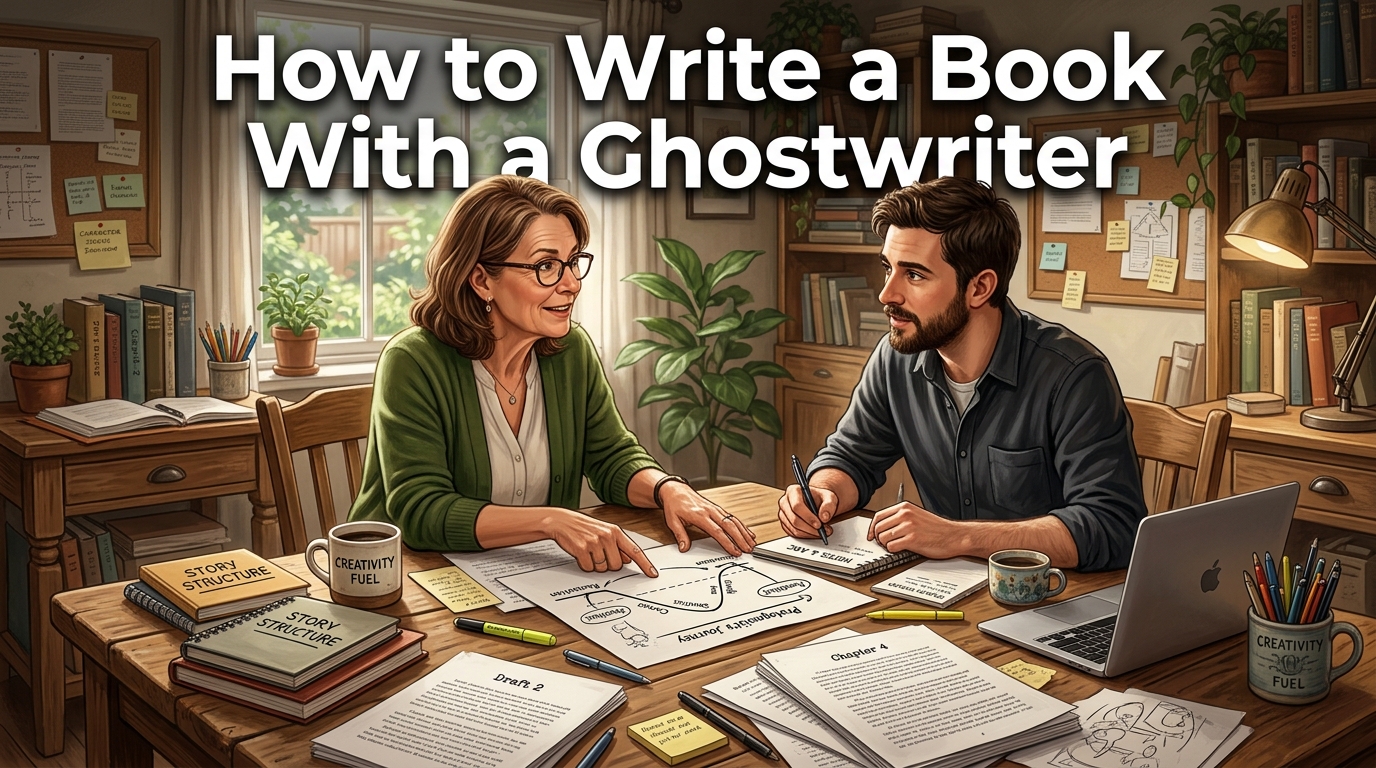
The process usually begins with extensive conversations. During this early stage, the ghostwriter tries to understand the author’s personality, goals, background, audience, and overall vision for the book. These discussions are extremely important because they shape the direction of the entire project.
Some authors arrive with detailed outlines and years of preparation. Others start with only a rough concept. A good ghostwriter knows how to guide both types of clients. Through interviews and brainstorming sessions, the writer gradually uncovers the themes, stories, and ideas that will become the foundation of the manuscript.
After gathering information, the ghostwriter typically creates a chapter outline. This outline serves as the structural blueprint for the book. It helps organize ideas logically while ensuring the narrative flows naturally from beginning to end.
Once the structure is approved, the drafting process begins. Interviews often continue throughout this stage because new stories, details, and insights emerge as the project develops. The ghostwriter then transforms those conversations into polished chapters while carefully preserving the author’s voice and personality.
The author reviews drafts, provides feedback, requests revisions, and helps refine the manuscript over time. This collaborative rhythm continues until the book feels complete and authentic.
Defining the Purpose of Your Book Before Hiring a Ghostwriter
Before starting a ghostwriting project, it is important to understand why you want to write a book in the first place. Many aspiring authors skip this step and later struggle because the project lacks direction.
Some books are written to build authority in a professional field. Others aim to inspire readers through personal stories. Some books serve as business tools designed to attract speaking opportunities, clients, or media attention. Fiction books may exist purely to entertain or emotionally move readers.
Clarifying your purpose changes the entire writing strategy.
A memoir requires emotional vulnerability and detailed storytelling. A business leadership book needs clarity, authority, and actionable insights. A self-help book must guide readers through transformation while remaining practical and relatable. Fiction requires strong world-building, pacing, dialogue, and character development.
When your goals are clear, it becomes much easier to communicate your vision to a ghostwriter. Instead of vaguely saying you want to “write a book someday,” you can define exactly what kind of experience you want readers to have.
Understanding your audience is equally important. A book written for startup founders will sound very different from a book written for grieving families, students, or aspiring artists. Tone, language, examples, and structure all depend on who the reader is.
Ghostwriters can help sharpen these ideas, but the stronger your initial clarity, the smoother the collaboration becomes.
Finding the Right Ghostwriter for Your Project
Choosing the right ghostwriter is one of the most important parts of the publishing journey. Since a ghostwriter helps shape your ideas, experiences, and voice into a finished book, the relationship needs to feel comfortable and collaborative from the beginning.
Why Compatibility Matters
Experience is important, but compatibility matters just as much. A skilled ghostwriter who does not understand your vision or communication style may create frustration during the process. The best collaborations happen when both people communicate openly and share a clear understanding of the book’s direction.
Evaluating Communication Skills
Early conversations can reveal a lot about a ghostwriter’s professionalism. Strong ghostwriters ask thoughtful questions, listen carefully, and explain their writing process clearly. Good communication usually leads to a smoother and more productive partnership.
Looking for Genre Experience
Genre experience is another important factor. Writing a memoir requires different storytelling skills than writing a business or fiction book. A ghostwriter familiar with your genre will better understand structure, pacing, and reader expectations.
| Factor | Why It Matters | What to Look For |
| Writing Style | Ensures the book sounds natural and authentic | Strong sample chapters and tone consistency |
| Genre Knowledge | Different genres require different storytelling methods | Experience with memoirs, nonfiction, or fiction |
| Communication | Good collaboration improves the entire process | Responsiveness and clear explanations |
| Interview Skills | Strong interviews create richer material | Thoughtful and engaging questions |
| Professionalism | Reduces project confusion later | Clear contracts and organized workflow |
| Revision Process | Helps refine the manuscript effectively | Structured editing rounds |
| Timeline Management | Keeps the project moving forward | Realistic deadlines and scheduling |
| Confidentiality | Protects private information and ideas | Non-disclosure agreements and trust |
The right ghostwriter should make you feel comfortable enough to speak openly and honestly throughout the process.
Preserving Your Authentic Voice Throughout the Book
One of the biggest fears people have about ghostwriting is that the final manuscript will not sound like them. Many worry the book will feel artificial, robotic, or disconnected from their real personality.
Professional ghostwriters work very hard to avoid that problem.
A skilled ghostwriter does not try to replace the author’s voice. Instead, they study it carefully and recreate it more clearly on the page. They pay attention to vocabulary, emotional tone, humor, storytelling habits, sentence rhythm, and conversational style.
This is why interviews are such an important part of the process. Listening to how someone naturally speaks provides far more insight than simply reading written notes. Through repeated conversations, ghostwriters begin understanding how the author explains ideas, reacts emotionally, and communicates with others.
The goal is for readers to feel as though the author personally sat down and told them the story.
In many successful ghostwriting projects, readers never realize another writer was involved because the voice feels so authentic and personal.
The Emotional Side of Writing With a Ghostwriter
Writing a book can become emotionally intense, especially when personal experiences are involved. Memoirs often require revisiting painful memories, complicated relationships, failures, trauma, or major life transitions. Even business books may involve discussions about burnout, leadership struggles, or personal setbacks.
This emotional vulnerability is one reason trust matters so much in ghostwriting relationships.
Authors need to feel safe sharing private stories honestly. Ghostwriters must approach those stories with empathy, professionalism, and respect. The strongest collaborations happen when both people understand that storytelling requires emotional openness.
Sometimes interviews uncover memories or emotions the author did not expect to revisit. This can slow the writing process temporarily, but it often leads to deeper and more meaningful storytelling.
Books that emotionally connect with readers usually come from honesty rather than perfection. Readers respond to authenticity, vulnerability, and human experiences they recognize within themselves.
A ghostwriter’s role is not only to organize information but also to help shape emotional truth into compelling narrative form.
Why Organization Makes the Process Easier
Although ghostwriters handle much of the heavy writing work, authors still benefit from preparing materials before the project begins. Organized information helps the process move more efficiently and reduces confusion later.
Helpful materials may include journals, speeches, blog posts, podcasts, voice notes, presentations, photographs, timelines, articles, or previous interviews. Even random notes stored on a phone can become valuable source material.
For memoirs, creating a rough timeline of important life events is especially useful. Dates, locations, relationships, and milestones help reconstruct stories accurately. For nonfiction projects, gathering supporting research and examples early can strengthen the manuscript significantly.
Preparation does not mean writing the book yourself. It simply means creating a foundation that helps the ghostwriter understand your experiences and ideas more clearly.
The more context a ghostwriter receives, the richer and more detailed the final manuscript becomes.
Managing Feedback and Revisions Productively
No first draft is perfect. Revision is one of the most important parts of creating a successful book.
Some authors feel uncomfortable giving critical feedback because they fear damaging the relationship with the ghostwriter. Others become overly controlling and rewrite entire chapters repeatedly. Neither extreme helps the process.
The healthiest approach involves clear, constructive communication.
Instead of saying a chapter feels “bad,” explain specifically what feels inaccurate or incomplete. Perhaps the tone sounds too formal, a story needs more emotional depth, or an important detail was overlooked. Clear feedback helps the ghostwriter improve the manuscript more effectively.
Revision rounds are normal and expected. Most strong books evolve significantly through editing and refinement. Collaboration during this stage often determines whether the final product feels authentic and polished.
Authors should remember that ghostwriting is a creative partnership rather than a one-time transaction.
Understanding Publishing After the Manuscript Is Finished
Completing the manuscript is a major milestone, but it is not the end of the publishing journey. Authors must then decide how they want to publish the book.
Traditional publishing involves securing a literary agent and obtaining a publishing deal through established publishing houses. This route may provide industry credibility and wider bookstore distribution, but it can also involve long waiting periods and competitive approval processes.
Self-publishing has become increasingly popular because it gives authors greater control over timelines, branding, royalties, and creative decisions. Many successful authors now choose independent publishing models because they allow faster market entry and direct ownership of the project.
Hybrid publishing combines aspects of both traditional and self-publishing approaches.
Some ghostwriters also help authors prepare book proposals, editing plans, or publishing strategies, although those services vary depending on the agreement.
Understanding your publishing goals early can influence how the manuscript is written and positioned in the market.
The Financial Reality of Hiring a Ghostwriter
Ghostwriting is a professional service, and pricing varies widely depending on the complexity of the project, the writer’s experience, the timeline, and the genre.
Some ghostwriters charge relatively modest rates for shorter projects, while highly experienced professionals working on major books may charge substantial fees. The investment reflects not only the writing itself but also research, interviews, outlining, revisions, project management, and creative expertise.
Choosing the cheapest option often creates problems later. A poorly written book can damage credibility and require expensive editing or rewriting in the future.
Instead of focusing only on price, authors should evaluate overall value. A strong ghostwriter can help create a book that generates speaking opportunities, business growth, personal branding, media attention, and long-term authority.
For many professionals, the book becomes far more valuable than the original investment.
Final Thoughts
Learning how to write a book with a ghostwriter is ultimately about understanding collaboration. A ghostwriter does not replace the author’s ideas, experiences, or voice. Instead, they help shape those elements into a structured, compelling manuscript that readers can genuinely connect with.
The process requires trust, communication, preparation, patience, and honesty from both sides. When the partnership works well, the result is a book that feels authentic, polished, and emotionally engaging.
Many people spend years dreaming about becoming authors but never move forward because the process feels overwhelming. Working with the right ghostwriter can transform that dream into a realistic and achievable project.
A meaningful book is not defined by who typed every sentence. It is defined by the ideas it shares, the emotions it creates, and the impact it leaves on readers long after they finish the final page.