
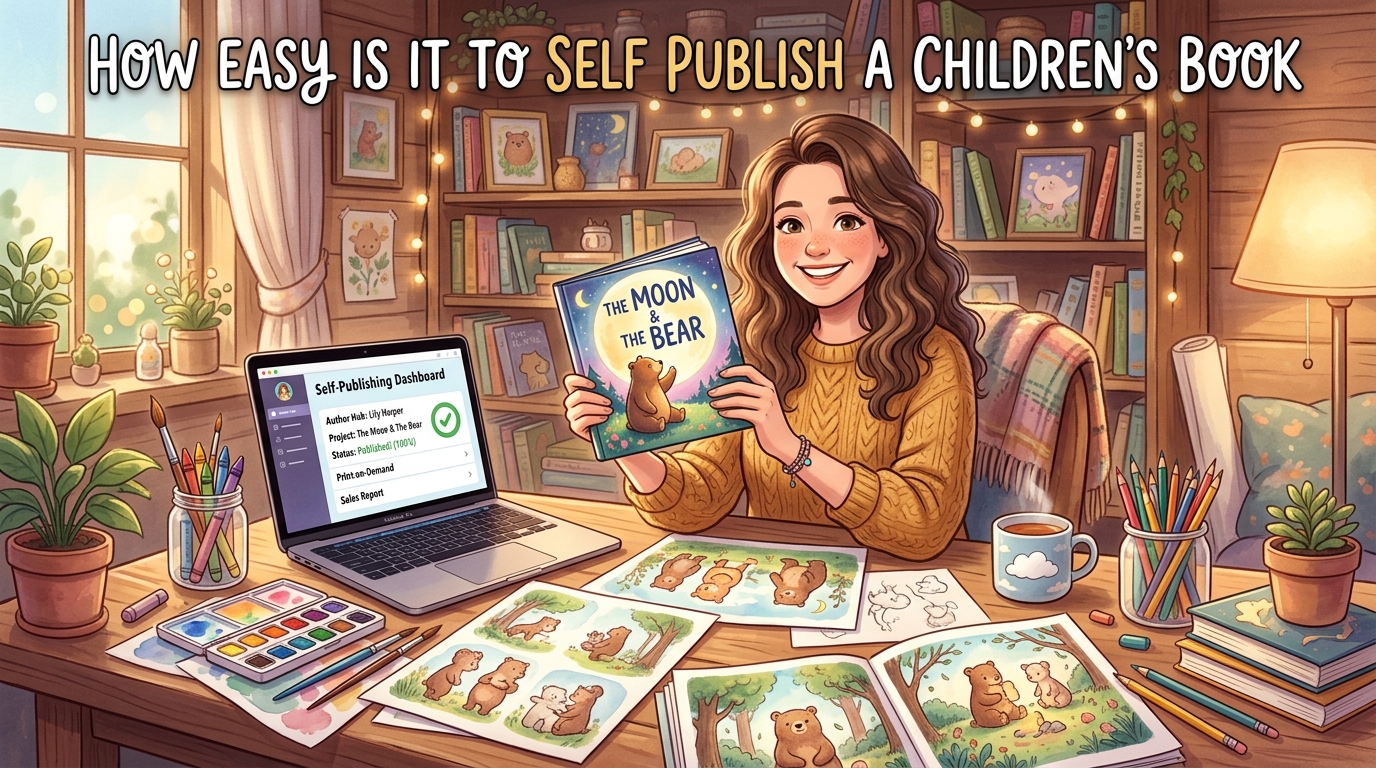
The Growing Appeal of Self-Publishing Children’s Books
Writing a children’s book is a dream many people quietly hold onto for years. Some imagine creating bedtime stories inspired by their own children, while others want to bring imaginative characters to life through colorful storytelling. In the past, turning that dream into a published book often felt impossible without the support of a traditional publishing house. Authors had to search for literary agents, wait months for responses, and compete with thousands of other manuscripts. Today, the publishing world has changed dramatically, and self-publishing has opened the door for aspiring writers everywhere.
The rise of digital publishing platforms has made publishing more accessible than ever before. Authors can now upload manuscripts online, design covers, choose printing formats, and make books available globally without needing a traditional publisher. This accessibility has led many new writers to ask an important question: how easy is it really to self-publish a children’s book?
The answer depends on what someone means by “easy.” The process itself is now simpler than it once was because technology has removed many of the barriers that previously stopped independent authors. However, children’s books come with unique creative and technical demands that require careful planning. While publishing a book is easier today, publishing a high-quality children’s book that truly connects with readers still takes effort, patience, and creativity.
Why Children’s Books Are Different From Other Books
Children’s books occupy a very different space in publishing compared to adult fiction or nonfiction. A novel may rely entirely on words to engage readers, but children’s books often depend on the relationship between text and visuals. Illustrations, page layout, typography, and design all play an essential role in shaping the reading experience.
For younger readers especially, visuals are just as important as storytelling. A picture book does not simply include artwork alongside the text. Instead, the illustrations become part of the narrative itself. Expressions, colors, backgrounds, and visual pacing help communicate emotion and meaning in ways words alone cannot achieve.
Because of this, self-publishing a children’s book involves more than simply writing a story and uploading it online. Authors must think about how the book will look, feel, and function as a physical product. This is one reason why many first-time authors initially underestimate the process.
Still, despite these challenges, the modern publishing environment has made independent publishing far more manageable than before. Writers no longer need permission from large publishing companies to share their stories with readers.
The Writing Process Feels Simpler Than Most People Expect
Many aspiring authors begin the journey believing writing will be the hardest part of publishing a children’s book. Surprisingly, many later discover that writing is often the easiest stage.
Children’s books may contain fewer words than adult novels, but effective storytelling for young readers requires precision. Every sentence matters. The language must feel natural, engaging, and age-appropriate without sounding overly simplistic. Rhythm and flow are particularly important because many children’s books are read aloud by parents or teachers.
A successful children’s story usually combines imagination with emotional clarity. Young readers connect deeply with stories that make them laugh, feel curious, or recognize familiar emotions. Whether the story involves magical adventures, talking animals, or family experiences, authenticity remains important.
One advantage of self-publishing is that authors maintain complete creative freedom during the writing stage. Traditional publishers often request significant revisions to match current market trends or educational requirements. Independent authors can preserve their original voice and ideas without external pressure.
For many writers, this freedom becomes one of the most rewarding aspects of self-publishing.
Illustrations Often Become the Biggest Challenge
While writing may feel manageable, illustrations are where many authors begin to realize that self-publishing a children’s book is more complex than expected.
Professional illustrations can transform a simple story into a memorable reading experience. At the same time, weak or inconsistent artwork can reduce the overall quality of the book regardless of how strong the writing may be. Parents, teachers, and bookstores often judge children’s books visually before reading the story itself.
Some authors choose to illustrate their own books. This approach works well when the writer already possesses artistic ability and understands how visual storytelling works within children’s publishing. However, not every writer has illustration experience, which leads many independent authors to hire freelance illustrators.
Finding the right illustrator involves much more than selecting someone who can draw well. The artistic style must match the tone of the story. A humorous adventure may require bright, energetic visuals, while a bedtime story may benefit from softer colors and calmer imagery. Communication between the author and illustrator also becomes extremely important because both individuals are collaborating to create a unified storytelling experience.
Illustration costs can also surprise first-time authors. High-quality artwork for a children’s picture book can require a significant financial investment depending on the complexity of the project. This is one reason some people hesitate before beginning the self-publishing process.
Formatting a Children’s Book Requires Careful Attention
Formatting is another area where self-publishing can feel unexpectedly technical. A children’s book is not formatted like a standard novel. Picture books especially require careful placement of text and illustrations to create a visually balanced reading experience.
Authors must think about page dimensions, image resolution, spacing, font selection, and printing requirements. If illustrations stretch across two pages, important details cannot disappear into the center fold of the book. Text placement must remain readable without covering important artwork.
These details may seem small, but they strongly influence how professional the final book appears.
Fortunately, modern publishing software and templates have simplified the formatting process considerably. Some authors choose to learn formatting themselves using design programs, while others hire professionals to handle layout design. Either approach can work successfully depending on the author’s comfort level and budget.
Although formatting may initially feel intimidating, it becomes easier once writers understand the basic structure required for children’s publishing.
Print-On-Demand Technology Has Changed Everything
One of the biggest reasons self-publishing has become easier is the development of print-on-demand technology. In earlier years, independent authors often had to print hundreds or even thousands of copies upfront. This required large financial investments and created storage challenges for unsold inventory.
Today, print-on-demand services allow books to be printed only after a customer places an order. This dramatically reduces financial risk because authors no longer need to purchase massive quantities of books before knowing whether readers will buy them.
Platforms such as Amazon KDP and IngramSpark have become popular because they handle printing, shipping, and online distribution automatically. Once a book is uploaded and approved, readers around the world can order copies online without the author managing inventory or shipping logistics.
This convenience is one reason many people now consider self-publishing a realistic option. The technology has removed many of the obstacles that once prevented independent authors from entering the publishing world.
| Publishing Element | Why It Matters in Children’s Books |
| Story Writing | Creates emotional connection and reader engagement |
| Illustrations | Help tell the story visually |
| Formatting | Ensures pages look professional and readable |
| Print Quality | Affects durability and visual appeal |
| Marketing | Helps parents and educators discover the book |
| Distribution | Makes the book available to global readers |
Marketing Is Often Harder Than Publishing
Many new authors believe the hardest part of self-publishing is completing the book itself. In reality, marketing often becomes the greater challenge.
Publishing platforms may make books available online quickly, but visibility is another issue entirely. Thousands of children’s books are uploaded every year, and standing out in such a crowded market requires consistent effort.
Children are rarely the direct buyers of books. Parents, grandparents, teachers, schools, and librarians usually make purchasing decisions. Because of this, marketing children’s books involves building trust with adults while also creating stories children genuinely enjoy.
Many successful independent authors promote their books through social media, school visits, local bookstores, parenting communities, and online reading events. Some focus on building relationships with teachers or educational groups. Others create engaging online content related to children’s literacy and storytelling.
Marketing takes time because audiences rarely appear overnight. However, authors who remain consistent often discover that word-of-mouth recommendations can become powerful over time.
Financial Expectations and Publishing Costs
Another reason people question whether self-publishing is easy relates to cost. Technically, publishing a book online can cost very little. However, producing a polished and professional children’s book usually requires investment.
Illustrations are often the largest expense, but editing, formatting, cover design, and marketing can also add to the overall budget. Full-color printing costs are typically higher than standard black-and-white books because children’s books depend heavily on visuals.
Some authors try to minimize expenses by handling multiple stages themselves, while others invest in professional services to improve quality. There is no single correct approach because every project has different goals and financial realities.
Many independent authors begin with modest expectations and gradually expand their publishing efforts after gaining experience. This step-by-step approach often feels less overwhelming than attempting to create a perfect commercial product immediately.
The Emotional Side of Publishing a Children’s Book
Despite the technical challenges, many authors describe self-publishing a children’s book as one of the most meaningful creative experiences of their lives.
Children’s books carry emotional significance in a unique way. They become part of bedtime routines, classroom memories, and childhood experiences. A story that feels small to the author may become deeply important to a young reader.
Holding a printed copy for the first time can feel incredibly rewarding because the project becomes something tangible and lasting. For some writers, simply seeing their story brought to life through illustrations is enough to make the entire process worthwhile.
This emotional connection explains why so many independent authors continue creating children’s books even when the process becomes difficult.
So, How Easy Is It Really?
Self-publishing a children’s book is easier today than it has ever been before. Modern technology allows writers to publish independently without relying on traditional publishing companies. Print-on-demand systems, online marketplaces, and digital design tools have simplified many parts of the process.
At the same time, children’s publishing still demands creativity, patience, and attention to detail. Writing the story may only represent one part of the journey. Illustrations, formatting, printing quality, and marketing all influence whether the final book feels professional and engaging.
For authors willing to learn and invest time into the process, self-publishing is absolutely achievable. The process is no longer limited to industry insiders or large publishing houses. Independent storytellers now have genuine opportunities to create meaningful books and share them with readers around the world.
The journey may not always feel effortless, but it is far more accessible than many aspiring writers imagine.