
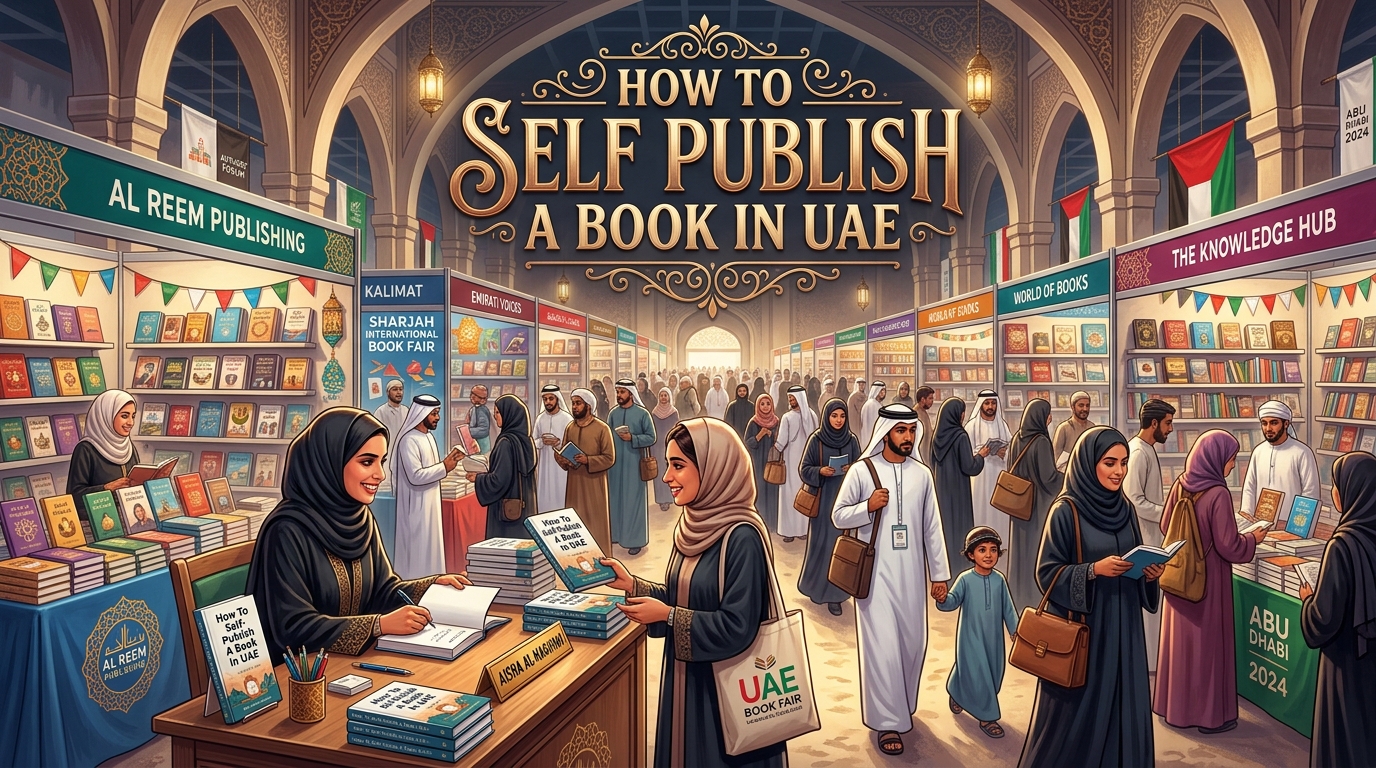
The publishing industry in the United Arab Emirates has evolved rapidly over the last decade. What was once a traditional, publisher-controlled market has now opened its doors to independent authors, entrepreneurs, educators, business professionals, and storytellers who want complete creative control over their work. Self-publishing in the UAE is no longer viewed as an alternative route for writers who could not secure a traditional publisher. Instead, it has become a respected and profitable publishing path for authors who want ownership, flexibility, and faster access to readers.
The rise of digital publishing platforms, print-on-demand services, online bookstores, and government-backed cultural initiatives has transformed the UAE into one of the most promising publishing hubs in the Middle East. Cities like Dubai and Abu Dhabi are actively investing in literature, media, and creative industries, which has created new opportunities for independent authors. Whether you are writing fiction, business books, children’s stories, poetry, memoirs, or educational material, the UAE offers a supportive environment for self-publishing.
At the same time, self-publishing in the UAE comes with its own structure, regulations, and expectations. Writers must understand ISBN registration, copyright protection, printing permits, formatting standards, distribution channels, and marketing strategies before launching their books successfully. Many first-time authors underestimate how much planning goes into publishing a professional-quality book. Writing the manuscript is only one part of the process. Editing, design, licensing, production, and promotion all determine whether a self-published book succeeds or disappears unnoticed.
This guide explores the complete process of self-publishing a book in the UAE. It explains the legal requirements, practical publishing steps, costs, distribution options, and marketing strategies that modern authors need to understand before releasing their work.
Understanding The Self-Publishing Landscape In UAE
The UAE publishing industry has experienced substantial growth due to rising literacy initiatives, international book fairs, and increased investment in cultural development. Events such as the Abu Dhabi International Book Fair and the Sharjah International Book Fair have turned the country into a major publishing destination in the Arab world. These literary events attract publishers, literary agents, authors, translators, and readers from around the globe.
This expanding literary ecosystem has made self-publishing far more accessible than it was years ago. Independent writers no longer need to rely entirely on large publishing houses to print and distribute their work. Digital technology now allows authors to publish eBooks globally while also offering printed editions through local and international platforms.
One important aspect of publishing in the UAE is understanding that the country has specific regulations related to media content, ISBN registration, and publishing permissions. Authors planning to publish locally should follow the official procedures carefully to ensure their books comply with UAE regulations. The UAE National Library and Archives states that ISBN registration is mandatory for publications in the country, and separate ISBNs are required for each book format such as paperback, hardcover, and eBook.
Self-publishing has also become particularly attractive in the UAE because of the region’s multicultural audience. Books written in English and Arabic both have strong potential markets. In addition, educational books, motivational titles, and business-related content perform especially well because of the UAE’s entrepreneurial environment.
Why More Authors Are Choosing Self-Publishing In UAE
Many writers are now choosing self-publishing because traditional publishing can be slow and highly selective. Authors may wait months for manuscript reviews, contract negotiations, editing cycles, and publication approvals. Even after acceptance, writers often lose significant creative control over their books.
Self-publishing changes that dynamic entirely. Authors maintain ownership of their manuscript, retain creative authority, and control pricing, cover design, distribution, and marketing decisions. This independence appeals strongly to modern writers who want flexibility and faster publication timelines.
Financially, self-publishing can also offer higher royalty percentages compared to traditional publishing. Platforms such as Amazon Kindle Direct Publishing allow authors to earn significantly more per sale than standard publishing contracts typically provide.
Another reason self-publishing has grown in the UAE is the increasing popularity of personal branding. Entrepreneurs, consultants, coaches, educators, and professionals frequently publish books to establish authority in their industries. In Dubai especially, books are often used as branding tools that support speaking engagements, consulting services, and business growth.
Writing A Book With The UAE Market In Mind
Before publishing begins, writers should think carefully about their audience. Understanding the UAE readership can help shape the tone, structure, and positioning of a book.
The UAE is home to a highly international population. Readers come from diverse cultural, linguistic, and professional backgrounds. Because of this, books that focus on universal themes often perform well. Topics related to entrepreneurship, leadership, self-development, finance, and multicultural experiences tend to attract attention.
Authors should also consider language accessibility. English-language books have a large audience due to the UAE’s expatriate population, while Arabic-language publishing remains deeply important culturally and commercially.
Writers creating content related to religion, politics, or sensitive social issues should be especially cautious and aware of local media regulations. Content standards in the UAE differ from some Western publishing markets, so reviewing regulations beforehand is essential.
The Importance Of Professional Editing
One of the biggest mistakes first-time self-published authors make is skipping professional editing. Readers immediately notice poor grammar, weak structure, inconsistent formatting, and spelling mistakes. A poorly edited book damages credibility regardless of how strong the core idea may be.
Professional editing generally happens in several stages. Developmental editing focuses on structure, pacing, and overall content quality. Copyediting improves language clarity and consistency. Proofreading eliminates final grammar and formatting errors before publication.
In the UAE’s increasingly competitive publishing environment, professionally edited books stand out dramatically. Readers expect quality, especially when purchasing books online where reviews influence buying decisions heavily.
Many authors in the UAE hire freelance editors remotely or work with local editorial agencies. While editing increases upfront costs, it significantly improves the book’s professional value and marketability.
Designing A Professional Book Cover
Book cover design plays an enormous role in publishing success. Readers judge books visually before they ever read a description or sample chapter. In online marketplaces, the cover functions as the book’s primary advertisement.
A professionally designed cover should immediately communicate genre, tone, and quality. Business books require a different visual approach than novels or children’s literature. Typography, imagery, and layout all influence reader perception.
The UAE publishing market is visually sophisticated, particularly because of Dubai’s strong branding culture. Authors should avoid generic templates whenever possible and invest in original cover design that aligns with industry standards.
Interior formatting also matters. Proper spacing, chapter organization, margins, and typography contribute to readability and professionalism. A clean reading experience improves reader satisfaction and review potential.
ISBN Registration In UAE
An ISBN, or International Standard Book Number, is one of the most important parts of publishing. It acts as a unique identifier for books and is required for commercial distribution.
In the UAE, ISBN registration is managed through the UAE National Library and Archives. The organization states that ISBN usage is legally required for publications distributed within the country. Each version of a book requires its own ISBN, meaning paperback, hardcover, audiobook, and eBook editions must all have separate identifiers.
The UAE National Library also notes that ISBN assignment is free for publishers and authors located in the UAE. Applications are submitted through the official ISBN UAE system, and approved registrations are generally processed within several working days.
The ISBN should appear clearly on the copyright page and back cover of the book. Once assigned, the ISBN cannot be reused or modified for another publication.
The table below explains the major publishing identifiers and permissions authors commonly encounter in the UAE.
| Publishing Requirement | Purpose | Why It Matters |
| ISBN | Identifies the book commercially | Required for retail distribution |
| Copyright Registration | Protects intellectual property | Establishes ownership rights |
| Printing Permit | Approves publication for circulation | Important for legal distribution |
| Book Formatting | Prepares manuscript for print/digital release | Improves professionalism |
| Metadata Submission | Helps bookstores and platforms categorize books | Improves discoverability |
Copyright Protection For UAE Authors
Many first-time writers worry about book theft or plagiarism. Copyright protection is therefore a major concern during the publishing process.
In the UAE, intellectual property rights are managed through official government systems. Copyright registration helps establish legal ownership of original written work. According to the Emirates Publishers Association, authors can register intellectual works through the UAE Ministry of Economy.
Although copyright technically exists automatically once an original work is created, formal registration provides stronger legal evidence in disputes. This is especially important for authors publishing commercially.
Writers should also maintain clear records of drafts, contracts, editing files, and publication dates. Proper documentation strengthens intellectual property claims if conflicts arise later.
Choosing Between Print And Digital Publishing
Modern authors in the UAE often choose between print publishing, digital publishing, or a hybrid approach combining both.
eBooks offer affordability and global accessibility. Platforms like Amazon Kindle allow UAE authors to reach international audiences instantly. Digital publishing eliminates printing costs and simplifies updates or revisions.
Print books, however, still hold substantial value in the UAE market. Readers continue to appreciate physical books, especially at literary events, conferences, and book fairs. Print editions also increase perceived authority for business authors and professionals.
Print-on-demand technology has made physical publishing easier and less risky. Instead of ordering thousands of copies upfront, authors can print books only when customers place orders. This reduces inventory costs dramatically.
Many successful UAE authors now combine eBook publishing with print-on-demand paperbacks to maximize reach and profitability.
Publishing Platforms Popular In UAE
Authors in the UAE have access to numerous publishing platforms. Amazon Kindle Direct Publishing remains one of the most widely used options because it supports both digital and paperback publishing.
Other international platforms such as IngramSpark also provide broad global distribution. These services allow books to appear in online bookstores, libraries, and retail systems worldwide.
Some UAE-based publishing support companies also assist authors with editing, formatting, design, ISBN registration, and marketing. These services are especially useful for first-time writers unfamiliar with publishing workflows.
However, authors should carefully research publishing companies before signing agreements. Some vanity publishers charge high fees while offering limited distribution or marketing value.
Printing A Book In UAE
Printing quality significantly affects reader perception. Cheap printing can ruin even a well-written book through poor paper quality, weak binding, faded colors, or formatting problems.
The UAE has numerous professional printing companies capable of producing high-quality books. Dubai and Sharjah especially have strong commercial printing industries due to the region’s publishing activity.
Authors should request physical samples before approving large print runs. Testing paper quality, cover finish, color accuracy, and binding durability helps avoid expensive production mistakes.
Many first-time authors choose smaller print quantities initially to test market demand before investing in larger inventory orders.
Book Distribution In UAE
Publishing a book is only half the challenge. Distribution determines whether readers can actually find and purchase it.
Online distribution is now the most accessible route for independent authors. Amazon, Apple Books, Google Play Books, and Kobo allow UAE writers to sell internationally with relatively low barriers.
Local distribution can be more challenging. Physical bookstores often prefer established publishers because of inventory and return policies. However, independent authors can still succeed by networking directly with bookstores, attending literary events, and leveraging local partnerships.
Book fairs in the UAE also provide valuable exposure opportunities. Events such as the Sharjah International Book Fair attract massive audiences and allow authors to interact directly with readers.
Marketing A Self-Published Book In UAE
Marketing is where many self-published books fail. Writing and publishing a book does not automatically generate readers. Visibility requires consistent promotion and strategic branding.
Social media plays a central role in UAE book marketing. Instagram, TikTok, LinkedIn, and YouTube are especially powerful for authors building personal brands. Business authors often perform well on LinkedIn, while fiction writers frequently gain traction through BookTok communities.
Authors should also invest in author websites, email newsletters, podcast interviews, and collaborations with influencers or literary communities.
In the UAE, networking remains extremely important. Attending book fairs, cultural events, business conferences, and literary gatherings can significantly increase visibility.
Professional photography, branded promotional materials, and strong online presentation also matter because the UAE market places heavy emphasis on presentation and image quality.
Understanding Publishing Costs
One misconception about self-publishing is that it is completely free. While digital platforms reduce costs substantially, professional publishing still requires financial investment.
Editing, cover design, formatting, marketing, ISBN management, printing, and advertising all contribute to overall expenses. Authors can publish on very small budgets, but cutting corners often damages long-term success.
The actual cost depends heavily on the book’s complexity and quality expectations. A professionally produced business book generally costs more than a simple eBook release because of editing depth, design quality, and marketing requirements.
Writers should approach self-publishing as a professional investment rather than a hobby expense.
Common Mistakes First-Time UAE Authors Make
Many new authors rush through the publishing process too quickly. They focus heavily on finishing the manuscript but neglect editing, branding, or marketing preparation.
Another common mistake is ignoring local regulations. Publishing without proper ISBN registration or distribution permissions can create legal complications.
Poor cover design also harms many self-published books. Readers often assume amateur covers reflect amateur writing quality.
Some writers also overprint physical copies without realistic sales planning. Print-on-demand services are usually safer for first-time publishers because they reduce inventory risk.
Finally, many authors underestimate how long marketing takes. Successful book promotion often requires months of consistent effort before significant visibility develops.
The Future Of Self-Publishing In UAE
The future of self-publishing in the UAE looks increasingly promising. Government initiatives supporting literacy, publishing, and creative industries continue expanding. International book fairs are growing larger every year, and digital publishing technologies are making distribution easier for independent writers.
The UAE’s multicultural population also creates unique opportunities for bilingual publishing, international storytelling, and niche educational content.
Artificial intelligence, audiobook growth, and online learning trends are further reshaping the publishing industry. Authors who adapt to digital consumption habits while maintaining professional publishing standards are likely to thrive.
Independent publishing is no longer considered a secondary option. In many cases, self-published authors now achieve levels of visibility and profitability once reserved only for traditionally published writers.
Final Thoughts
Self-publishing a book in the UAE requires far more than simply uploading a manuscript online. It involves careful planning, professional editing, legal compliance, strategic branding, and ongoing marketing. Authors who approach publishing professionally are far more likely to build credibility, attract readers, and generate meaningful book sales.
The UAE offers a strong environment for independent publishing because of its growing literary culture, international audience, and expanding creative economy. Writers now have access to global distribution systems, advanced printing technology, and powerful marketing tools that make independent publishing more achievable than ever before.
For aspiring authors, the most important step is not perfection but commitment. Every successful self-published author started with an unfinished manuscript and uncertainty about the process. The difference between unpublished ideas and published books is the willingness to move forward consistently, learn the industry, and invest in quality at every stage.
With the right preparation, strategy, and professionalism, self-publishing in the UAE can become more than a creative milestone. It can evolve into a lasting author career, a business opportunity, or a platform that amplifies ideas to readers across the world.