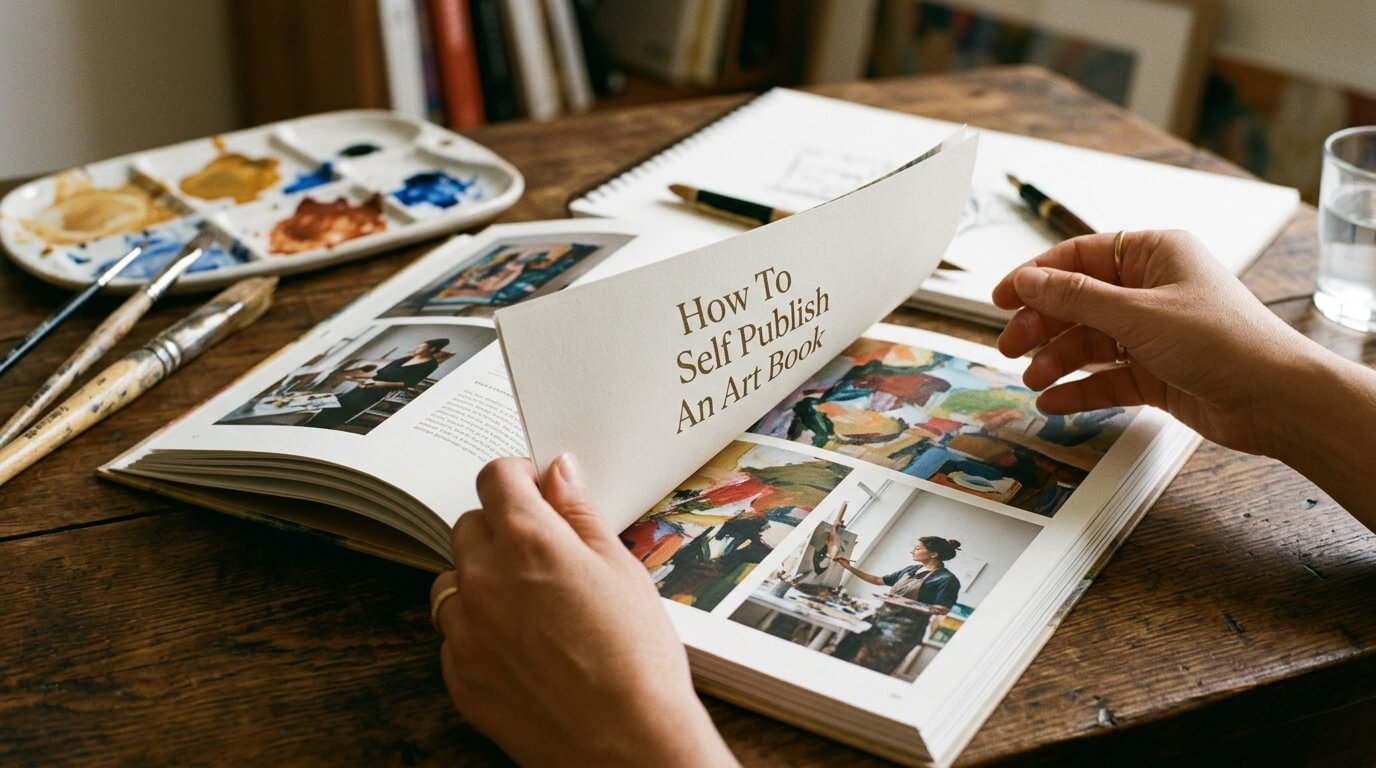
Self-publishing an art book is one of the most fulfilling yet technically demanding creative journeys an artist can undertake. Unlike standard publishing, where text often drives structure, an art book is built from visual rhythm, material choices, and emotional sequencing. It sits somewhere between a gallery exhibition and a printed object, meaning every decision—from image selection to paper texture—becomes part of the artwork itself.
In today’s creative landscape, artists no longer need traditional publishers to bring their visual work into the world. With accessible printing technology, design software, and global distribution platforms, independent publishing has become a powerful way for artists to retain full creative control. However, freedom also comes with responsibility. A self-published art book demands planning, discipline, and an understanding of both artistic and production systems.
This guide explores the complete process in depth, from concept to distribution, helping you understand not just how to make an art book, but how to make one that feels intentional, professional, and emotionally impactful.
What Makes an Art Book Different from Other Books
An art book is not simply a collection of images placed into a printed format. It is a curated experience where each page contributes to a larger visual and emotional structure. The reader is not just consuming content but moving through a designed journey shaped by pacing, contrast, and visual silence.
Unlike narrative books, where meaning unfolds through language, art books rely on composition and sequencing. A single image might hold meaning on its own, but its true impact is often shaped by what comes before and after it. This is why successful art books often feel cinematic in structure, even without words.
An art book also carries physical presence. The weight of the paper, the texture of the cover, and the scale of the pages all influence interpretation. This makes it a hybrid form of storytelling where visual art, editorial design, and physical craftsmanship meet.
Building a Clear Creative Direction Before You Start
Before any design or printing begins, the most important step is establishing a clear creative direction. This direction acts as the foundation for every decision that follows. Without it, an art book can easily become a disconnected collection of images rather than a cohesive experience.
At this stage, you are defining the emotional core of the book. It might revolve around a long-term project, a personal transformation, a visual experiment, or a specific aesthetic exploration. The direction does not need to be overly intellectual, but it should be specific enough to guide your choices later.
Many artists also begin identifying the audience they are speaking to. A gallery collector expects something different from a casual viewer or an academic reader. These expectations influence everything from layout density to printing quality. Understanding your audience early prevents costly redesigns later in the process.
The Deep Process of Curating Your Work
Curation is where your art book truly begins to take shape. This is often the most emotionally challenging stage because it requires distance from your own work. You are no longer just the creator but also the editor.
Most artists discover that only a fraction of their work actually contributes to a strong visual narrative. Some pieces may be technically strong but disrupt flow. Others may be emotionally significant but visually inconsistent with the rest of the collection. The goal is not to include everything, but to create rhythm and cohesion.
This stage often involves multiple rounds of selection. The first round is intuitive, where you choose pieces that immediately feel connected. The second round is analytical, where you assess visual balance, repetition, and contrast. The final selection is about flow, ensuring that the book moves like a visual conversation rather than a static archive.
Structuring Visual Rhythm and Page Flow
Once your selection is complete, structuring the flow becomes essential. This is where your art book transforms from a collection into a designed experience. Flow refers to how the viewer’s eye moves through the pages, how tension builds and releases, and how silence is used as part of composition.
Some pages may be intentionally dense, filled with detail that demands attention. Others may be minimal, allowing space for reflection. This contrast is what creates rhythm. Without it, even strong artwork can feel visually overwhelming.
Spreads, or two-page layouts, are especially important in art books. They allow for larger compositions and help establish pacing. Meanwhile, single-page images can create moments of focus or interruption, depending on how they are used. Typography, if included, should never dominate the visual experience. Instead, it should act as a supporting layer that quietly guides interpretation without breaking immersion.
Choosing Formats, Materials, and Physical Experience
The physicality of an art book is one of its most defining features. Unlike digital portfolios, a printed book has texture, weight, and presence. These qualities shape how the viewer emotionally connects with the work.
Size is one of the first decisions. Large-format books create immersive, gallery-like experiences where images feel expansive. Smaller formats feel intimate, encouraging closer reading and personal engagement. Neither is better; each serves a different emotional purpose.
Paper selection is equally important. Glossy paper enhances sharpness and color vibrancy, making it ideal for photography or digital artwork. Matte paper, on the other hand, softens contrast and creates a more organic, gallery-print feel. Textured paper can add depth, especially for illustration or mixed media work.
Binding methods also influence perception. Hardcover books feel archival and collectible. Softcover books are more accessible and flexible. Lay-flat binding is often used when images need uninterrupted visibility across spreads.
Editing, Design Software, and Production Workflow
Once your structure is clear, the technical design phase begins. This is where your art book is translated into a print-ready file. Professional artists often use tools such as Adobe InDesign or Affinity Publisher because they offer precise control over layout, spacing, and export settings.
The editing workflow usually starts with rough placement. At this stage, the focus is not perfection but structure. Images are placed in sequence, and pacing is tested visually. Once the flow feels stable, refinement begins, including alignment, margins, and spacing adjustments.
Color management becomes critical in this stage. Screens display images differently than printed paper, which means calibration is necessary. Working in CMYK mode, rather than RGB, helps ensure that printed colors match expectations more closely. Many artists also request test prints before final production to avoid unexpected shifts.
Understanding Print Specifications and Technical Requirements
Print preparation is one of the most overlooked but essential parts of self-publishing. Without proper technical setup, even strong artwork can lose quality in print. Resolution is a key factor. Images typically need to be prepared at 300 DPI to ensure clarity. Lower resolutions may appear fine on screen but become pixelated in print.
Bleed is another important concept. This refers to extra space beyond the page edges that prevents unwanted white borders after trimming. Most printers require consistent bleed settings to ensure clean results. Color profiles, margins, and file formats all contribute to final print quality. These details may seem technical, but they directly affect how professional your book looks when printed.
Working With Printers and Understanding Production Options
Choosing the right printing partner can significantly influence your final product. Print-on-demand services offer accessibility and flexibility, making them ideal for early-stage or experimental books. They allow you to print without large upfront costs and test different versions of your work.
Offset printing, however, is often preferred for high-quality or limited-edition art books. It requires a larger initial investment but delivers superior color accuracy, paper variety, and professional finishing options. Many artists begin with small digital runs to test audience response before moving into offset production for final editions. This phased approach reduces risk while allowing creative flexibility.
Budgeting and Cost Planning for an Art Book
Budgeting plays a major role in determining the scale and quality of your art book. Costs typically include design software, printing, proofing, distribution, and marketing. Printing often represents the largest expense, especially for high-quality materials or hardcover formats. Limited print runs tend to be more expensive per unit, while larger runs reduce cost but increase upfront investment.
Design costs vary depending on whether you work independently or hire a professional designer. Many artists choose a hybrid approach, handling initial layout themselves and outsourcing final refinement. Understanding your financial limits early helps shape realistic expectations and prevents production delays.
Cost Breakdown Overview Table
| Stage of Production | What It Includes | Typical Cost Impact | Notes |
| Design & Layout | Software, designer work, editing time | Medium | Depends on complexity |
| Printing | Paper, binding, production method | High | Largest cost factor |
| Proofing | Sample prints and revisions | Low to Medium | Essential for quality control |
| Distribution | Shipping, platform fees | Medium | Varies by region |
| Marketing | Promotion, launch, visuals | Low to Medium | Often self-managed |
This structure helps artists understand how resources are distributed throughout the publishing process and where adjustments can be made based on budget constraints.
Proofing and Final Quality Control
Before final printing, proofing is essential. A proof is a test version of your book that allows you to check color accuracy, layout consistency, and material feel. This step helps identify issues that may not be visible on screen. Many artists go through multiple proof rounds before approving final production. This is especially important for color-sensitive work such as photography or digital illustration.
Proofing is not just technical; it is also emotional. Seeing your work in physical form for the first time often reveals new insights about pacing, composition, and overall impact.
Pricing Your Art Book and Understanding Value
Pricing an art book is both a practical and strategic decision. It must account for production costs while also reflecting artistic value. Limited edition books often carry higher pricing due to exclusivity, while open editions are priced more accessibly to reach a wider audience.
Artists often underestimate the perceived value of physical art books. Unlike mass-market books, art books are often seen as collectible objects, which allows for more flexible pricing strategies.
Balancing affordability with sustainability is key. Pricing too low can undervalue the work, while pricing too high may limit accessibility.
Distribution Strategies for Independent Artists
Distribution determines how your audience interacts with your work. Some artists choose direct-to-consumer models through personal websites or social platforms, allowing full control over pricing and presentation.
Others collaborate with galleries, bookstores, or online retailers to reach wider audiences. Each distribution method comes with trade-offs between control, visibility, and profit margin.
Limited releases are also common in art publishing. By producing a fixed number of copies, artists create exclusivity and increase demand.
Marketing Without Compromising Artistic Integrity
Marketing an art book should feel like an extension of the creative process rather than a separate commercial activity. Instead of focusing on aggressive promotion, many artists share behind-the-scenes insights, process images, and conceptual explanations.
Social platforms become visual storytelling spaces where audiences connect with the evolution of the work. This builds emotional engagement rather than transactional interest.
Exhibitions, pop-up displays, and collaborative events are also powerful ways to introduce an art book to audiences in an immersive environment.
Common Mistakes Artists Make During Self-Publishing
Many first-time publishers face similar challenges. One of the most common is overloading the book with too much content, which weakens visual impact. Another is underestimating technical print requirements, leading to color or alignment issues.
Budget mismanagement is also frequent, especially when production costs exceed expectations. Additionally, many artists rush the design phase without enough proofing, resulting in avoidable errors.
Understanding these pitfalls early allows for smoother production and higher-quality outcomes.
Final Thoughts
Self-publishing an art book is a deeply personal and highly technical journey. It requires balancing creativity with structure, intuition with precision, and artistic vision with production realities. When done thoughtfully, it transforms your work into a physical object that carries emotional and aesthetic weight far beyond digital presentation.
An art book is not just something you make. It is something you construct, refine, and ultimately experience. And in that process, you do not only publish your art—you define how it lives in the world.
FAQs
Q1. Do I need a publisher to create an art book?
No, you don’t need a traditional publisher. Many artists today self-publish using print-on-demand services or independent printing studios. This allows full creative control over layout, paper choice, and design while also giving you ownership of the final product.
Q2. What is the best printing method for an art book?
It depends on your goals and budget. Print-on-demand is best for beginners or small runs because it has low upfront cost and flexible quantities. Offset printing is better for high-quality, professional editions with larger print runs, offering superior color accuracy and material options.
Q3. How many pages should an art book have?
There is no fixed rule, but most art books range from 40 to 200 pages. The ideal length depends on your concept and visual rhythm. The focus should be on storytelling and flow rather than filling pages unnecessarily.
Q4. How do I price my self-published art book?
Pricing depends on production cost, edition size, and perceived artistic value. Limited edition art books are usually priced higher due to exclusivity. You should always calculate printing and distribution costs first, then add a margin that reflects your creative work.
Q5. Can I sell my art book internationally?
Yes, you can sell your art book globally using online platforms, personal websites, or international print-on-demand services. However, you should consider shipping costs, taxes, and delivery times when planning international distribution.