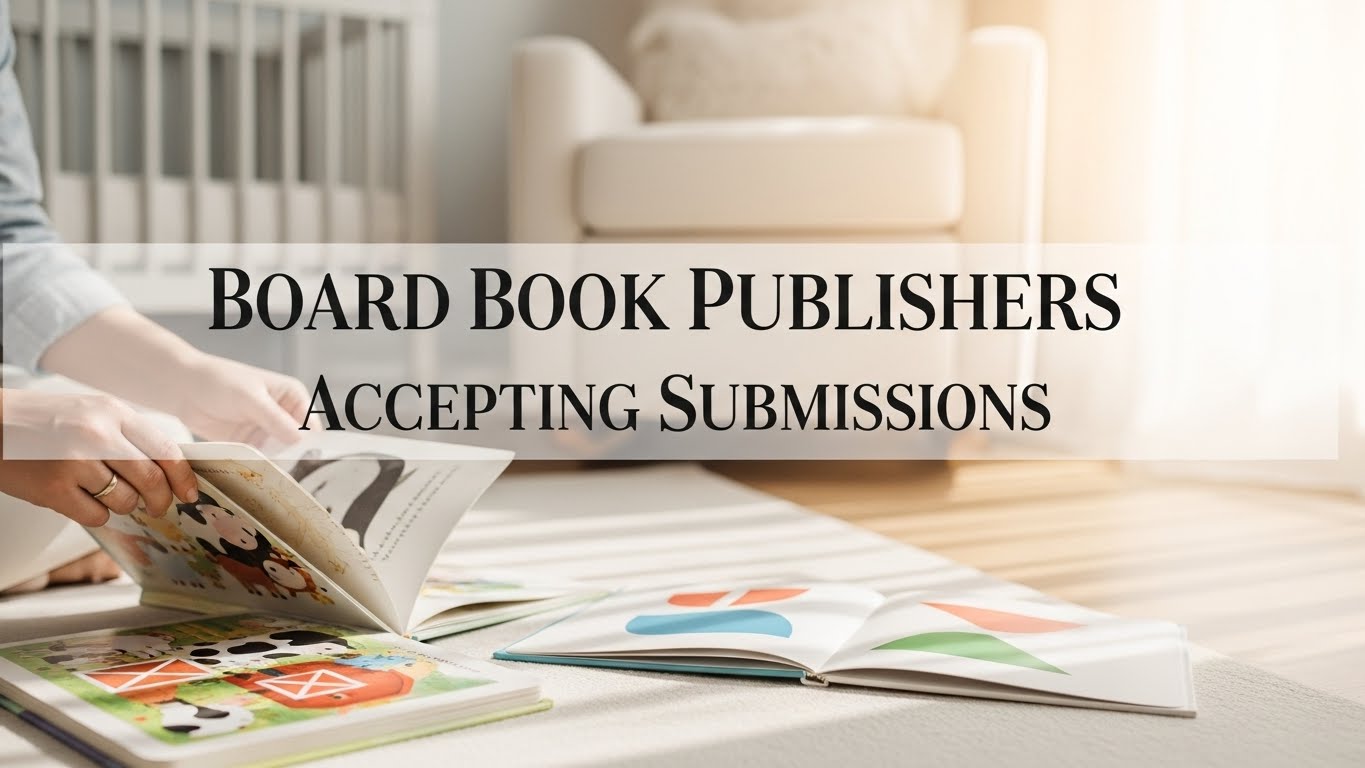
Board books are often a child’s first introduction to reading. These sturdy, colorful books are designed specifically for babies and toddlers who are just beginning to explore the world through touch, sound, and images. Because board books are meant to be handled roughly—chewed, dropped, and reread countless times—their creation and publishing process is very different from other children’s books.
For writers and illustrators interested in early childhood publishing, understanding board book publishers accepting submissions is an important step. This guide explains what board books are, what publishers look for, and which well-known publishers are open to board book ideas, while keeping expectations realistic and professional.
What Is a Board Book?
A board book is a book made with thick cardboard pages rather than traditional paper. These books are specifically designed for children between birth and three years old, making durability and simplicity essential.
Key Characteristics of Board Books:
- Thick, rigid pages that resist tearing
- Rounded corners for safety
- Short length, usually 10–20 pages
- Minimal text with strong visual storytelling
Board books often focus on basic concepts rather than full stories. Topics may include animals, first words, colors, numbers, emotions, daily routines, or familiar objects. Because babies and toddlers are still developing language skills, board books rely heavily on repetition, rhythm, and clear imagery.
Why Board Book Publishing Is Unique
Publishing board books is very different from publishing picture books or middle-grade titles. The production costs are higher, and the target audience is much younger.
What Makes Board Books Different:
- Printing is more expensive due to thick materials
- Books must meet safety standards for infants
- Content must appeal to both children and caregivers
- Word counts are extremely limited
Because of these factors, publishers are cautious when selecting board book manuscripts. However, they are always searching for strong, marketable concepts that can connect emotionally with families and encourage early learning.
What Board Book Publishers Look For
Understanding what publishers want can significantly improve your chances of success.
1. Clear, Simple Concepts
Board books must communicate ideas quickly and clearly. A publisher should be able to understand the entire book concept within seconds. If an idea requires explanation, it is usually too complex for a board book.
2. Market Awareness
Editors want concepts that fit into the current market while still offering something new. Familiar themes are welcome, but they must feel fresh, relevant, or emotionally engaging.
3. Rhythm and Repetition
Repetitive language helps children learn words and anticipate patterns. Board books often use predictable phrasing that encourages participation.
4. Visual Thinking
Publishers expect authors to think visually. The text should leave room for illustrations to communicate meaning without being overly descriptive.
Board Book Publishers Accepting Submissions
Below are reputable publishers known for producing board books and showing openness to reviewing new ideas, either directly or through agents.
1. Chronicle Books
Chronicle Books is widely admired for its visually appealing children’s titles, including high-quality board books.
What They Prefer:
- Strong emphasis on design and illustration
- Interest in concept-driven board books
- Openness to debut authors and illustrators
They favor books that feel modern, playful, and emotionally engaging while remaining simple enough for very young readers.
2. Candlewick Press
Candlewick Press is known for thoughtful, well-crafted children’s books, including board books with emotional depth.
What They Prefer:
- Gentle, reassuring content
- Clear pacing suitable for read-alouds
- Books that support early development
Candlewick values quality storytelling even at the simplest level, making them a strong option for carefully written board book concepts.
3. Nosy Crow
Nosy Crow has earned a reputation for producing interactive and innovative board books for toddlers.
What They Prefer:
- Lift-the-flap or novelty-style concepts
- Interactive language that invites participation
- Bright, energetic themes
Their board books often encourage curiosity and hands-on exploration.
4. Penguin Random House (Children’s Division)
Penguin Random House publishes board books through several children’s imprints.
What They Prefer:
- Strong global distribution
- Experience with bestselling board books
- Interest in universal early-learning themes
Many submissions are agented, but they remain influential in the board book market.
5. HarperCollins Children’s Books
HarperCollins produces a wide range of board books, including original concepts and branded titles.
What They Prefer:
- Commercially strong ideas
- Familiar and comforting topics
- Series and gift-book potential
They look for ideas that can grow beyond a single title.
6. Sourcebooks Jabberwocky
Sourcebooks Jabberwocky focuses on modern, relationship-driven children’s books.
What They Prefer:
- Emotion-based board books
- Contemporary family experiences
- Strong parent-child connection
They are known for supporting new voices with meaningful ideas.
7. Barefoot Books
Barefoot Books emphasizes education, rhythm, and global perspectives.
What They Prefer:
- Musical or rhythmic text
- Inclusive and multicultural themes
- Gentle educational concepts
Their board books often feel timeless and warm.
8. Quarto Kids
Quarto Kids is a visually driven publisher known for educational and novelty formats.
What They Prefer:
- Strong design-focused concepts
- Early STEM or learning topics
- Visual storytelling
They value books that combine learning with visual appeal.
9. Abrams Appleseed
Abrams Appleseed is dedicated entirely to board books and early childhood content.
What They Prefer:
- High-concept, giftable ideas
- Clean, modern visuals
- Strong shelf presence
They are selective but open to unique board book concepts.
10. Hachette Book Group (Children’s Imprints)
Hachette publishes board books through multiple imprints focused on early learning.
What They Prefer:
- Everyday toddler experiences
- Emotional reassurance
- Series-ready ideas
Their editorial teams help refine manuscripts carefully.
How to Prepare a Board Book Submission
Submitting a board book requires careful planning.
1. Perfect the Concept
Your idea should be simple enough to explain in one sentence. If it sounds complicated, refine it.
2. Keep the Word Count Low
Most board books contain very few words, often under 200. Less is usually more.
3. Write With Read-Aloud Flow
Parents will read these books repeatedly. The language should feel natural and pleasant.
4. Avoid Over-Directing Illustrations
Allow room for illustrators to interpret the story visually.
Common Mistakes to Avoid
Many submissions are rejected due to avoidable issues.
- Too much text
- Overly educational or preachy tone
- Abstract concepts toddlers can’t grasp
- Ignoring the adult reader’s experience
Successful board books feel joyful, intuitive, and emotionally safe.
Should You Have an Agent?
While not required, an agent can be helpful when submitting to large publishers. Smaller presses may accept direct submissions, especially from illustrators.
Final Thoughts
Board books may appear simple, but they require careful thought, creativity, and understanding of early childhood development. Publishers are always searching for strong, simple ideas that support learning, comfort, and joy during a child’s earliest years.
If you have a clear concept, engaging language, and patience for the submission process, board book publishing can be a rewarding path. With the right preparation and research, your idea could become a treasured part of a child’s first reading experiences.
FAQs
Q- How can I make my board book popular?
Focus on a simple concept, engaging illustrations, and repetitive text that parents enjoy reading aloud.
Q- Do board book publishers accept first-time authors?
Yes, many board book publishers are open to debut authors with strong, market-ready ideas.
Q- What word count is ideal for a board book?
Most successful board books contain between 50 and 200 words.
Q- Do I need illustrations before submitting a board book?
No, most publishers prefer text-only submissions unless you are a professional illustrator.
Q- Are board books better as series or standalone titles?
Both work, but publishers often favor ideas with series potential.
Disclaimer: Barnett Ghostwriting shares publisher listings for informational purposes only. We are not partnered with any of the publishers mentioned, and we do not guarantee anything related to submissions, acceptance, or publication. Our expertise lies in professional writing, editing, and book promotion services that help authors present their work effectively.