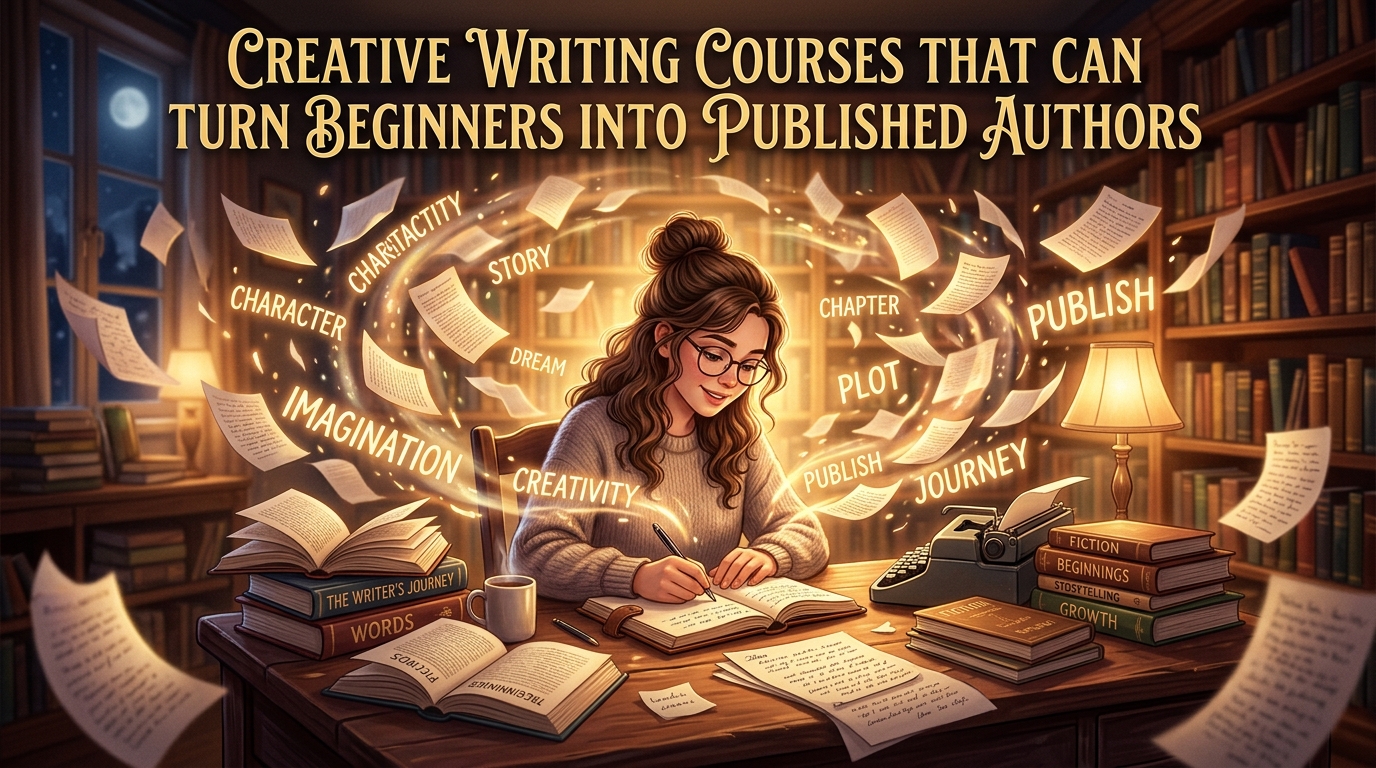
There is a quiet transformation that happens when someone decides to take writing seriously. It often begins with scattered ideas, unfinished drafts, and a persistent feeling that something meaningful is trying to take shape but never quite lands. For beginners, the gap between imagination and execution can feel overwhelming. This is where creative writing courses step in, not as rigid classrooms, but as structured environments where raw instinct is refined into craft.
In 2026, the landscape of creative education has evolved significantly. Writing courses are no longer confined to traditional institutions. They exist across digital platforms, hybrid workshops, and mentorship-driven programs that connect aspiring writers with published authors and industry professionals. These courses are not simply about learning grammar or plot structure. They are about understanding voice, mastering narrative flow, and developing the discipline required to complete and publish a piece of work.
The idea that a beginner can become a published author is no longer idealistic. It is practical, achievable, and increasingly common. What bridges that gap is not just talent, but guided learning, consistent feedback, and exposure to real publishing pathways. This blog explores how creative writing courses are shaping that journey and which programs truly have the power to transform beginners into confident, publishable writers.
The Shift from Hobby Writing to Professional Craft
Writing often starts as a personal habit. People journal, draft stories, or experiment with poetry without any formal structure. While this phase is essential, it rarely leads to publication on its own. The transition from hobby writing to professional-level storytelling requires an understanding of narrative mechanics.
Creative writing courses introduce this structure without suffocating creativity. They teach pacing, character development, dialogue authenticity, and thematic depth in a way that feels organic rather than forced. Beginners begin to see their work differently. Instead of writing what feels right in the moment, they start writing with intention, shaping stories that resonate with readers rather than just expressing personal thoughts.
Another critical shift is accountability. Courses provide deadlines, peer reviews, and instructor feedback. This transforms writing from a sporadic activity into a disciplined practice. Over time, this consistency becomes the foundation for producing work that meets publishing standards.
Why Creative Writing Courses Matter More Than Ever
The modern publishing world is both more accessible and more competitive. Self-publishing platforms have opened doors, but they have also raised expectations. Readers now demand quality regardless of how a book is published. This means beginners must develop strong storytelling skills early in their journey.
Creative writing courses act as a filter and a foundation. They help writers avoid common pitfalls such as weak openings, inconsistent tone, and underdeveloped characters. More importantly, they expose writers to diverse styles and genres, encouraging experimentation and growth.
Another key factor is industry insight. Many courses now include modules on publishing, literary agents, and manuscript submission. This knowledge demystifies the process and empowers writers to take actionable steps toward publication rather than feeling lost in a complex system.
Online Platforms That Are Redefining Writing Education
Digital platforms have revolutionized how creative writing is taught. They offer flexibility, accessibility, and exposure to global instructors. Platforms like Coursera and MasterClass provide courses taught by established authors who share not only techniques but also personal insights into their creative processes.
On Coursera, university-backed programs allow beginners to learn storytelling fundamentals while receiving structured assignments. These courses often include peer-reviewed work, which helps writers understand how their stories are perceived by real readers.
Meanwhile, MasterClass offers a different experience. Courses taught by renowned writers focus on inspiration, mindset, and storytelling philosophy. While they may not always include direct feedback, they provide invaluable perspective on what it takes to succeed as an author.
Another platform worth noting is Skillshare, which emphasizes short, practical lessons. These courses are ideal for beginners who want to build specific skills such as dialogue writing, character arcs, or world-building without committing to long programs.
University-Led Programs and Their Lasting Impact
Despite the rise of online learning, university-led creative writing programs continue to hold significant value. Institutions like University of Iowa Writers’ Workshop have long been associated with producing successful authors. These programs offer an immersive experience where writing becomes a daily practice rather than a side activity.
What sets university courses apart is depth. They focus not only on writing techniques but also on literary analysis, encouraging students to study existing works and understand what makes them effective. This analytical approach sharpens a writer’s ability to critique their own work.
However, these programs require time, financial investment, and often a competitive application process. For beginners, they may not always be the first step, but they represent a powerful pathway for those committed to pursuing writing at a professional level.
Mentorship-Based Courses: Learning Directly from Authors
One of the most transformative forms of learning comes from mentorship. Courses that connect beginners with published authors create an environment where feedback is not generic but deeply personalized.
Programs offered by platforms like The Novelry focus heavily on mentorship. Writers receive guidance on their manuscripts, helping them refine their voice and structure in ways that general courses cannot achieve. This level of attention accelerates growth and often leads to work that is publication-ready.
Mentorship also provides emotional support. Writing can be an isolating process, and having an experienced guide helps writers navigate self-doubt and creative blocks. This psychological aspect is often overlooked but plays a crucial role in long-term success.
The Role of Workshops and Peer Feedback
Workshops are a core component of many creative writing courses. They create a collaborative environment where writers share their work and receive feedback from peers. This process is both challenging and enlightening.
For beginners, hearing how others interpret their writing can be eye-opening. It reveals strengths that may not have been obvious and highlights areas that need improvement. Over time, writers learn to detach from their work emotionally and approach it with a critical mindset.
Workshops also foster a sense of community. Writers connect with others who share similar goals, creating networks that often extend beyond the course itself. These connections can lead to collaborations, beta reading partnerships, and even publishing opportunities.
From Coursework to Publication: Bridging the Gap
The ultimate goal for many writers is publication. Creative writing courses increasingly focus on this transition, offering guidance on editing, querying, and marketing.
Courses now include modules on how to prepare a manuscript for submission, write compelling query letters, and approach literary agents. Some programs even provide direct connections to publishers or opportunities to showcase work.
Self-publishing is also covered extensively. Writers learn how to format their books, design covers, and promote their work effectively. This dual approach ensures that writers are prepared for both traditional and independent publishing routes.
A Comparative Overview of Popular Creative Writing Courses
Below is a table that highlights key features of some widely recognized creative writing platforms and programs. This comparison provides a clearer understanding of what each option offers and how they cater to different types of learners.
| Platform/Program | Learning Style | Key Focus | Best For | Unique Advantage |
| Coursera | Structured, academic | Story fundamentals, peer review | Beginners seeking foundation | University-backed certifications |
| MasterClass | Inspirational, lecture-based | Author insights, storytelling mindset | Writers seeking inspiration | Courses by famous authors |
| Skillshare | Short, practical lessons | Specific writing skills | Flexible learners | Bite-sized, skill-focused classes |
| The Novelry | Mentorship-driven | Manuscript development | Serious beginners | Direct author feedback |
| University of Iowa Writers’ Workshop | Immersive, academic | Literary craft and critique | Advanced learners | Prestigious literary reputation |
How These Courses Shape a Writer’s Voice
One of the most significant outcomes of a creative writing course is the development of a unique voice. Beginners often mimic styles they admire, which is a natural starting point. However, courses encourage experimentation, helping writers discover what feels authentic to them.
Through consistent practice and feedback, writers begin to understand their strengths. Some excel in dialogue, others in descriptive prose, and some in creating complex characters. Recognizing these strengths allows writers to refine their voice rather than forcing themselves into a predefined style.
This process is gradual but transformative. By the end of a well-structured course, writers often produce work that feels distinctly their own, which is a crucial factor in achieving publication.
Overcoming Creative Blocks Through Guided Learning
Creative blocks are an inevitable part of writing. Beginners, in particular, struggle with self-doubt and uncertainty. Creative writing courses address this by providing prompts, exercises, and structured challenges that keep the creative process active.
These exercises are designed to push writers out of their comfort zones. They encourage experimentation with different genres, perspectives, and narrative techniques. Over time, this reduces fear and builds confidence.
Instructors also play a key role in helping writers navigate these challenges. Their feedback often goes beyond technical advice, offering reassurance and practical strategies to maintain momentum.
The Psychological Transformation of a Writer
Beyond technical skills, creative writing courses foster a psychological shift. Beginners often view writing as something they “try” to do. Through structured learning, they begin to see themselves as writers.
This identity shift is crucial. It influences how seriously they approach their work, how consistently they write, and how confidently they share their stories. Courses create an environment where writing is not just an activity but a commitment.
This transformation is often what separates those who dream of publishing from those who actually achieve it.
Conclusion
Creative writing courses have evolved into powerful tools that bridge the gap between aspiration and achievement. They provide structure without limiting creativity, guidance without overshadowing individuality, and opportunities that extend beyond the classroom.
For beginners, these courses offer more than just education. They offer direction, discipline, and a clear pathway toward publication. Whether through online platforms, university programs, or mentorship-based learning, the right course can transform scattered ideas into compelling narratives that resonate with readers.
Becoming a published author is no longer reserved for a select few. It is a journey that begins with learning, grows through practice, and culminates in persistence. Creative writing courses are not a shortcut, but they are a catalyst, turning potential into progress and beginners into authors who are ready to share their stories with the world.