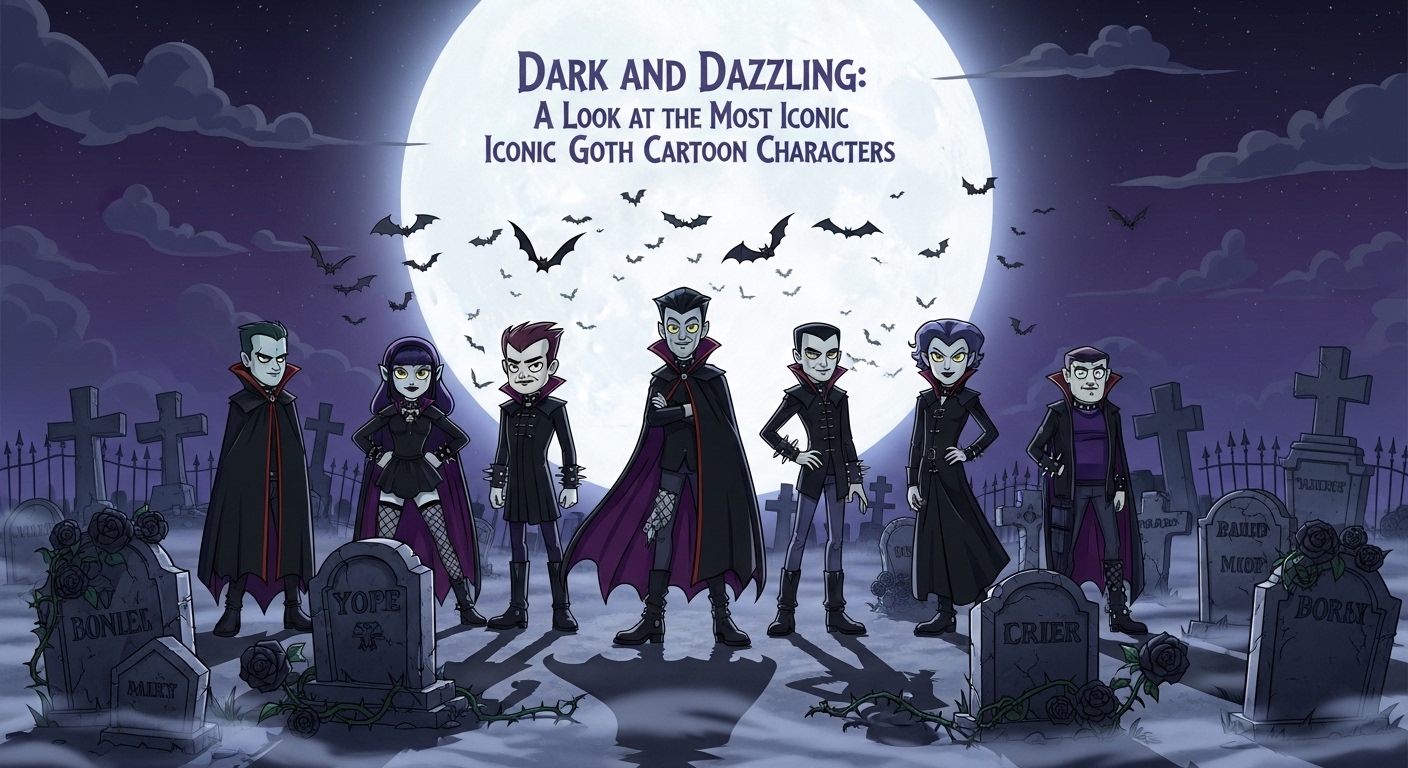
Animation has always celebrated characters who are larger than life. Some are colorful heroes, some are lovable fools, and some are endlessly cheerful personalities who light up every scene. Yet there is another kind of animated figure who has quietly built a loyal fan following over the years. These are the goth cartoon characters who enter a story wrapped in shadows, dressed in black, and carrying an attitude that instantly separates them from everyone else. They often speak less, think more, and leave a stronger impression than louder characters ever could.
Goth cartoon characters are popular because they represent individuality. They do not chase approval or try to fit in with the crowd. Instead, they embrace mystery, intelligence, style, and emotional honesty. In many cases, they become the most relatable people in the room because they express feelings that others avoid. Their sarcasm, quiet confidence, and unique worldview give them lasting appeal.
Over time, these characters have evolved from side jokes and spooky stereotypes into some of the richest personalities in animation. They can be heroes, friends, rebels, artists, or emotionally complex leads. This blog explores the most iconic goth cartoon characters, why audiences love them, and how they changed animated storytelling forever.
What Makes a Cartoon Character Goth?
Being goth in animation is about more than wearing black clothes. While dark fashion is a common trait, true goth characters combine visual style with a certain personality and perspective. They are often thoughtful, observant, skeptical, creative, or emotionally layered. Many prefer authenticity over popularity and intelligence over empty trends.
Design plays an important role. Dark dresses, striped sleeves, boots, silver accessories, pale tones, dramatic hair, and shadowy color palettes often signal gothic influence. However, style alone does not make a character memorable. What matters is the contrast between their appearance and their depth.
Many iconic goth characters seem intimidating at first, but soon reveal loyalty, humor, compassion, or wisdom. Others use sarcasm to protect themselves while caring deeply underneath. This combination of edge and humanity is what makes them compelling.
Wednesday Addams: The Eternal Standard
Wednesday Addams is perhaps the most recognizable goth-inspired character in pop culture. Her animated appearances helped introduce generations of younger viewers to a personality who was darkly funny, highly intelligent, and completely unbothered by social expectations.
Wednesday’s strength comes from her calm confidence. While others overreact or seek attention, she remains steady and observant. Her black dress, braided hair, pale expression, and razor-sharp humor made her instantly iconic. She does not need to shout to control a scene.
More importantly, Wednesday changed expectations for female characters. She was not written to be sweet, cheerful, or decorative. She was smart, independent, and unapologetically herself. That influence can still be seen in many modern animated characters.
Raven: Power Beneath Silence
Raven became one of the most beloved goth cartoon characters of the modern era. As part of a team filled with energetic heroes, Raven stood apart through her quiet presence, mystical powers, and emotional restraint.
Her gothic style was clear through dark colors, a hooded cloak, and a serious tone, but what made her special was emotional complexity. Raven constantly struggled to control darkness within herself. She feared losing control, hurting others, or becoming something dangerous.
That internal battle made her deeply relatable. Many viewers saw their own anxiety, pressure, or hidden emotions reflected in her story. Raven proved that goth characters could be heroes with emotional intelligence and real depth.
Lydia Deetz: Strange with Heart
Lydia Deetz brought gothic charm into family-friendly animation. Surrounded by weirdness and supernatural chaos, Lydia remained curious, brave, and imaginative.
Unlike characters who fear the unusual, Lydia embraced it. She was drawn to mystery, not because she was negative, but because she was creative. Her dark style never prevented her from being warm or adventurous.
This made her important in animation history. Lydia helped younger audiences see that dark aesthetics could be playful, expressive, and friendly rather than frightening.
Sam Manson: The Alternative Voice of a Generation
Sam Manson became a standout character for many viewers growing up in the early 2000s. She was stylish, outspoken, and confident in who she was. She did not apologize for being different.
Sam was also principled. She challenged shallow behavior, cared about causes she believed in, and fiercely supported her friends. The show treated her identity seriously rather than using it as a joke.
That mattered because many younger viewers saw someone who looked alternative yet was written with respect and intelligence. Sam helped modernize the goth cartoon archetype.
Gaz Membrane: Queen of Deadpan Comedy
Gaz Membrane proved that goth-coded characters could dominate comedy. She was cynical, highly intelligent, and permanently unimpressed by the madness around her.
Gaz rarely needed long speeches. A single glare or short line could steal an entire scene. Her humor came from contrast. While other characters screamed, panicked, or acted foolishly, she remained cool and detached.
Fans loved her because she felt powerful without trying. Gaz showed that stillness and sarcasm can be stronger than chaos.
Marceline: Depth, Music, and Modern Greatness
Marceline is one of the richest animated characters of recent decades. As a vampire queen and musician, she brought goth style naturally, but her emotional writing is what made her iconic.
Marceline’s stories explored loneliness, memory, family wounds, identity, and healing. She could be playful and wild in one episode, then deeply vulnerable in another. Her bass guitar, cool confidence, and emotional honesty created a character who felt both mythical and human.
She represents the evolution of goth cartoon characters from stereotype into nuanced storytelling leads.
Other Memorable Dark Icons
Many other animated figures deserve recognition for carrying gothic energy in unique ways. Mandy turned cruelty and deadpan confidence into comedy gold. Mavis Dracula blended cute modern style with gothic heritage. Shego added villainous charisma through dark design and sharp attitude.
These characters prove that goth influence can appear in comedy, action, horror, and family entertainment alike.
Comparison Table of Iconic Goth Cartoon Characters
| Character | Series | Signature Traits | Lasting Impact |
| Wednesday Addams | The Addams Family | Intelligent, eerie, witty | Defined gothic cool |
| Raven | Teen Titans | Powerful, quiet, layered | Goth superhero icon |
| Lydia Deetz | Beetlejuice | Creative, brave, strange | Made dark style playful |
| Sam Manson | Danny Phantom | Bold, principled, modern | Teen alternative symbol |
| Gaz Membrane | Invader Zim | Cynical, funny, sharp | Cult comedy favorite |
| Marceline | Adventure Time | Musical, emotional, stylish | Modern fan favorite |
Why Audiences Connect with Them
One major reason goth cartoon characters remain popular is honesty. Many animated personalities are exaggerated to be endlessly cheerful or simple. Goth characters often feel more realistic because they show doubt, frustration, sadness, curiosity, or emotional depth openly.
Another reason is independence. These characters rarely beg to be liked. They know who they are and remain true to themselves even when others misunderstand them. That confidence attracts admiration.
They also reward viewers who look deeper. Someone who appears cold may be deeply loyal. Someone sarcastic may be caring underneath. Someone dressed in black may be the kindest person present. This reversal of expectations keeps them interesting.
Fashion and Cultural Influence
Goth cartoon characters have influenced real-world style for years. Fans imitate black dresses, boots, chokers, striped sleeves, dramatic makeup, silver jewelry, and layered dark clothing inspired by beloved characters.
They have also shaped internet culture, fan art communities, cosplay trends, and social media aesthetics centered on moody elegance and alternative self-expression. Their influence stretches far beyond the screen.
Why They Still Matter Today
Modern audiences value characters with emotional realism and individuality. Goth cartoon characters naturally provide both. They often ask harder questions, reveal hidden truths, or expose superficial behavior around them.
In a world where people increasingly celebrate uniqueness, these characters feel more relevant than ever. They remind viewers that being different is not a weakness. It can be strength, creativity, and identity.
Conclusion
Dark and dazzling goth cartoon characters continue to fascinate audiences because they bring something timeless to animation. They are stylish without being shallow, mysterious without being empty, and emotionally rich without losing charm. They often say less than others, yet mean more.
From Wednesday Addams to Marceline, these icons have shown that the characters standing in the shadows are often the ones viewers remember longest. In bright animated worlds full of noise, they prove that darkness can shine brilliantly.