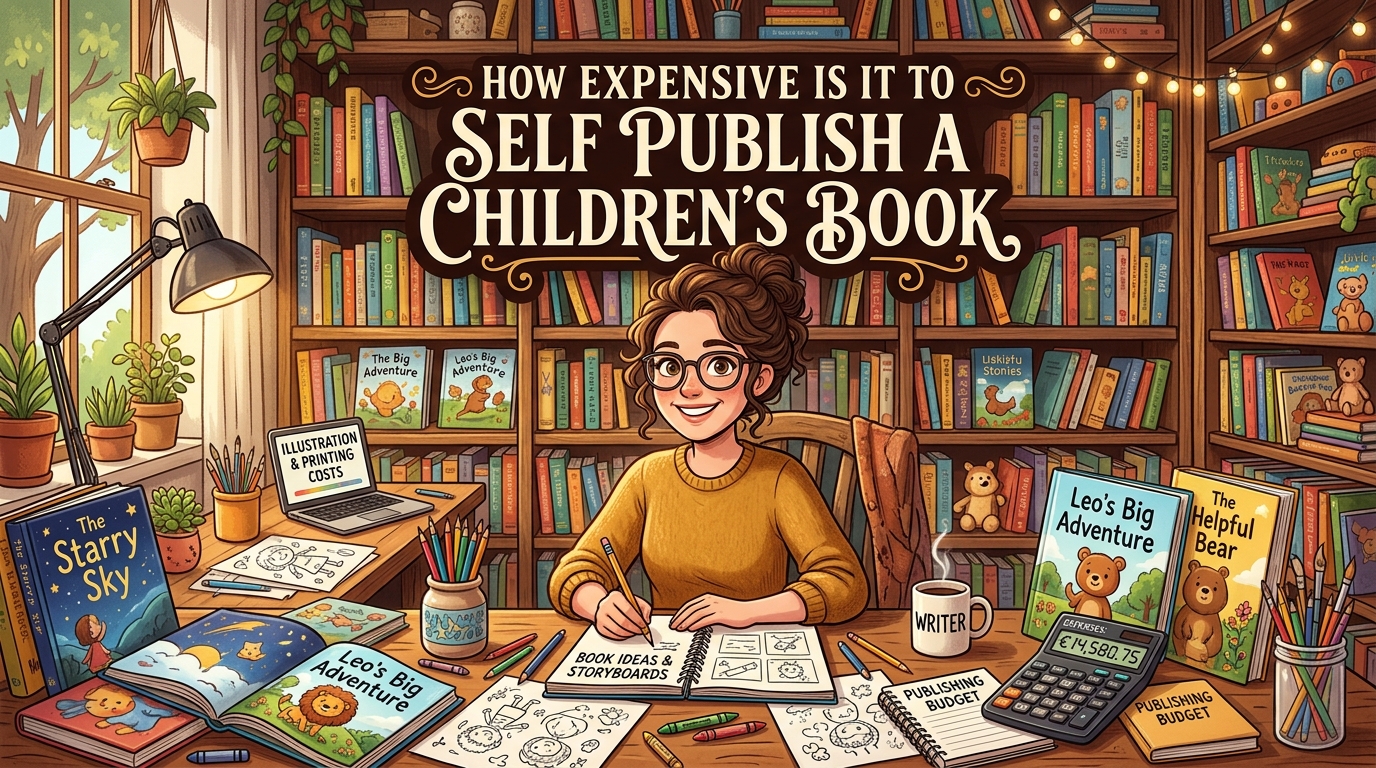
There is a reason so many aspiring authors ask the same question before publishing their first picture book: “How much is this actually going to cost me?” The answer is rarely simple because children’s books sit in a unique corner of publishing. Unlike novels, where the focus is primarily on text, children’s books depend heavily on illustrations, design, formatting, and print quality. A 500-word picture book can easily cost more to produce than a 70,000-word novel simply because of the artwork involved.
The good news is that self-publishing has made children’s books more accessible than ever before. Authors no longer need approval from traditional publishing houses to bring their stories to life. Platforms like Amazon KDP and IngramSpark allow writers to publish independently while maintaining creative control and ownership. But creative freedom also means financial responsibility. Every stage of the process comes with decisions that can either keep costs manageable or make the project surprisingly expensive.
Most self-published children’s book authors spend anywhere between $1,000 and $8,000 depending on the quality of illustrations, editing, printing choices, and marketing strategies. Some creators publish for only a few hundred dollars by doing most of the work themselves, while others invest tens of thousands into professional production.
Understanding where the money goes is what helps authors avoid overspending. The biggest mistake first-time creators make is assuming the only expense is printing. In reality, printing is often one of the smaller parts of the budget. Illustration, editing, and marketing usually consume the majority of costs.
Why Children’s Books Cost More Than Most Books
One of the biggest misconceptions about children’s publishing is that shorter books are cheaper to produce. A children’s picture book might contain fewer than 1,000 words, but every page must visually engage a child. That means illustrations become the emotional engine of the story.
For adult fiction, a single cover may be enough artwork for an entire novel. Children’s books, however, may require 15 to 30 fully illustrated pages. Professional illustrators charge based on experience, complexity, style, and usage rights. That is why illustration alone can cost anywhere from $500 to over $10,000 for one project.
Another factor is print quality. Children’s books are often printed in full color with glossy pages, thicker paper, and larger trim sizes. Those production choices increase printing costs significantly compared to black-and-white novels.
Parents are also the real buyers of children’s books, not children themselves. That creates another layer of pressure. Parents judge books quickly based on visual quality, educational value, and professionalism. A poorly designed book may instantly appear amateur, even if the story itself is excellent.
The Average Cost Breakdown of Self-Publishing a Children’s Book
Before diving deeper into each expense, it helps to understand what a realistic publishing budget looks like.
| Publishing Expense | Low Budget DIY Approach | Professional Quality Approach |
| Editing | $50 – $300 | $500 – $2,000 |
| Illustrations | $300 – $1,500 | $3,000 – $10,000+ |
| Cover Design | $0 – $100 | $300 – $800 |
| Formatting & Layout | $0 – $150 | $300 – $1,000 |
| ISBN & Copyright | $0 – $125 | $125 – $250 |
| Printing Proofs | $20 – $60 | $50 – $150 |
| Marketing | $50 – $300 | $1,000 – $5,000+ |
| Total Estimated Cost | $500 – $2,000 | $5,000 – $20,000+ |
These numbers vary widely depending on the publishing route an author chooses.
Writing and Editing Costs
Many new authors underestimate editing because children’s books are shorter. But writing for children is deceptively difficult. Every sentence must feel clear, emotionally engaging, and age-appropriate. Picture books especially rely on rhythm, pacing, and simplicity.
Editing typically happens in multiple stages. Developmental editing focuses on story structure and character flow. Copyediting addresses grammar and readability. Proofreading catches final errors before publication.
Professional editing for children’s books often ranges from $150 to $2,000 depending on manuscript length and editor experience.
Some authors reduce costs by relying on beta readers, critique groups, or editing software. While this can help, completely skipping professional editing often becomes obvious once reviews begin appearing online. Readers notice awkward phrasing, pacing issues, and grammatical mistakes quickly.
Interestingly, many successful indie authors say editing is one of the few areas where spending more usually improves the final product. On Reddit, several self-published writers shared that editing became their single largest expense but also the most valuable investment in reader trust and long-term sales.
Illustration Is Usually the Biggest Expense
Illustration is where budgets can rise dramatically. For most children’s books, artwork is not optional. It defines the personality of the book and strongly influences whether parents purchase it.
Professional illustrators may charge per page, per spread, or for the entire project. Rates vary enormously. Emerging freelance illustrators may accept projects for a few hundred dollars, while experienced children’s illustrators can charge thousands.
A standard 32-page picture book with full-color illustrations may cost anywhere between $2,000 and $10,000 or more.
Several factors influence pricing. Highly detailed watercolor art usually costs more than simple cartoon-style illustrations. Custom character development also adds expense because artists spend extra time refining the visual identity of the story.
Some authors lower costs by hiring international freelancers through marketplaces or by using AI-assisted artwork. However, AI-generated illustrations remain controversial in publishing. Many readers, educators, and publishing professionals still prefer human-created art, especially in children’s literature.
Authors who are also illustrators themselves hold a major financial advantage. They may only need to pay for formatting and printing, dramatically reducing total costs.
Cover Design and Visual Branding
Even though the interior illustrations matter most, the cover remains the book’s first impression. Parents browsing Amazon or bookstores make quick decisions based on cover quality.
A professionally designed cover often costs between $250 and $800 depending on complexity.
Some illustrators include cover design within their overall package, while others charge separately. Typography also matters more than many first-time authors realize. Strong fonts and readable title placement can instantly make a book appear more credible and marketable.
DIY tools like Canva can reduce expenses, but homemade covers often look noticeably less polished unless the creator has design experience.
Formatting and Interior Layout Costs
Children’s books require specialized formatting because illustrations and text must work together visually. Every page turn matters. Placement, spacing, readability, and visual rhythm influence the storytelling experience.
Professional formatting usually costs between $200 and $1,000.
Some authors handle layout themselves using Canva, Adobe InDesign, or Affinity Publisher. This can save money, but formatting mistakes can cause printing problems or make books appear unprofessional.
Print-on-demand platforms like Amazon KDP provide templates, which help beginners reduce setup costs. However, achieving bookstore-quality layouts still requires design knowledge.
ISBN and Copyright Expenses
ISBNs are often misunderstood by new authors. Platforms like Amazon KDP offer free ISBNs, meaning technically you can publish without paying anything for one. However, purchasing your own ISBN gives you more publishing control and allows you to list your own publishing imprint.
In the United States, a single ISBN typically costs around $125 through Bowker. Copyright registration usually costs around $35 to $65.
These costs are relatively small compared to illustration or editing, but they still contribute to the overall publishing budget.
Printing Costs and Production Choices
Printing costs depend heavily on trim size, paper type, color usage, and whether the author uses print-on-demand or bulk printing.
Print-on-demand services have become popular because they eliminate inventory risk. Books are only printed when customers order them. That means authors avoid paying thousands upfront for warehouse stock.
Most self-published children’s books printed through POD services cost roughly $3 to $10 per copy depending on specifications.
Hardcover editions cost more to print but often look more premium, especially for gift purchases or school libraries. Paperback editions remain more affordable for first-time authors testing the market.
Bulk offset printing becomes cheaper per book when ordering large quantities, but it requires significant upfront investment and storage space.
Marketing Is Where Many Authors Overspend
Publishing the book is only half the challenge. Marketing is often what determines whether the book succeeds commercially.
Some authors spend almost nothing on promotion and rely entirely on organic discovery. Others invest heavily in advertising campaigns, influencer outreach, school visits, book trailers, and social media promotion.
Marketing budgets vary wildly. Some indie authors spend under $100, while others invest several thousand dollars into ads and launch campaigns.
Amazon Ads and Facebook Ads are common promotional tools, but they require experimentation. Many first-time authors lose money initially while learning how advertising platforms work.
School visits, parent communities, TikTok content, and Instagram reels have also become valuable marketing channels for children’s authors. Personal storytelling and authentic audience-building often outperform expensive advertising campaigns.
Can You Self-Publish a Children’s Book for Free?
Technically, yes. Platforms like Amazon KDP allow creators to upload books at no upfront publishing fee. Free ISBNs, free templates, and DIY tools make it possible to publish with almost no budget.
But “free publishing” usually means the author is personally handling every role. They become the writer, editor, illustrator, formatter, marketer, and publisher simultaneously.
While some creators successfully launch books this way, the results often depend on their existing skills. A professional illustrator may publish cheaply because they already possess artistic expertise. A designer may create their own layouts without hiring help.
The biggest risk of ultra-low-budget publishing is poor presentation. In competitive marketplaces flooded with content, amateur-looking books struggle to gain visibility.
Reddit discussions among self-published authors repeatedly highlight one lesson: readers immediately notice weak covers and sloppy editing.
Is Self-Publishing Worth the Cost?
For many authors, the answer is yes — but not always for financial reasons alone.
Some people publish children’s books to share family stories, honor personal memories, or create meaningful gifts for their children. Others dream of building a long-term author career. Success depends heavily on expectations.
Children’s publishing is highly competitive. Thousands of books appear every month, especially on Amazon KDP.
However, self-publishing also offers advantages traditional publishing cannot always provide. Authors retain creative control, higher royalty percentages, and ownership of their intellectual property. They can publish faster and adapt quickly to trends.
Financial success usually comes from consistency rather than one viral launch. Many indie authors build momentum over multiple books instead of relying on a single title.
How to Reduce Costs Without Sacrificing Quality
Smart budgeting matters more than massive spending. Many successful authors find ways to cut expenses strategically while still producing professional books.
One common approach is prioritizing the most visible elements first. Readers judge books quickly based on covers and illustration quality, so investing in strong visuals often delivers better returns than overspending elsewhere.
Authors also reduce costs by hiring newer freelance illustrators building their portfolios. Others collaborate with students from art schools or work through royalty-sharing agreements.
Learning formatting software can save hundreds of dollars. Using beta readers before professional editing may reduce editing fees because the manuscript arrives cleaner.
Print-on-demand also minimizes financial risk because authors avoid buying large print inventories upfront.
The smartest publishing budgets are rarely the largest. They are simply focused on the areas readers notice most.
The Real Answer to “How Expensive Is It?”
The real cost of self-publishing a children’s book depends entirely on the experience an author wants to create.
A minimalist DIY project may cost under $500. A professionally illustrated bookstore-quality picture book may exceed $10,000. Most authors land somewhere in between.
What matters most is understanding where the money goes before beginning the journey. Self-publishing rewards preparation. Authors who plan carefully, research costs realistically, and invest wisely often avoid the frustration that comes from unexpected expenses later.
Children’s books may be expensive to produce, but they also hold something unique. They become bedtime rituals, classroom memories, and stories children carry into adulthood. For many writers, that emotional impact makes the investment feel worthwhile long after the book is published.