
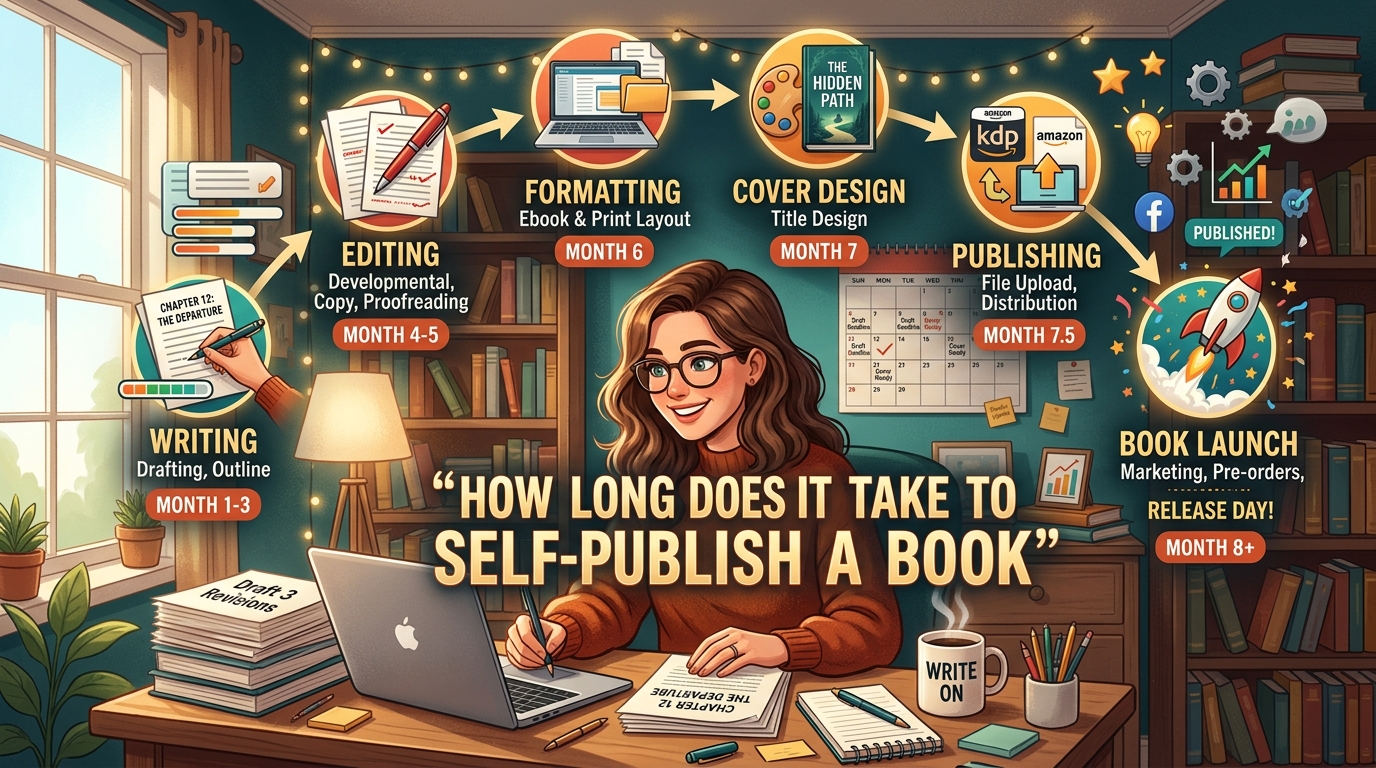
Self-publishing has completely changed the publishing industry over the last decade. Writers no longer have to wait for literary agents, publishing houses, or approval committees to share their work with readers. Today, authors can publish novels, memoirs, business books, poetry collections, and nonfiction guides independently through digital publishing platforms. Yet despite how accessible publishing has become, one question continues to appear among first-time authors: how long does it actually take to self-publish a book?
The answer is not as simple as a few days or weeks. While uploading a completed manuscript to a publishing platform may only take a couple of hours, creating a professional-quality book takes much longer. Writing, editing, formatting, cover design, proofreading, and marketing all influence the publishing timeline.
Some writers manage to self-publish within a few months, while others spend more than a year perfecting their manuscript before release. The timeline depends on writing speed, publishing goals, genre, experience level, and how polished the manuscript is before production begins.
Understanding the self-publishing process helps writers avoid unrealistic expectations and unnecessary stress. Publishing quickly is possible, but publishing professionally requires planning and patience. Every stage of the process contributes to the reader’s experience and the long-term success of the book.
This guide explores how long self-publishing really takes, what affects the timeline, and how writers can move through the process more efficiently without sacrificing quality.
The Average Time It Takes To Self Publish A Book
For most authors, self-publishing a book takes anywhere between three months and one year from the beginning of the writing process to the final release date. Some shorter ebooks may be completed faster, while large novels or research-heavy nonfiction books often take much longer.
One reason the timeline varies so widely is because self-publishing is not just one task. It is a collection of creative and technical stages that all require attention. Writing the manuscript alone can take several months. Editing may require additional weeks or months depending on the condition of the draft. Cover design, formatting, and launch preparation also add time to the process.
Many people assume self-publishing is instant because digital publishing platforms can upload books quickly. Technically, a completed manuscript can appear online within seventy-two hours after submission. However, professional self-publishing involves far more than uploading files.
Modern readers expect self-published books to meet the same standards as traditionally published titles. That means authors need to invest time into editing, presentation, and readability if they want strong reviews and consistent sales.
The timeline also depends heavily on the writer’s lifestyle. Full-time writers naturally move faster than authors balancing careers, education, or family responsibilities alongside writing.
Writing the Manuscript Usually Takes the Longest
First Draft Development
The writing stage is typically the most time-consuming part of self-publishing. Every writer works at a different pace. Some authors complete a manuscript within a month during intensive writing sessions, while others spend years developing their ideas.
For the average author, writing a complete book often takes between three and nine months. Fiction writers may spend additional time building characters, creating realistic dialogue, and structuring plotlines. Nonfiction authors frequently need to conduct research, collect interviews, or organize educational material before drafting chapters.
Book length matters significantly as well. A forty-thousand-word novella naturally requires less time than a one-hundred-thousand-word fantasy novel or a detailed business guide.
Creative style also affects speed. Some writers prefer rapid drafting and edit later, while others revise constantly during the writing process. Neither method is necessarily better because successful publishing depends more on quality and consistency than writing speed alone.
Revising the Manuscript
Completing the first draft does not mean the book is ready for publication. In reality, revision is where many books truly improve.
Authors usually spend several weeks or months reviewing pacing, sentence flow, grammar, structure, tone, and consistency. Entire chapters may be rewritten or reorganized during this stage.
Most writers underestimate how long revisions actually take. It is common for authors to revise a manuscript multiple times before sending it to an editor.
First-time authors often require longer revision periods because they are still learning storytelling techniques and common writing mistakes. Experienced writers generally move faster because they already understand narrative structure and publishing expectations.
Editing Is One of the Most Important Stages
Professional editing is essential for producing a polished book. Readers quickly notice grammatical mistakes, awkward sentences, repetitive wording, or structural issues. Even strong ideas can lose credibility if the manuscript feels unprofessional.
Editing timelines vary depending on manuscript length, editor availability, and the type of editing required.
Developmental Editing
Developmental editing focuses on the overall structure of the book. Editors examine pacing, organization, readability, clarity, and reader engagement.
This process may take anywhere from two weeks to two months depending on the complexity of the manuscript. Large fantasy novels, memoirs, and research-heavy nonfiction books often require more extensive editorial feedback.
After receiving comments, authors usually spend additional time revising their manuscript again. In many cases, the revision stage after developmental editing takes longer than the editor’s review itself.
Copyediting and Proofreading
Copyediting focuses on grammar, punctuation, sentence flow, and consistency. Proofreading acts as the final quality check before publication.
Together, these stages often require another two to six weeks. Authors who book editors months in advance usually avoid delays, while last-minute scheduling can extend timelines significantly.
Skipping professional editing may save money temporarily, but it often damages reader trust and reduces long-term sales potential.
Cover Design Takes More Time Than Many Authors Expect
Book covers play a major role in attracting readers. In digital marketplaces, readers often decide whether to click on a book within seconds. A professionally designed cover can dramatically improve visibility and credibility.
Cover design generally takes one to four weeks depending on revisions and designer availability. Some experienced cover designers book projects months ahead, especially in competitive genres like romance, fantasy, and thriller fiction.
The design process usually involves typography selection, image licensing, concept drafts, and revision rounds. Authors who purchase pre-made covers can move faster because the design already exists. Custom covers, however, require more collaboration and creative planning.
Genre expectations matter as well. A business book requires a completely different visual approach compared to fantasy fiction or romance novels.
A rushed cover often harms book performance regardless of how strong the writing may be.
Formatting and Interior Layout Preparation
Formatting transforms a manuscript into a readable book layout for print and digital platforms.
Although formatting sounds technical and simple, it requires careful attention to spacing, fonts, margins, chapter headings, page breaks, and ebook compatibility.
Print formatting and ebook formatting are separate processes. Kindle books must display correctly across various devices, while printed books need exact trim sizes and print-safe layouts.
Professional formatting generally takes several days to two weeks depending on the complexity of the manuscript.
Errors during formatting can create frustrating reader experiences. Broken chapter links, inconsistent fonts, or awkward spacing immediately reduce professionalism.
Some authors use formatting software themselves, while others hire specialists to avoid technical problems.
Publishing Platform Setup and Uploading
Once the manuscript, formatting, and cover design are complete, authors move into the publishing setup stage.
This includes uploading files, writing the book description, choosing categories, selecting keywords, setting pricing, and registering ISBN information if necessary.
Platforms like Amazon Kindle Direct Publishing usually review and publish books within twenty-four to seventy-two hours after submission.
However, authors often spend additional time optimizing their book listings because discoverability strongly affects long-term sales performance.
Publishing across multiple platforms can also increase preparation time since each platform has slightly different requirements.
Marketing Preparation Before Launch
One of the biggest mistakes new self-published authors make is waiting until release day to think about marketing.
Successful launches often require weeks or months of preparation beforehand. Building an audience, collecting email subscribers, planning social media content, organizing review campaigns, and creating promotional graphics all take time.
Marketing preparation is especially important for first-time authors without an existing readership.
Some writers begin building their audience while still drafting the manuscript. Others focus on promotion only after completing the book. Early marketing preparation generally creates stronger launch momentum.
Marketing timelines vary widely depending on the author’s goals. A simple release may require minimal preparation, while a major promotional campaign involving advertisements and influencer outreach may require months of planning.
A Typical Self-Publishing Timeline
| Publishing Stage | Estimated Time |
| Writing the First Draft | 3 to 9 months |
| Revising the Manuscript | 1 to 3 months |
| Developmental Editing | 2 to 8 weeks |
| Copyediting and Proofreading | 2 to 6 weeks |
| Cover Design | 1 to 4 weeks |
| Formatting and Layout | Several days to 2 weeks |
| Publishing Platform Review | 1 to 3 days |
| Marketing Preparation | 1 to 3 months |
While some stages overlap, this table demonstrates why professional self-publishing often takes longer than beginners expect.
Fast Publishing Versus Professional Publishing
Digital publishing has encouraged a culture focused heavily on speed. Some authors release several books every year, particularly in genres like romance, mystery, and fantasy.
Fast publishing can work successfully for experienced writers who already understand production systems. However, speed without quality control often creates poor reader experiences.
Books rushed through editing may contain plot holes, grammar issues, or inconsistent pacing. Covers designed too quickly may fail to attract readers. Poor formatting can immediately reduce credibility.
Professional self-publishing is not about releasing books as fast as possible. It is about publishing books readers genuinely enjoy.
Authors should focus on balancing efficiency with quality. Publishing slowly does not automatically guarantee success, but publishing carelessly can seriously damage an author’s reputation.
How Genre Affects the Publishing Timeline
Different genres require different levels of preparation and revision.
Fantasy novels often take longer because of worldbuilding and longer word counts. Historical fiction requires extensive research to maintain accuracy. Memoirs may require emotional reflection and careful storytelling structure.
Business books and self-help guides often involve case studies, interviews, or research material that increase production time.
Children’s books may appear shorter, but illustration development can significantly extend the timeline.
Poetry collections are generally faster to format, although they may require extensive thematic revision.
Genre expectations also influence marketing preparation because each audience responds differently to promotional strategies.
First-Time Authors Usually Need More Time
New writers often take longer to self-publish because every stage includes a learning curve.
Understanding formatting software, hiring editors, choosing publishing platforms, designing covers, and learning book marketing all require research and experimentation.
First-time authors also tend to struggle with perfectionism. Many continue revising endlessly because they fear criticism or negative reviews.
Experienced self-published authors usually work faster because they already understand publishing workflows. Many build relationships with editors, designers, and formatters that streamline future projects.
For most writers, the first book is the slowest. Future books often move much faster because the author becomes more confident and organized.
Can You Self Publish a Book in One Month?
Technically, yes. Realistically, it depends on the manuscript’s condition.
If the manuscript is already completed, edited, formatted, and ready for upload, publication can happen within days.
However, writing, editing, designing, formatting, and marketing an entirely new book within one month is extremely difficult.
Rapid publishing schedules usually work best for experienced authors or shorter ebooks. Writers with professional teams already in place can also move faster.
For most authors, rushing the process too aggressively reduces overall quality and increases stress significantly.
Self Publishing Is Still Faster Than Traditional Publishing
One major advantage of self-publishing is control over timing.
Traditional publishing timelines are much longer because manuscripts move through agents, acquisitions departments, editors, marketers, and print scheduling systems.
Even after receiving a publishing contract, authors often wait twelve to twenty-four months before their official release date.
Self-publishing removes many of these delays. Authors decide when to publish, how frequently to release books, and what creative direction to follow.
This flexibility is one of the biggest reasons independent publishing continues to grow worldwide.
Why Some Authors Delay Publishing
Not every publishing delay is negative. Some delays genuinely improve the final quality of the book.
Authors may need additional revision time after editorial feedback. Others delay releases to improve marketing campaigns or align with seasonal trends.
In some situations, emotional factors also influence timelines. Fear of criticism, anxiety about sales performance, or comparison with other writers can create hesitation.
Publishing a book is both a creative and emotional experience. Writers often feel vulnerable sharing their work publicly.
The key is learning the difference between productive revision and endless perfectionism.
Tips for Speeding Up the Self-Publishing Process
Writers who want to publish more efficiently should focus on preparation and organization.
Creating a consistent writing schedule helps maintain momentum during drafting. Booking editors early prevents scheduling problems later. Preparing marketing materials before launch also reduces last-minute stress.
Many successful self-published authors hire freelancers for editing, formatting, and design so they can focus primarily on writing.
Time management is just as important as creativity during the publishing process.
Final Thoughts
So, how long does it take to self-publish a book? For most authors, the realistic timeline falls somewhere between several months and one year. While modern publishing platforms have made publishing faster and more accessible than ever before, creating a professional-quality book still requires patience, planning, and careful execution.
The timeline depends on many factors, including writing speed, editing depth, cover design, formatting quality, and marketing preparation. First-time authors generally need more time because every stage involves learning new skills and understanding publishing standards.
Self-publishing offers something traditional publishing often cannot: flexibility and creative control. Authors choose their release schedules, publishing strategies, and creative direction without waiting for external approval.
The goal should not simply be publishing as quickly as possible. The real goal is publishing a book readers genuinely enjoy and remember.
A carefully prepared book has a much better chance of earning positive reviews, building an audience, and supporting long-term writing success. Whether the process takes three months or twelve, investing time into quality almost always benefits the final result.