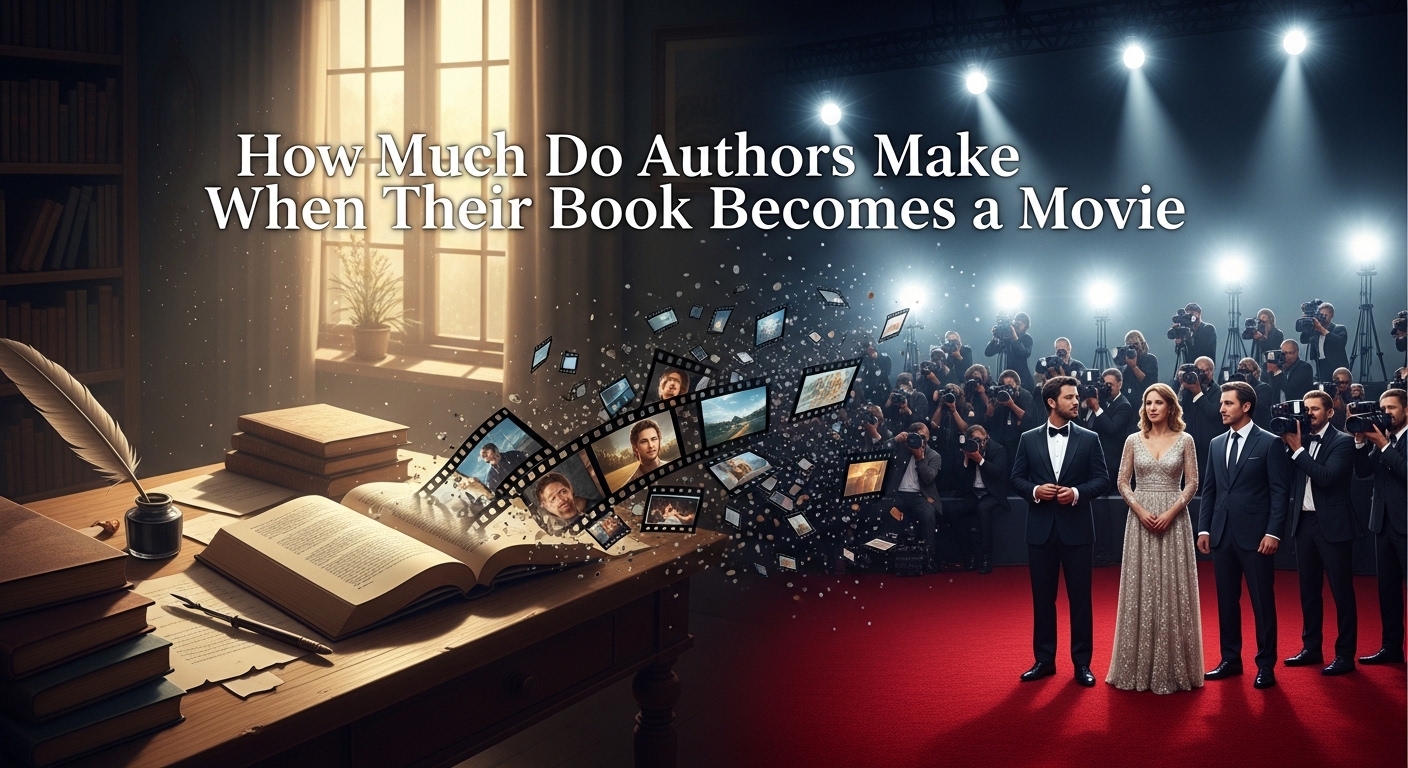
There is something undeniably cinematic about the idea of a book becoming a film. For writers, it represents more than creative validation—it signals entry into an entirely different financial world, one that operates by its own rules, expectations, and unpredictabilities. The image most people hold is simple: a studio buys a book, a movie gets made, and the author becomes wealthy overnight. The truth is more layered, more technical, and often more uncertain.
Authors do not earn a single, straightforward paycheck when their work is adapted for the screen. Instead, income is built through stages—option agreements, purchase prices, bonuses, royalties, and indirect earnings that unfold over time. Some authors earn life-changing sums, while others receive only modest compensation despite having their work optioned. Understanding how this system works is essential not just for financial clarity, but for navigating the opportunities and risks that come with adaptation.
The First Financial Step: Understanding the Option Agreement
The journey from page to screen almost always begins with an option agreement. This is essentially a temporary rental of rights rather than a full sale. A production company pays the author for exclusive permission to develop the book into a film within a specific timeframe, usually between one and two years.
The option fee itself can vary dramatically depending on the author’s profile and the book’s market performance. For debut authors or lesser-known works, this fee may be relatively small, sometimes only a few hundred or a few thousand dollars. For books that have already gained attention—through sales, awards, or cultural relevance—the option fee can rise into the tens of thousands.
What makes the option agreement particularly significant is that it carries no obligation for the studio to proceed. The production company is essentially buying time to explore the project. If they fail to move forward within the agreed period, the rights revert back to the author, who keeps the payment. In some cases, the option may be renewed, providing the author with additional income without any guarantee of a film.
This stage introduces the first key reality: many books are optioned, but relatively few are actually produced.
When the Deal Becomes Real: The Purchase Price
If a studio decides to move forward with the project, they “exercise” the option. This triggers the purchase agreement, which is where the real money begins to flow. At this stage, the production company acquires the full rights to adapt the book into a film.
The purchase price is often structured as either a fixed sum or a percentage of the film’s production budget. A commonly cited range is around two to three percent of the total budget, though this can vary widely depending on negotiations and the author’s leverage.
For example, if a film has a budget of $10 million, an author might receive between $200,000 and $300,000. For larger productions, this figure can increase significantly. High-profile adaptations of bestselling novels have resulted in multimillion-dollar deals, particularly when multiple studios compete for the rights.
However, it is important to recognize that these high-end deals represent a small portion of the market. Many authors receive more modest payments, especially if their work is being adapted into independent films or streaming projects with limited budgets.
The Illusion and Reality of Backend Deals
Beyond the upfront purchase price, there is often discussion about backend participation—earnings tied to the success of the film. This may include a share of profits, box office bonuses, or additional payments triggered by milestones such as award nominations.
In theory, backend deals can be extremely lucrative. In practice, they are less common and often less rewarding than they appear. Studios typically reserve these arrangements for authors with significant bargaining power, such as those whose books are already global bestsellers.
Even when backend participation is included, it may be structured in a way that limits actual payouts. The film industry is known for complex accounting practices that can make profitable films appear unprofitable on paper. As a result, many authors never see substantial earnings from backend agreements.
This does not mean such deals are meaningless, but it does highlight the importance of understanding their limitations. For most authors, the primary financial gain comes from the upfront payments rather than the long-term profit share.
The Hidden Goldmine: Book Sales After Adaptation
One of the most underestimated aspects of a film adaptation is its impact on book sales. When a movie is announced, marketed, and released, it often brings renewed attention to the original work. This visibility can lead to a dramatic increase in sales, sometimes transforming a previously modest title into a bestseller.
This surge is not limited to the original book. It can extend to an author’s entire catalog, introducing new readers who go on to purchase other works. In some cases, publishers release special editions tied to the film, complete with updated cover design and branding that aligns with the movie.
The financial impact of this boost can be substantial. Unlike film payments, which are often one-time sums, book royalties provide ongoing income. A successful adaptation can generate years of increased sales, making it one of the most valuable long-term benefits for an author.
For some writers, especially those who receive smaller film deals, this secondary income becomes the most meaningful financial outcome of the adaptation process.
Creative Involvement and Additional Earnings
While many authors step back once the rights are sold, some choose to remain involved in the filmmaking process. This involvement can take different forms, including working on the screenplay, consulting on the adaptation, or serving as an executive producer.
These roles come with additional compensation, which varies depending on the scope of involvement and the scale of the project. For authors with experience in screenwriting or a strong creative vision, this can be both financially rewarding and artistically fulfilling.
However, such opportunities are not guaranteed. Studios often prefer to work with established screenwriters and may limit the author’s creative input. The level of involvement typically depends on the author’s reputation, the terms of the contract, and the dynamics of the production team.
Why Most Adaptations Never Happen
A critical aspect of this conversation is the high failure rate of film adaptations. The development process is long and complex, involving multiple stages such as script development, financing, casting, and distribution planning.
Many projects stall at some point along this path. Scripts may fail to meet expectations, budgets may fall through, or market conditions may shift. As a result, a large percentage of optioned books never become films.
For authors, this means that the option fee may be the only payment they receive. While this can still be a valuable opportunity, it underscores the uncertainty inherent in the process. The journey from option to production is far from guaranteed.
The Role of Representation in Maximizing Earnings
Navigating film deals requires expertise that most authors do not possess on their own. Literary agents, film agents, and entertainment lawyers play a crucial role in negotiating contracts, protecting intellectual property, and securing favorable terms.
Agents typically earn a commission, but their involvement often leads to higher overall earnings. They understand industry standards, identify potential pitfalls, and advocate for the author’s interests in a highly competitive environment.
Strong representation can make a significant difference in the outcome of a deal. It can mean the difference between a modest option fee and a competitive bidding war, between limited rights and a contract that preserves future opportunities.
A Comparative Look at Author Earnings
To better understand the financial landscape, it helps to compare the different income streams available to authors when their book enters the film world.
| Income Source | Typical Earnings Range | Payment Structure | Long-Term Potential |
| Book Advance | $5,000 – $100,000+ | Upfront payment | Moderate |
| Book Royalties | 10% – 30% per sale | Ongoing income | High over time |
| Film Option Fee | $500 – $50,000 | One-time payment | Limited unless renewed |
| Film Purchase Price | $25,000 – $500,000+ | One-time payment | High |
| Backend Participation | Variable and rare | Performance-based | Uncertain |
| Sales Boost from Film | Highly variable | Ongoing royalties | Very high |
This comparison highlights a key insight: film income is often front-loaded, while publishing income builds gradually over time. The two systems operate differently, but together they can create a powerful financial ecosystem for authors.
What Determines How Much an Author Earns
Several factors influence how much an author ultimately makes from a film adaptation. The popularity of the book is one of the most significant. Bestselling novels attract more attention and often lead to competitive bidding, which drives up prices.
Timing also plays a role. Books that align with current trends or cultural conversations are more likely to be pursued aggressively by studios. The reputation of the author, the genre of the story, and the perceived commercial potential of the adaptation all contribute to the final deal.
Another important factor is negotiation. Authors who understand their value—or who have strong representation—are better positioned to secure favorable terms. This includes not only higher payments but also clauses that protect their rights and future earnings.
The Long-Term Career Impact
Beyond immediate financial gain, a film adaptation can have a profound impact on an author’s career. It can increase visibility, attract new readers, and open doors to additional opportunities in both publishing and entertainment.
Authors whose work is successfully adapted often find it easier to secure higher advances for future books. They may also receive offers for television adaptations, sequels, or original screenwriting projects.
In this way, a film deal is not just a single transaction. It is a catalyst that can reshape an author’s professional trajectory, creating momentum that extends far beyond the initial adaptation.
Conclusion
The question of how much authors make when their book becomes a movie cannot be answered with a single figure. It is a spectrum shaped by multiple variables, from the size of the option fee to the scale of the production, from the strength of negotiation to the unpredictable nature of the film industry itself.
Some authors earn modest sums, while others secure deals that transform their financial lives. Yet in many cases, the most valuable outcome is not the upfront payment, but the long-term impact on book sales, visibility, and career growth.
A movie adaptation is not a guaranteed windfall, nor is it a simple transaction. It is a complex, evolving process—one that blends creativity with commerce and offers both opportunity and uncertainty in equal measure. For authors willing to navigate this landscape, it can be one of the most powerful extensions of their work, turning stories on the page into experiences that reach far beyond them.