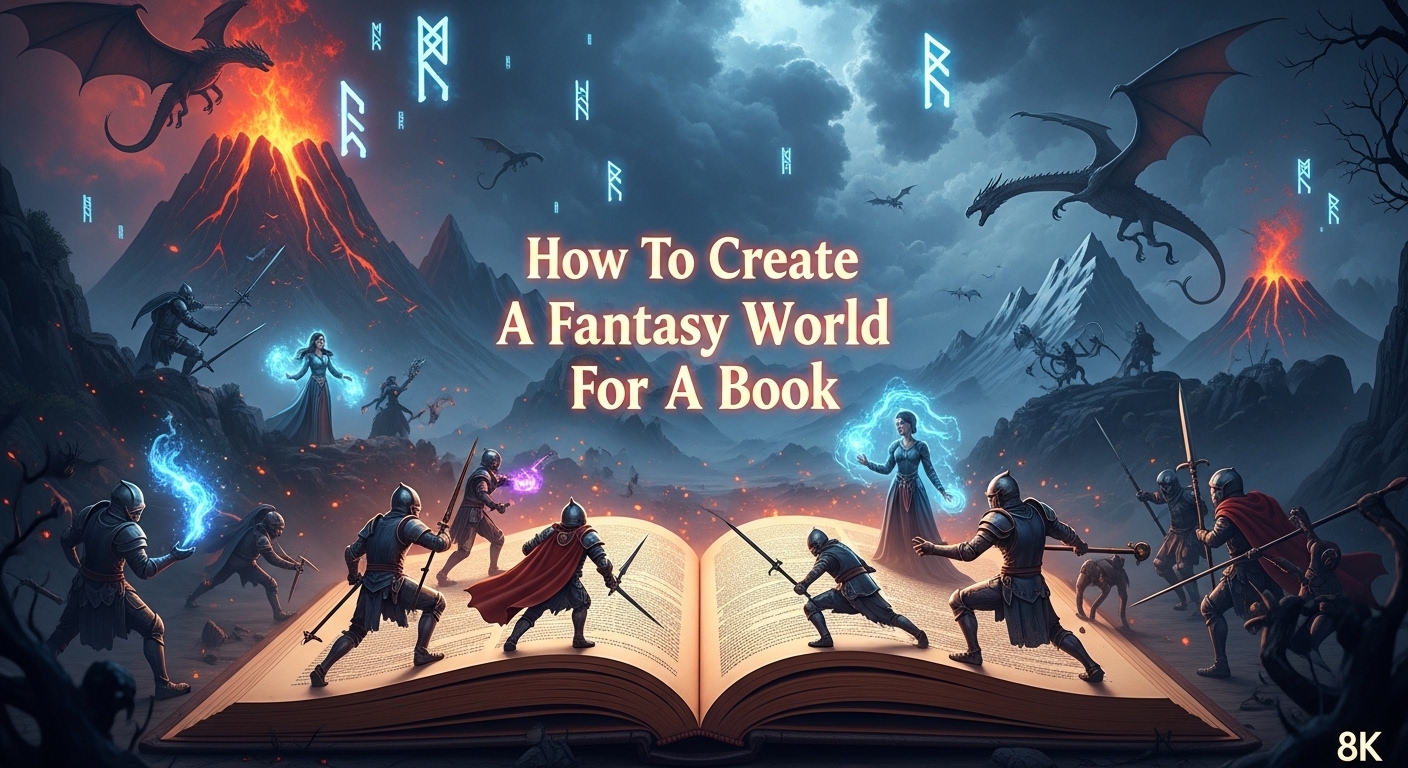
Fantasy is more than dragons, magic systems, and invented maps. At its core, fantasy is about building a world so immersive that readers forget they are turning pages. Whether you dream of writing an epic saga like The Lord of the Rings or a character-driven magical tale like Harry Potter, the strength of your story will depend on how believable and layered your world feels.
Creating a fantasy world can feel overwhelming. Where do you begin? Geography? Magic? Politics? Creatures? The truth is: worldbuilding is both structural and emotional. It requires logic, imagination, and consistency.
In this comprehensive guide, you’ll learn exactly how to create a fantasy world for your book—step by step—with clarity, depth, and creative freedom.
Why Worldbuilding Matters
A fantasy world is not just a backdrop. It shapes:
- Your characters’ beliefs and struggles
- The political tensions and conflicts
- The economy and survival systems
- The themes of your story
Think about the layered political systems in A Song of Ice and Fire. The world itself generates conflict. The environment creates hardship. The culture drives betrayal and loyalty.
A strong fantasy world makes your story feel inevitable rather than convenient.
Step 1: Start With the Core Concept
Before drawing maps or inventing languages, ask yourself:
- What makes this world different from ours?
- What emotional tone defines it? Dark and brutal? Whimsical and hopeful?
- What central theme does this world explore?
Your world should reflect your story’s heart.
For example:
- A world where magic is dying can reflect themes of loss and change.
- A floating-island civilization might explore class division between sky and ground dwellers.
- A desert kingdom built on water trade can center on survival and power.
Don’t build randomly. Build intentionally.
Step 2: Design the Geography
Geography influences everything: climate, culture, economy, and warfare.
Key Questions to Ask:
- Are there continents, islands, or a single landmass?
- What climates dominate?
- Where are natural barriers (mountains, oceans, forests)?
- How do people travel?
Mountains create isolation. Rivers create trade routes. Harsh winters create resilience. Deserts create scarcity.
You don’t need a detailed map at first—but understanding physical terrain helps maintain realism. Many writers sketch rough maps, even if readers never see them.
Step 3: Develop Cultures and Societies
A fantasy world becomes believable when its people feel real.
Consider:
- Social hierarchy
- Religious beliefs
- Traditions and rituals
- Fashion and architecture
- Food and daily life
- Attitudes toward magic or outsiders
Avoid making every kingdom feel the same. Cultural differences create natural tension and conflict.
For example:
- One region may worship elemental spirits.
- Another may outlaw magic entirely.
- A coastal nation might value sailors above scholars.
Depth comes from specificity.
Step 4: Create a Logical Magic System
Magic is exciting—but it must have rules.
Readers accept the impossible when it follows internal logic.
Decide:
- Who can use magic?
- What does it cost?
- What are its limits?
- Can it be learned or inherited?
- Is it feared, regulated, or worshipped?
If magic solves every problem effortlessly, tension disappears.
There are generally two types of systems:
Soft Magic System – mysterious and unexplained (common in mythic fantasy).
Hard Magic System – structured rules and limitations (common in modern epic fantasy).
Choose the one that fits your story’s tone.
Step 5: Establish History and Mythology
Every world has a past.
Ask yourself:
- Was there a great war?
- Did empires rise and fall?
- Are there ancient prophecies?
- What myths do people believe?
You don’t need to reveal all history in your book—but you should know it.
History creates realism. It explains why kingdoms hate each other. It explains ruined cities. It explains ancient magical artifacts.
A world without history feels flat.
Step 6: Build Political and Power Structures
Power drives plot.
Consider:
- Who rules?
- How are leaders chosen?
- Are there councils, monarchies, guilds, or dictators?
- Is there corruption?
Politics don’t have to be complicated—but they should influence conflict.
Power struggles make stakes personal and large-scale at the same time.
Step 7: Design the Economy and Resources
Fantasy worlds need practical foundations.
Ask:
- What is the main currency?
- What resources are valuable?
- Is there trade between regions?
- What creates wealth or poverty?
If magic exists, does it replace labor? Or is it rare and expensive?
Economic tension creates natural stakes. Scarcity leads to conflict. Trade leads to alliances.
Step 8: Create Unique Flora and Fauna
Fantasy worlds thrive on imaginative ecosystems.
Consider:
- Magical creatures
- Mythical beasts
- Unique plants
- Dangerous wildlife
But be careful not to add creatures just for decoration. Each species should serve a purpose—symbolic, ecological, or narrative.
If dragons exist:
- Do they dominate the food chain?
- Are they intelligent?
- Are they hunted?
Ecosystems must make sense.
Step 9: Develop Language and Naming Conventions
Names carry cultural identity.
Decide:
- Do certain regions use similar sounds?
- Are names long and lyrical? Short and harsh?
- Are there titles or honorifics?
You don’t need to create a full language unless you want to. Consistency matters more than complexity.
Step 10: Anchor the World in Character Perspective
Worldbuilding should never feel like a textbook.
Reveal the world through:
- Dialogue
- Character observations
- Conflict
- Cultural misunderstandings
- Personal stakes
Readers don’t need a history lecture. They need to experience the world.
Instead of explaining a religious ritual, show a character nervously preparing for it.
Instead of describing a political system in detail, show how it oppresses someone.
Emotion makes worldbuilding powerful.
Worldbuilding Checklist Table
Here’s a practical overview to organize your fantasy world:
| Element | Questions to Answer | Why It Matters |
| Geography | Climate? Terrain? Borders? | Shapes culture and conflict |
| Culture | Traditions? Religion? Social roles? | Adds realism and tension |
| Magic System | Rules? Costs? Limits? | Maintains tension and logic |
| History | Wars? Legends? Fallen empires? | Creates depth and continuity |
| Politics | Who holds power? How? | Drives large-scale conflict |
| Economy | Trade? Currency? Scarcity? | Grounds the world practically |
| Creatures | Role in ecosystem? Symbolism? | Enhances immersion |
| Language | Naming patterns? Titles? | Strengthens authenticity |
Use this table as a blueprint when building your world.
Common Worldbuilding Mistakes to Avoid
1. Overbuilding Without Plot
Don’t spend years building a world and never writing the story.
2. Info-Dumping
Readers don’t need every detail at once.
3. Inconsistent Rules
If magic can’t heal the dead in chapter one, it shouldn’t suddenly do so in chapter twenty.
4. Generic Kingdoms
Avoid “medieval Europe copy-paste” unless you add unique twists.
How Much Worldbuilding Is Enough?
The answer: enough to support your story.
Some authors create thousands of years of history. Others build only what’s necessary for the plot.
Start small:
- One city
- One kingdom
- One conflict
Expand only when needed.
Practical Exercise to Start Today
Try this:
- Write a one-paragraph summary of your world.
- Describe one major conflict shaping it.
- Invent one cultural tradition.
- Define one rule of magic.
- Create one historical event that still impacts the present.
Within an hour, you’ll have the skeleton of a fantasy world.
Final Thoughts
Creating a fantasy world is an act of courage. You are inventing reality. You are deciding what is possible.
But remember: the most important element isn’t magic, geography, or politics.
It’s emotional truth.
Readers fall in love with worlds that feel lived in. They connect to struggle, hope, injustice, rebellion, love, and transformation.
If your world reflects the emotional journey of your characters, it will feel real—no matter how fantastical.
Build slowly. Stay consistent. Let conflict shape geography and culture. Let history leave scars.
And above all, let your world challenge your characters.
Because in fantasy, the world itself is often the greatest antagonist—and sometimes, the greatest ally.