Writing a book is one of the most ambitious creative projects a person can take on. Some people carry an idea for years before finally deciding to turn it into something real. Others know exactly what they want to say but struggle to organize their thoughts into a complete manuscript. Then there are entrepreneurs, public speakers, business owners, influencers, and professionals who have valuable stories or expertise but simply do not have the time to write an entire book themselves. That is where ghostwriters enter the picture.
The idea of hiring a ghostwriter used to feel mysterious to many people. Some imagined it was something only celebrities or politicians did behind closed doors. Today, ghostwriting has become a normal part of the publishing industry. Memoirs, business books, self-help guides, novels, and even thought-leadership books are frequently created through collaborations between authors and ghostwriters. The process is more common than most readers realize.
Still, finding the right ghostwriter is not easy. A book is personal. Whether it is fiction or nonfiction, your voice, experiences, and ideas matter. The wrong writer can make your story feel artificial, lifeless, or disconnected from who you are. The right writer, however, can transform scattered thoughts into a compelling manuscript that still sounds authentically yours.
Understanding how to find a ghostwriter for a book requires more than searching random websites or hiring the first freelancer with a polished portfolio. It involves understanding the industry, knowing what type of ghostwriter you need, recognizing pricing structures, protecting your rights, and building a collaborative relationship that can survive the long process of creating a manuscript.
This guide explores the complete process in detail so you can approach ghostwriting with clarity and confidence.
What a Ghostwriter Actually Does
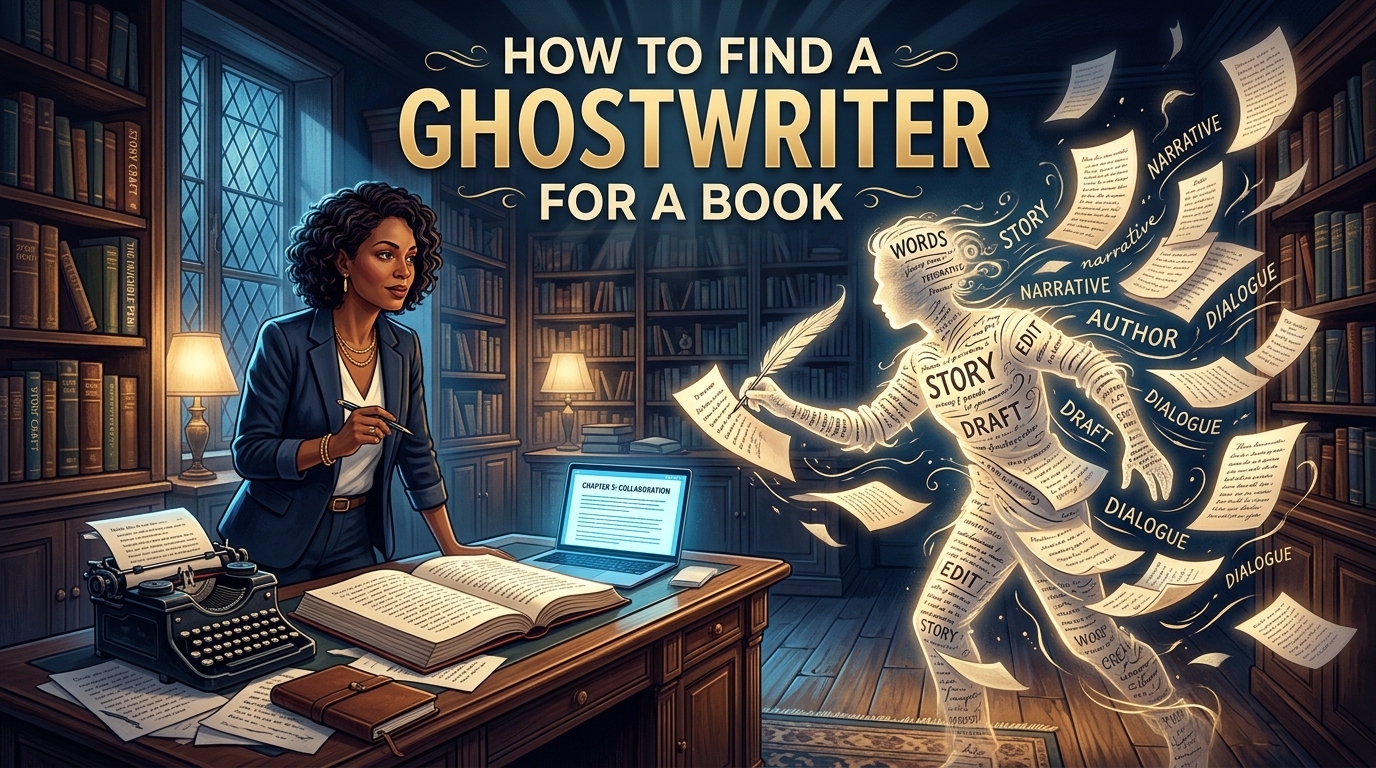
A ghostwriter is a professional writer hired to create content that will ultimately be credited to someone else. In book publishing, the ghostwriter works behind the scenes to help shape ideas, organize information, conduct interviews, write chapters, revise drafts, and complete manuscripts.
Some ghostwriters work almost entirely from notes and outlines. Others interview clients for dozens of hours and build the book from recorded conversations. In fiction, ghostwriters may follow detailed story bibles or create narratives from loose concepts. The level of involvement depends on the project and the agreement.
A skilled ghostwriter does far more than simply write words on a page. They interpret voice, structure information, strengthen pacing, clarify themes, and help shape the emotional and intellectual core of a book. Many clients assume ghostwriting is mostly transcription work, but the reality is much more collaborative and strategic.
One of the biggest misconceptions about ghostwriting is that hiring one somehow makes the work less legitimate. In reality, the client still provides the vision, expertise, experiences, and authority behind the book. The ghostwriter simply helps bring that material into publishable form.
Why So Many Authors Hire Ghostwriters
People hire ghostwriters for many different reasons, and not all of them are related to poor writing skills. Some highly educated and articulate people still struggle with long-form storytelling or book structure. Others simply do not have the time required to produce a polished manuscript.
Business professionals often hire ghostwriters because they want to establish authority in their industry without sacrificing months or years of work time. Public figures may need help organizing life stories into compelling memoirs. Fiction writers sometimes hire developmental collaborators to turn broad concepts into fully realized novels.
There are also emotional reasons people seek ghostwriters. Writing a deeply personal story can feel overwhelming. Trauma, grief, or complicated life experiences may be easier to communicate through conversation than through solitary writing sessions. A compassionate ghostwriter can help shape difficult memories into meaningful narratives.
The modern publishing world has also increased demand for ghostwriters because content moves quickly. Many professionals want books as part of larger branding strategies, speaking careers, coaching businesses, or online platforms. A ghostwriter can accelerate that process significantly.
Deciding What Type of Ghostwriter You Need
Before searching for writers, it is important to understand the kind of help your project requires. Ghostwriting exists on a broad spectrum.
Some writers specialize in memoirs and personal narratives. Others focus entirely on business books, leadership content, self-help, or nonfiction expertise-driven material. Fiction ghostwriters often work within specific genres such as romance, thriller, fantasy, or science fiction.
You may not even need a full ghostwriter. Some projects benefit more from co-writing, developmental editing, or manuscript coaching. If you already have several chapters completed, you might need someone who can reshape and strengthen existing material rather than create everything from scratch.
The clearer your understanding of your own project, the easier it becomes to identify writers who truly fit your needs.
Where Most People Find Ghostwriters
The internet has made ghostwriters easier to access than ever before, but it has also made the market more crowded and inconsistent. Some writers are highly experienced professionals with bestselling credits, while others are inexperienced freelancers learning as they go.
Freelance platforms are one of the most common starting points. Websites like Upwork and Freelancer contain thousands of ghostwriters across different price ranges. These platforms make it easier to compare reviews, portfolios, and communication styles. However, quality varies dramatically, so careful vetting becomes essential.
Professional ghostwriting agencies offer another route. Agencies often manage the matching process and provide structured workflows, contracts, and editorial oversight. Companies such as Banett Ghostwriting, The Urban Writers,Reedsy, and Kevin Anderson & Associates connect clients with experienced professionals in different genres and industries.
Writers’ communities and publishing networks can also lead to strong collaborations. LinkedIn has become surprisingly useful for finding professional ghostwriters because many showcase their experience, niches, and publishing credits there. Referrals from editors, literary agents, or other authors are often among the most reliable ways to find quality talent.
Some clients search directly through Google using targeted phrases like “memoir ghostwriter,” “business book ghostwriter,” or “fiction ghostwriter for fantasy novels.” This approach often reveals independent professionals with personal websites and detailed portfolios.
The best place to search depends on your budget, genre, timeline, and desired level of collaboration.
Comparing Different Ways to Hire a Ghostwriter
| Hiring Method | Best For | Advantages | Challenges |
| Freelance Platforms | Budget-conscious authors | Wide range of pricing and talent | Quality varies significantly |
| Ghostwriting Agencies | Professional, managed experience | Contracts, editing support, structured process | Higher costs |
| Referrals & Networking | Serious long-term collaborations | Greater trust and reliability | Takes time to build connections |
| Independent Ghostwriters | Personalized collaboration | Direct communication and flexibility | Requires stronger vetting |
| Publishing Communities | Genre-specific projects | Writers with industry knowledge | Can be competitive and selective |
How to Evaluate a Ghostwriter Properly
Many people make the mistake of hiring based entirely on price or surface-level portfolios. A ghostwriter should be evaluated on much deeper qualities.
Voice adaptability is one of the most important skills. Great ghostwriters can write in different tones and styles while maintaining consistency. During early conversations, pay attention to whether the writer seems interested in understanding your perspective and personality rather than imposing their own style onto the project.
Experience matters, but relevant experience matters even more. A talented romance ghostwriter may not be the right fit for a business leadership book. Likewise, someone skilled in technical nonfiction may struggle with emotionally layered memoir writing.
Communication style is equally important. Ghostwriting projects can last months or even years. You need someone who responds clearly, listens carefully, and handles feedback professionally. Many projects fail not because of writing quality but because communication deteriorates during revisions.
Ask potential writers about their process. Do they conduct interviews? Create outlines first? Deliver chapters in stages? Include revisions? Transparency about workflow often reflects professionalism.
Samples are useful, but remember that ghostwriters frequently cannot reveal past work due to confidentiality agreements. Some may provide anonymized excerpts or custom samples instead.
Understanding Ghostwriting Costs
One of the most confusing aspects of ghostwriting is pricing. Costs vary dramatically depending on experience, genre, manuscript length, and project complexity.
Lower-budget ghostwriters may charge a few thousand dollars for shorter books, while elite professionals can charge six figures for major projects. Most professional full-length ghostwriting projects fall somewhere between those extremes.
Memoirs and deeply researched nonfiction books usually cost more because they require extensive interviewing and organization. Fiction projects may also become expensive if world-building, plotting, or developmental work is involved.
Pricing structures vary as well. Some writers charge flat project fees. Others bill hourly or per word. Milestone payment systems are common, where payments are divided across outlining, drafting, revisions, and final delivery stages.
Extremely cheap ghostwriting services often produce disappointing results. Low pricing sometimes reflects rushed work, outsourced labor, AI-generated content, or limited experience. A book represents your reputation, so quality matters.
That does not mean the most expensive option is automatically the best. The goal is to find a writer whose skills, communication, and process justify the investment.
Why Chemistry Matters More Than Most People Realize
Ghostwriting is unusually personal compared to many freelance relationships. A writer may spend months hearing your stories, discussing your goals, and shaping your ideas into narrative form. If the connection feels uncomfortable early on, the collaboration may become frustrating later.
A strong ghostwriter-client relationship requires trust. You should feel comfortable sharing thoughts, memories, opinions, and vulnerabilities without feeling judged or misunderstood.
Many experienced ghostwriters conduct discovery calls before accepting projects because they also want to determine whether the partnership feels compatible. Chemistry influences creativity more than people expect.
The best collaborations often feel conversational rather than transactional.
Questions You Should Ask Before Hiring
Asking thoughtful questions can reveal far more about a writer than polished marketing language ever will.
Ask about their experience with your genre and audience. Ask how they handle revisions and disagreements. Ask whether they use interviews, outlines, or questionnaires during development. Discuss timelines realistically rather than emotionally.
It is also important to ask about confidentiality and ownership rights. In most ghostwriting agreements, the client owns the manuscript and publishing rights once payment is completed. Still, every detail should appear clearly in a written contract.
You should also ask how involved the writer expects you to be. Some ghostwriters require active collaboration throughout the process, while others operate more independently.
Transparency early on prevents major misunderstandings later.
Red Flags to Watch For
The ghostwriting industry contains many talented professionals, but it also contains misleading marketing and unrealistic promises. Be cautious of anyone guaranteeing bestseller status. Publishing success depends on marketing, audience reach, timing, quality, and many unpredictable factors. No writer can honestly promise bestseller results.
Another warning sign is refusal to provide contracts or clear payment terms. Professional ghostwriters protect both themselves and their clients through written agreements. Poor communication during early conversations often becomes worse later. If someone takes weeks to reply, ignores questions, or avoids discussing process details, the collaboration may become difficult.
Be wary of agencies or freelancers who promise impossibly fast turnaround times for full-length books. High-quality ghostwriting takes time, especially when interviews, revisions, and research are involved.
The Importance of Contracts
A contract protects everyone involved in the project. It defines expectations, payment schedules, deadlines, revision policies, ownership rights, confidentiality clauses, and termination procedures. Without a contract, misunderstandings can escalate quickly. Even small details like the number of included revisions should be clarified beforehand.
Many ghostwriters use nondisclosure agreements as part of their process, especially when handling sensitive personal stories or proprietary business information. If the project represents a major financial investment, consulting a publishing attorney can also provide additional protection and clarity.
How the Ghostwriting Process Usually Works
Every writer has their own approach, but most ghostwriting projects follow similar stages. The process often begins with discovery conversations where the writer learns about the book’s purpose, audience, themes, and goals. Some projects involve extensive interviews recorded over weeks or months.
After gathering material, the ghostwriter usually develops an outline or book structure. This phase is critical because it shapes pacing, chapter organization, and narrative direction before drafting begins. Drafting often happens chapter by chapter, allowing feedback throughout the process. Revisions refine voice, clarity, emotional depth, and consistency.
Once the manuscript is complete, some ghostwriters also assist with editing coordination, publishing preparation, or proposal development for traditional publishing submissions. A successful project feels collaborative rather than mechanical.
Preserving Your Authentic Voice
One fear many people have about ghostwriting is losing their authentic voice. They worry the book will sound artificial or detached from who they are. A talented ghostwriter does the opposite. Their job is to amplify your voice, not replace it.
Voice preservation comes through interviews, observation, rhythm analysis, and careful listening. Skilled ghostwriters pay attention to sentence patterns, emotional phrasing, humor, storytelling habits, and conversational flow. This is why communication matters so much during the hiring process. If a writer truly understands you, the final manuscript should still feel emotionally recognizable.
The best ghostwritten books often sound so natural that readers never suspect another writer helped shape them.
Should You Hire an Agency or an Independent Ghostwriter?
Both options have advantages. Agencies provide structure, management, editing support, and replacement options if problems arise. This can reduce stress for first-time authors unfamiliar with publishing workflows.
Independent ghostwriters, however, often provide more direct collaboration and flexibility. Communication may feel more personal and intimate because there are fewer layers between client and writer. Agencies tend to cost more because they include additional overhead and management. Independent professionals may offer more flexible pricing structures.
The right choice depends on how much guidance and structure you want during the process.
The Emotional Side of Hiring a Ghostwriter
Many people underestimate how emotional ghostwriting can become. Sharing unfinished ideas or personal experiences requires vulnerability. Some clients feel insecure about not writing the book themselves. Others worry about creative control. These feelings are normal. A ghostwriter is not replacing your story. They are helping shape it into something readable, compelling, and complete. The emotional ownership of the book still belongs to you because the ideas, memories, expertise, and vision originate from you. For many people, hiring a ghostwriter becomes the difference between carrying an unwritten idea forever and finally seeing it become real.
Final Thoughts
Finding the right ghostwriter for a book is less about hiring someone to “write for you” and more about finding a creative partner who understands your goals, voice, and vision. The process requires patience, research, communication, and trust. Rushing into agreements based only on pricing or marketing promises often leads to disappointment.
A strong ghostwriter can help organize chaos into structure, transform conversations into narrative, and turn unfinished ideas into polished manuscripts. Whether you are writing a memoir, business book, self-help guide, or novel, the right collaboration can make the publishing journey far more manageable and far more rewarding.
Books carry pieces of identity inside them. That is why choosing a ghostwriter should never feel like hiring anonymous labor. It should feel like building a partnership with someone capable of understanding the heart of your story and helping it reach the page in the strongest possible form.