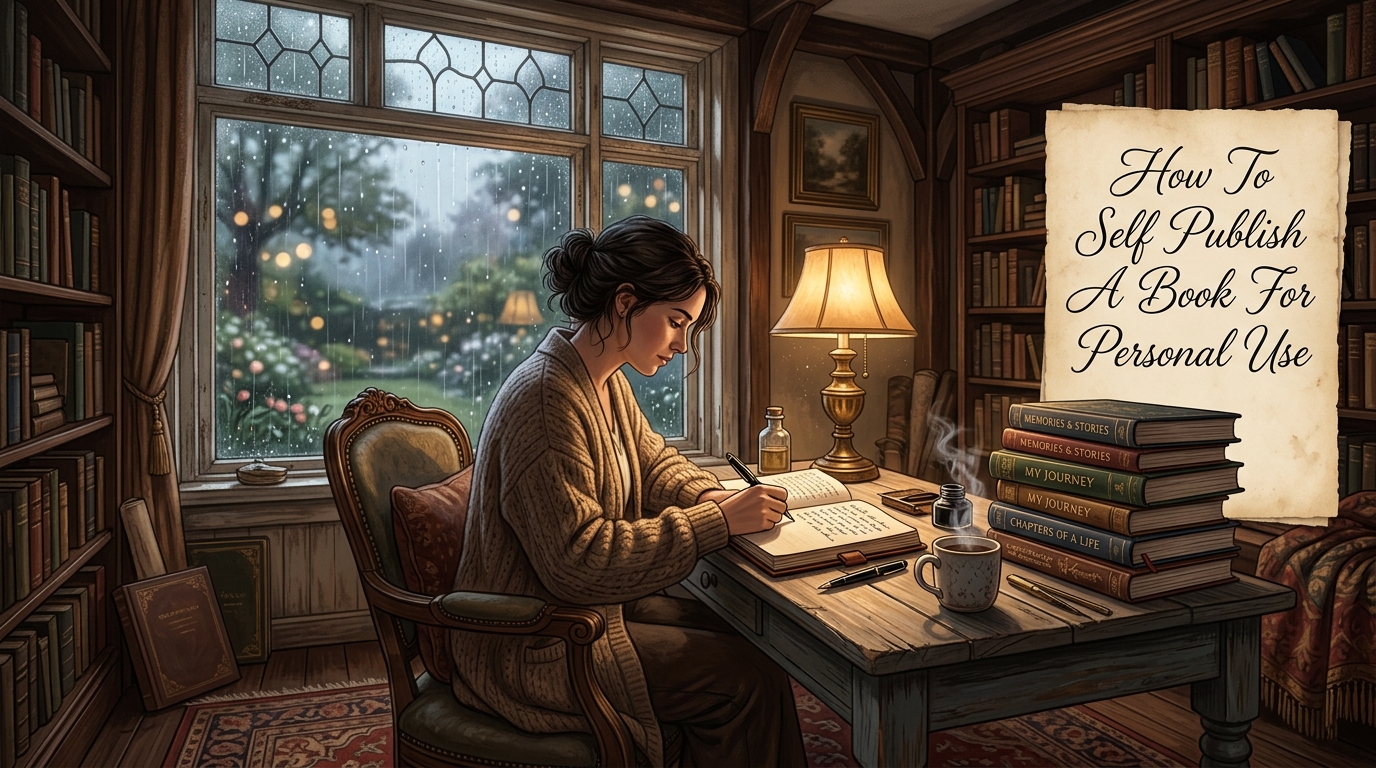
There is something deeply personal about holding a book that exists only because you decided it should. Not every book is created for bookstore shelves, bestseller lists, or commercial success. Some books are made for family histories that deserve preservation. Others are built from journals, poems, recipes, photographs, letters, or stories that would otherwise remain hidden inside folders and forgotten hard drives. In recent years, self-publishing has expanded beyond entrepreneurship and become a meaningful way for ordinary people to preserve memories, experiences, and creative work for themselves and the people closest to them.
Publishing a book for personal use is different from publishing for profit. The pressure changes entirely. Instead of worrying about marketing campaigns, distribution chains, or sales rankings, the focus becomes quality, emotional value, and permanence. You are creating something tangible that may sit on your shelf for decades, become part of a family archive, or be handed down to future generations. That changes the way the process feels. It becomes less about selling and more about preserving.
The good news is that modern self-publishing platforms have made this process easier than ever before. You no longer need a traditional publisher to print a professional-looking hardcover or paperback. You can design, format, upload, and print books in small quantities without spending thousands of dollars. Whether you want a single copy or fifty copies for relatives and friends, there are practical and affordable ways to do it.
The Meaning Behind Personal Use Publishing
Publishing for personal use usually means creating a book that is not intended for mass commercial distribution. The goal is not necessarily to sell copies online or compete in the marketplace. Instead, the purpose may be emotional, archival, artistic, or commemorative.
Some people publish memoirs for their children and grandchildren. Others create tribute books after the loss of a loved one. Parents often compile childhood photographs and memories into keepsake books. Writers sometimes print private poetry collections or novels simply to see their work in physical form. Many individuals also turn travel journals, spiritual reflections, or family recipes into professionally bound books.
What makes personal publishing unique is the freedom it offers. You are not bound by market trends or industry expectations. Your book does not need to fit a profitable genre or appeal to a broad audience. It only needs to matter to you and the people you want to share it with.
That freedom can also make the process more enjoyable. Without commercial pressure, you can focus entirely on authenticity. The book can be intimate, experimental, sentimental, or unconventional because its primary purpose is personal preservation rather than public validation.
Deciding What Kind of Book You Want to Create
Before beginning the publishing process, it helps to understand exactly what kind of book you want to make. Personal books come in many forms, and each requires a slightly different approach.
A memoir or autobiography usually focuses on storytelling and emotional reflection. A family history book may include photographs, timelines, letters, and historical records. Poetry collections prioritize layout and visual presentation. Cookbooks often combine recipes with family anecdotes and imagery. Journals or devotional writings may require a clean, minimalist design that highlights the text itself.
The structure of your project influences everything that follows, including formatting choices, page size, paper type, and binding style. A photography-heavy book may work best as a large hardcover with glossy pages, while a novel or memoir may feel more natural as a standard paperback with cream-colored paper.
Thinking about the emotional experience of the finished book is important. Ask yourself how you want readers to feel when they open it. Some books are meant to feel elegant and archival. Others should feel warm, intimate, or handmade even when professionally printed.
Writing With Emotional Authenticity
One of the advantages of publishing for personal use is that you can write honestly without worrying about commercial expectations. That honesty often becomes the strongest part of the book.
Many people freeze when they begin writing because they think the work needs to sound literary or professionally polished immediately. In reality, the most memorable personal books are often the ones that feel sincere and emotionally grounded. Readers connect more deeply with honesty than perfection.
When writing memoirs or family stories, details matter. Describing the smell of an old kitchen, the sound of a neighborhood street, or the atmosphere of a family gathering can make memories feel alive again. Personal books become meaningful because they preserve moments that might otherwise disappear over time.
It also helps to write naturally instead of trying to imitate formal publishing styles. A conversational tone often works best for personal projects because it reflects your actual voice. Years later, that voice may become one of the most valuable parts of the book.
Consistency is more important than speed. Some people complete their books in a few months, while others spend years collecting memories, editing photographs, and refining stories. Since the project is personal, you have the freedom to move at your own pace.
Organizing Your Material Before Formatting
One of the biggest mistakes first-time self-publishers make is formatting before organizing. A book becomes far easier to design when the content is already structured clearly.
Begin by separating your material into sections or chapters. If you are creating a memoir, think about periods of life, important relationships, or defining experiences. If you are creating a family book, you might organize chapters by generation, event, or location.
Photographs should also be sorted carefully before layout begins. High-resolution images are essential for printing quality. Old photographs can often be restored or enhanced digitally before being added to the book.
The organization stage is also where many people discover gaps in their stories. You may realize certain transitions need explanation or certain memories deserve more depth. Structuring the book early allows you to identify these issues before de sign work begins.
Why Editing Still Matters for Personal Books
Even if a book is only for family or private circulation, editing remains important. Editing is not about removing personality. It is about improving clarity and readability so the book communicates effectively.
Personal books often contain emotional material, and emotions can make writing repetitive or unclear without the author realizing it. A careful editing process helps refine the structure while preserving authenticity.
There are different levels of editing that can improve a personal project. Basic proofreading catches spelling and grammar mistakes. Developmental editing improves structure and storytelling flow. Line editing focuses on sentence rhythm and clarity.
You do not necessarily need to hire a professional editor, although many people choose to do so for special projects. Trusted friends or relatives can also help review the manuscript. Fresh eyes often notice inconsistencies or missing details that the writer overlooks.
A well-edited personal book feels more permanent. It gives the impression that the memories and stories were treated with care and respect.
Choosing the Right Book Size and Format
Book formatting is one of the stages where the project begins to feel real. Suddenly, the manuscript transforms into something that resembles an actual book rather than a document on a screen.
The size of your book affects both appearance and readability. Standard memoirs and novels often use sizes like 5.5” x 8.5” or 6” x 9”. Photography books and keepsakes may benefit from larger dimensions that showcase images more effectively.
Hardcovers tend to feel more archival and durable, especially for sentimental projects. Paperbacks are more affordable and lightweight, making them ideal for sharing multiple copies with friends or relatives.
Typography also plays a surprisingly important role in emotional presentation. Serif fonts often create a classic literary feel, while sans-serif fonts appear modern and clean. Line spacing, margins, and chapter styling all contribute to the reading experience.
Formatting software such as Microsoft Word, Adobe InDesign, Atticus, Canva, or Vellum can help create professional layouts. Many print-on-demand platforms also offer built-in templates that simplify the process for beginners.
Designing a Cover That Feels Personal
The cover is the emotional doorway into the book. Even if the project is private, the cover influences how the book is perceived and remembered.
A personal-use book cover does not need to imitate commercial trends. Instead, it should reflect the spirit of the content. A family history might feature an old photograph. A poetry collection may work better with minimalist typography and soft colors. A memoir might use symbolic imagery tied to the author’s life experiences.
The goal is not necessarily flashy design. The goal is emotional resonance.
Professional cover designers can help if you want a polished appearance, but many people also create beautiful covers using design platforms like Canva. The key is balance. Overcrowded covers often feel amateurish, while clean and intentional designs appear timeless.
Pay attention to spine design as well, especially if you plan to keep the book on shelves for years. A readable title on the spine adds a sense of permanence and professionalism.
Comparing Self-Publishing Platforms
Modern self-publishing platforms have made personal publishing incredibly accessible. The best option depends on how many copies you want, what type of book you are creating, and how much control you want over printing quality.
Here is a comparison of some popular self-publishing options for personal-use books:
| Platform | Best For | Print Quality | Minimum Copies | Hardcover Option | Ease of Use |
| Amazon KDP | Memoirs, novels, journals | Good | 1 | Yes | Very Easy |
| Lulu | Personal keepsakes and photo books | High | 1 | Yes | Easy |
| Blurb | Photography and visual books | Excellent | 1 | Yes | Moderate |
| IngramSpark | Professional archival printing | Very High | 1 | Yes | Moderate |
| BookBaby | Premium custom publishing | Excellent | Small batches | Yes | Easy |
Amazon KDP is often the simplest option for beginners because it allows single-copy printing at relatively low cost. Lulu and Blurb are popular for visually rich projects because of their high-quality paper and printing options. IngramSpark is known for professional-level production quality, while BookBaby offers more hands-on publishing support.
For purely personal projects, print-on-demand services are usually the most practical because you only pay for copies you actually need.
Understanding the Costs of Personal Self-Publishing
One reason many people delay publishing personal books is the assumption that printing a book is extremely expensive. In reality, costs vary widely depending on quality choices and quantity.
A simple black-and-white paperback memoir can cost surprisingly little to print, especially through print-on-demand platforms. Hardcover editions with premium paper and color photographs cost more but often feel worth the investment for sentimental projects.
Editing, cover design, formatting, and photo restoration may increase expenses if outsourced professionally. However, many people handle portions of the process themselves to reduce costs.
The advantage of personal publishing is flexibility. You control the budget entirely. You can create a meaningful book with modest spending or invest heavily in premium production if the project has long-term family significance.
The emotional value of the finished book often outweighs the financial cost. Many people later describe these books as some of the most meaningful creative projects they have ever completed.
Printing Only a Few Copies
Traditional publishing once required large print runs, but modern print-on-demand technology changed that completely. You can now print a single professionally bound copy without ordering hundreds of books.
This is particularly important for personal-use publishing because most people do not need large inventories. You may only want one personal archive copy and a few additional copies for close family members.
Small-batch printing also allows flexibility. If you later discover mistakes or want to update sections, revised editions can be uploaded easily without wasting unsold inventory.
Some families even create annual editions of memory books, documenting important events, photographs, and milestones over time. Print-on-demand makes these evolving projects financially realistic.
Adding Photos, Letters, and Personal Documents
One of the most powerful aspects of personal publishing is the ability to preserve fragile materials inside a durable format.
Old letters, journal entries, postcards, newspaper clippings, recipes, and photographs often deteriorate over time. Including them in a printed book transforms them into preserved artifacts rather than scattered pieces of paper stored in boxes.
Scanning materials at high resolution is essential for print clarity. Image restoration tools can repair faded or damaged photographs while still preserving their historical character.
Captions also matter more than people realize. Future readers may not recognize faces or understand contexts decades later. Identifying names, dates, locations, and relationships gives lasting meaning to the images.
A personal book often becomes more valuable over time precisely because it preserves information that future generations might otherwise lose completely.
Why Personal Books Become Family Heirlooms
Many people initially create personal books casually, only to realize later how significant they become emotionally.
A printed book has permanence that digital files rarely achieve. Hard drives fail. Phones are replaced. Social media posts disappear into endless timelines. Physical books remain visible, touchable, and discoverable.
Family memoirs and personal histories often become emotional anchors across generations. Children and grandchildren may learn stories they never heard directly. Handwritten notes, photographs, and reflections suddenly become part of a preserved legacy.
This is especially meaningful for older family members whose memories may never have been formally documented before. Publishing their stories can feel like safeguarding history itself.
Even private novels or poetry collections can carry emotional significance. Many writers dream of simply holding their work in physical form once in their lifetime. Self-publishing for personal use allows that dream to become real without needing industry approval.
Protecting Your Privacy While Publishing
Since personal books often contain intimate material, privacy is an important consideration. Fortunately, self-publishing platforms allow you to maintain full control over distribution.
You do not need to list the book publicly for sale. Most platforms allow private printing or limited distribution settings. You can order copies directly without making the title searchable in online bookstores.
Some people even use pen names or omit identifying information for extra privacy. Others create password-protected digital editions for family sharing.
The important thing is understanding that self-publishing does not automatically mean public exposure. You remain in control of who sees the book and how widely it circulates.
Conclusion
Self-publishing a book for personal use is ultimately about preservation, expression, and meaning. It is about transforming memories, stories, reflections, and creative work into something tangible that can survive beyond screens and temporary files. Unlike commercial publishing, personal publishing removes the pressure to perform for a market. The value of the book comes from what it means to you and the people connected to it.
The process itself can also become deeply rewarding. Writing forces reflection. Organizing memories creates clarity. Designing a book encourages intention. By the time the finished copy arrives in your hands, it often feels like more than a project. It feels like a piece of your life preserved in physical form.
Whether you are creating a memoir, family archive, poetry collection, tribute book, or private novel, modern self-publishing tools make the process accessible to almost anyone. You do not need permission from traditional publishers to create something beautiful and lasting. Sometimes the most important books are not the ones sold to millions of strangers, but the ones created for the people who matter most.