Finishing a manuscript is one of the biggest milestones a writer can reach. Many people dream about writing a book for years, but only a small percentage actually complete one. If you have reached the final page, you have already done something meaningful. But once the excitement settles, a new question usually appears: what happens next?
For many first-time authors, finishing the manuscript feels like standing at the edge of a new world without a map. You may wonder whether to self-publish or seek a traditional publisher. You may question whether your manuscript is ready, whether you need an editor, how book covers work, what marketing costs, or how long publication takes.
The truth is that publication is not a single step. It is a path made of decisions, preparation, and strategy. The authors who move forward with confidence are usually the ones who understand the process early.
This guide walks through the complete first-time author’s path to publication so you know what to do after typing “The End.”
First, Do Not Rush to Publish
The biggest mistake many new authors make is publishing too quickly. Completing a manuscript creates excitement, and it is natural to want your book in stores immediately. But a first draft is rarely the final version.
Even professional authors revise extensively after finishing. Many bestselling books go through multiple rounds of edits before readers ever see them.
Set your manuscript aside for a short period if possible. A few weeks of distance can help you return with clearer eyes. When you reread it later, weak chapters, pacing issues, repetition, and unclear scenes become easier to spot.
This pause often improves a book more than authors expect.
Begin with Self-Editing
Before hiring anyone or submitting anywhere, revise the manuscript yourself.
Read through the full book and ask practical questions. Does the opening chapter create interest? Does each chapter move the story or message forward? Are there sections that drag? Are characters believable? Is the structure clear?
For nonfiction, check whether ideas flow logically and whether readers can easily follow the content. For fiction, look carefully at pacing, dialogue, conflict, and emotional payoff.
Grammar matters, but structure matters more. A grammatically clean boring book still struggles.
Your first editing goal should be clarity, consistency, and reader engagement.
Share It with Beta Readers
Once you have improved the manuscript yourself, outside feedback becomes valuable. Beta readers are early readers who provide honest reactions before publication. Choose readers who enjoy your genre or subject. Family and friends may be supportive, but they are not always the most objective. Balanced feedback is more useful than praise.
Ask specific questions. Were there boring parts? Did anything confuse them? Which characters stood out? Did the ending satisfy them? Would they recommend it? Patterns matter more than one opinion. If five readers mention a slow middle section, pay attention. Beta readers often reveal issues authors cannot see because they know the story too well.
Professional Editing Is Worth Serious Consideration
Many first-time authors underestimate how important professional editing can be. Readers quickly notice poor grammar, awkward sentences, continuity mistakes, and weak formatting.
Depending on your manuscript, you may need different editing levels:
| Editing Type | Purpose | Best Time to Use |
| Developmental Editing | Improves structure, pacing, story flow, content strength | Early revision stage |
| Line Editing | Improves style, sentence quality, tone | After structure is stable |
| Copy Editing | Corrects grammar, spelling, consistency | Near final draft |
| Proofreading | Final typo check before release | Last stage |
Not every book needs every service, but almost every publishable book benefits from some professional review.
Editing is not just correction. It is refinement.
Choose Your Publishing Path
This is one of the most important decisions in your author journey. Most first-time writers choose between traditional publishing and self-publishing.
Traditional Publishing
Traditional publishing means submitting your manuscript to literary agents or publishers. If accepted, the publisher usually handles editing, design, printing, and distribution.
The benefits include industry credibility, professional support, and broader bookstore access. The challenges include competition, long timelines, and less creative control.
Many first-time authors spend months or years querying before landing a deal.
Self-Publishing
Self-publishing gives you full control. You decide title, cover, pricing, release date, and marketing strategy. Royalties are often higher per sale than traditional publishing.
The challenge is that you become the project manager. You must coordinate editing, design, formatting, and promotion.
Today, many successful authors build strong careers through self-publishing, especially in fiction niches and specialized nonfiction.
Hybrid or Assisted Publishing
Some companies offer paid publishing support services. Quality varies widely, so research carefully before signing contracts.
Always understand what services you are paying for and what rights you keep.
If You Choose Traditional Publishing
Your next step is preparing a professional submission package. Usually this includes a query letter, synopsis, and sample chapters. Nonfiction may also require a book proposal. Your query letter should briefly explain what the book is about, who it is for, and why you are the right person to write it. Keep it concise and professional.
Research agents who represent your genre. Sending romance to an agent who only handles business books wastes time. Rejections are common. Even excellent books receive many passes. Persistence matters.
If You Choose Self-Publishing
Self-publishing requires treating your book like a product launch.
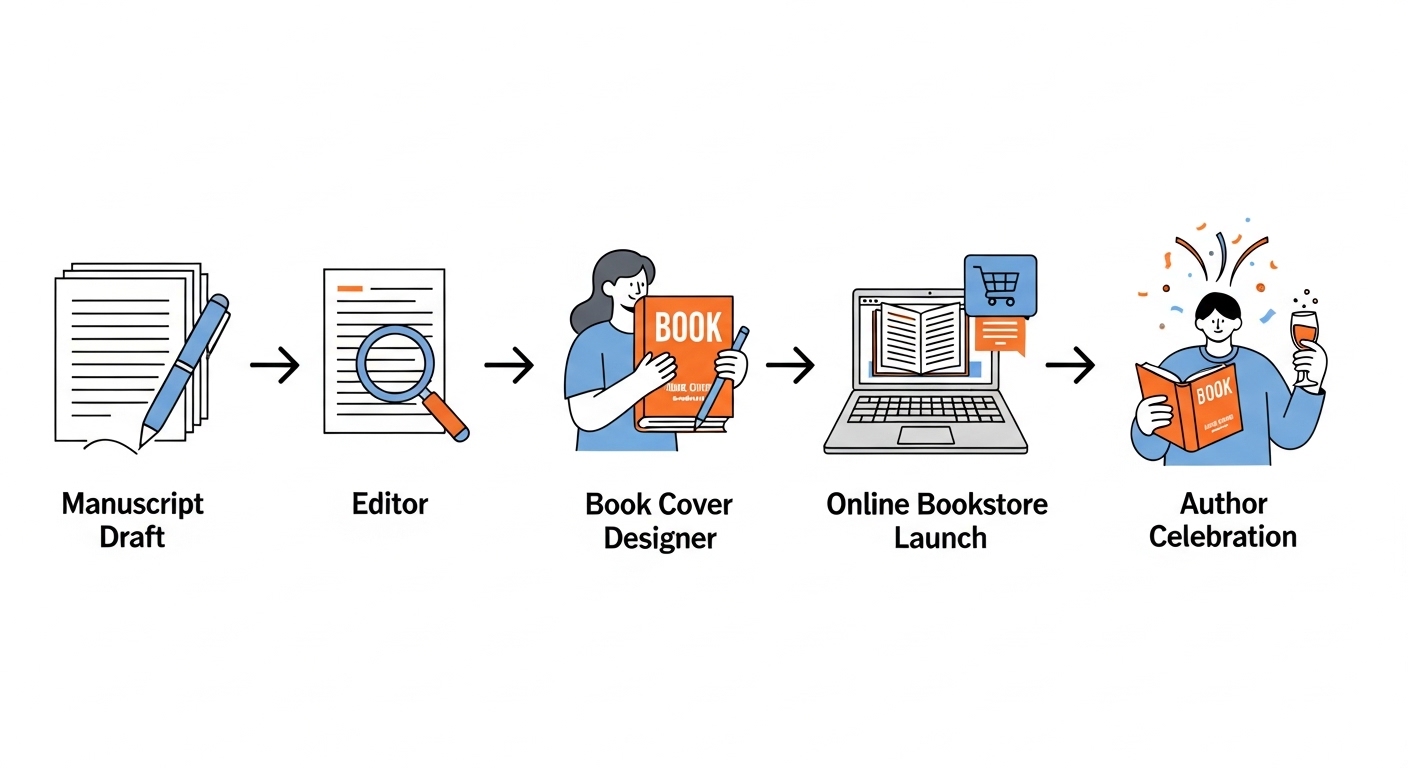
After editing, you need a strong cover design, professional formatting, metadata, pricing strategy, ISBN decisions depending on platform, and a launch plan.
A poor cover can damage sales even if the writing is excellent. Readers absolutely judge books by covers, especially online.
Invest in design that matches your genre expectations. Thriller covers look different from memoir covers. Romance covers differ from business books.
Presentation influences trust.
Book Formatting Matters More Than You Think
Readers expect clean formatting whether they buy print or ebook editions. Margins, spacing, chapter breaks, font choices, clickable tables of contents, page numbering, and indentation all affect reading experience. Bad formatting creates friction. Readers may not consciously describe the issue, but they feel it. If you are not confident with formatting software, consider hiring help or using trusted publishing tools.
Create a Strong Author Platform
Many first-time authors think marketing begins after publication. In reality, visibility starts earlier.
An author platform simply means places where readers can find and connect with you. This may include a website, newsletter, social media presence, or professional profile.
You do not need millions of followers. You need relevance and consistency.
If your book solves a problem, teaches a skill, or entertains a niche audience, start gathering those readers before launch.
Even a small engaged audience can outperform a large passive one.
Build a Realistic Timeline
Publication often takes longer than expected. Self-publishing can happen quickly, but quality still takes time. Traditional publishing can take a year or more after acceptance.
Here is a realistic example timeline:
| Stage | Estimated Time |
| Self-revision | 2–6 weeks |
| Beta reader feedback | 2–4 weeks |
| Professional editing | 3–8 weeks |
| Cover design and formatting | 2–6 weeks |
| Launch preparation | 4–8 weeks |
| Traditional querying | Several months to years |
Planning prevents frustration.
Understand ISBNs, Copyright, and Ownership
First-time authors often worry about legal basics. In many countries, copyright exists automatically when you create original work, though formal registration may provide added protection depending on jurisdiction. ISBNs are identification numbers for books used in retail systems. Some platforms provide them, while some authors buy their own for greater control. Most importantly, understand contracts before signing anything. Know who owns rights to print, ebook, audiobook, translations, and future editions. If terms are unclear, ask questions or seek professional advice.
Prepare for Reviews and Feedback
Publishing a book means inviting reaction. Some readers will love it. Some will not. This is normal. Even celebrated books receive criticism.
Separate your identity from reader response. Reviews are reactions to a product, not a verdict on your worth. Useful criticism can help future books. Unhelpful criticism can be ignored. Long-term authors survive because they keep writing.
Marketing Is Not Optional
Many great books disappear because no one knows they exist. Marketing does not have to feel fake or aggressive. It can simply mean helping the right readers discover a book they would genuinely enjoy.
Effective beginner strategies include author newsletters, podcast interviews, relevant communities, launch teams, review copies, useful social content, and targeted ads if budget allows. Word of mouth remains powerful, but it usually starts with visibility.
Your First Book Is Also Your Education
Many authors place unbearable pressure on a first book. They expect instant success, massive sales, or life-changing recognition. Sometimes that happens. Usually it does not.
More often, the first book teaches lessons that lead to a stronger second book. You learn about readers, editing, positioning, covers, timelines, pricing, and consistency. That knowledge becomes career capital. Instead of asking whether the first book will make you famous, ask whether it can make you better.
Keep Writing During the Publishing Process
One of the smartest moves a new author can make is starting the next project while publishing the first.
Why? Because writing momentum matters. It also protects your mindset from obsessing over sales numbers, agent responses, or reviews.
A growing body of work creates more opportunities than one isolated title ever can. Career authors think in catalogs, not single launches.
Common First-Time Author Mistakes to Avoid
New authors often stumble in predictable ways. They publish too early, skip editing, choose weak covers, ignore metadata, price randomly, expect instant success, or stop after one setback.
Another common mistake is comparing your beginning to someone else’s tenth year. Publishing rewards persistence more than perfection.
What Success Can Look Like
Success is personal. For one author, success means seeing a printed copy on the shelf. For another, it means 500 monthly sales. For another, it means helping readers with a message that matters. Define success before launch. Otherwise, outside noise will define it for you. A clear goal helps shape your decisions.
Final Thoughts
Completing your manuscript is not the end of the journey. It is the handoff point between writing and publishing. Now the focus shifts from imagination to execution. Revise carefully. Seek honest feedback. Choose the publishing path that fits your goals. Invest in presentation. Learn marketing. Stay patient.
Most importantly, keep writing. Your first manuscript proves you can finish. Your next steps prove you can build a publishing future. That is how authors are truly made.