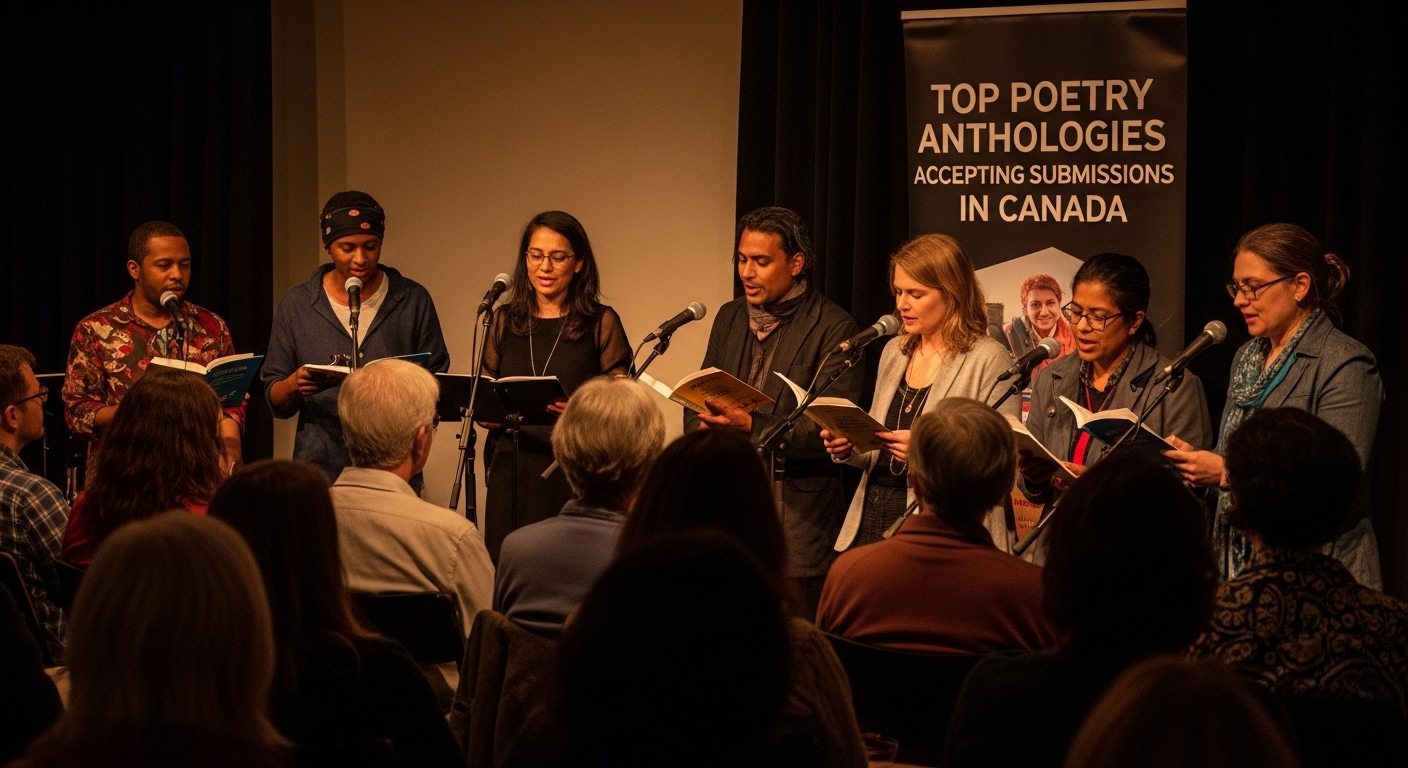
Poetry has always held a powerful place in Canada’s literary landscape. From spoken-word performances in urban cultural centers to quiet literary journals emerging from universities and independent presses, Canadian poetry thrives on diversity, experimentation, and emotional honesty. For poets seeking recognition, publication credits, or simply a wider readership, poetry anthologies offer one of the most accessible and meaningful entry points into the literary world.
Unlike single-author collections, anthologies bring together multiple voices under a shared theme, editorial vision, or cultural conversation. They allow emerging poets to stand alongside established writers while learning how professional editing, thoughtful publishing, and intentional design shape poetry into a lasting artistic experience. Many Canadian anthologies actively encourage submissions from new voices, making them ideal platforms for writers at different stages of their creative journeys.
This guide explores some of the top poetry anthologies and anthology-producing publishers in Canada that regularly accept submissions, along with insights into how poets can successfully prepare their work for consideration.
Anthologies and Their Impact on Canadian Poetic Careers
Anthologies serve as literary bridges. They connect poets with editors, publishers, readers, and the wider writing community. For many writers, an anthology publication becomes their first professional credit — a milestone that builds confidence and credibility.
Canada’s multicultural identity plays a significant role in anthology culture. Editors frequently curate collections centered on themes such as identity, migration, Indigenous voices, environmental awareness, or regional storytelling. Because of this, anthologies often seek fresh perspectives rather than established reputations.
From a professional standpoint, anthology participation also introduces poets to the collaborative side of publishing. Writers experience editorial feedback, formatting standards, and book design decisions that influence how poetry appears on the page. These experiences become invaluable when preparing a full-length manuscript later.
The Canadian Poetry Publishing Landscape
Canada’s poetry ecosystem is supported by independent presses, literary organizations, universities, and arts councils. Many anthology projects emerge through small presses that prioritize artistic innovation over commercial trends.
Unlike large commercial publishing houses, anthology editors typically focus on literary quality, authenticity, and thematic cohesion. This means poets have greater creative freedom, but they must also pay careful attention to submission guidelines and editorial expectations.
Canadian anthology calls often emphasize:
- Original, unpublished poetry
- Strong voice and imagery
- Cultural or thematic relevance
- Careful editing and formatting
Understanding this landscape helps poets align their submissions with the goals of anthology editors.
Leading Poetry Anthologies Accepting Submissions in Canada
Arc Poetry Magazine Anthology Projects
Arc Poetry Magazine, based in Ottawa, is widely respected within Canada’s poetry community. While known primarily as a literary magazine, Arc frequently participates in anthology collaborations and themed poetry collections connected to contests or special editorial initiatives.
Arc values craft-driven poetry that demonstrates emotional clarity and linguistic precision. Their editorial process is known for thoughtful feedback, highlighting the importance of professional editing even at anthology level. Poets whose work balances experimentation with accessibility often find success here.
Participation in Arc-related anthology projects introduces writers to a readership deeply engaged with contemporary Canadian poetry.
The Malahat Review Anthology Initiatives
Operating from the University of Victoria, The Malahat Review has long supported emerging and established poets alike. Alongside journal publications, the editorial team contributes to curated poetry collections and collaborative anthology ventures.
The publication favors polished submissions that reflect careful revision. Poems that demonstrate structural awareness and strong visual design on the page stand out during selection. The editors frequently highlight how typography and layout influence poetic meaning, showing how design plays a crucial role in literary presentation.
Writers seeking literary prestige often view inclusion in Malahat-associated projects as a significant achievement.
Room Magazine Anthologies
Room Magazine is one of Canada’s most influential feminist literary publications. Known for amplifying marginalized voices, Room periodically develops anthology collections inspired by themes explored in its issues.
The editorial vision prioritizes inclusivity, emotional depth, and social awareness. Many anthology calls encourage submissions from women, nonbinary writers, and underrepresented communities.
Room’s editorial process demonstrates how collaborative editing strengthens poetic voice rather than restricting it. Contributors often describe the experience as educational, helping them understand how professional publishing refines raw creativity into impactful literature.
Prairie Fire Anthology Collections
Based in Winnipeg, Prairie Fire has played a major role in Canadian literary culture for decades. Beyond publishing a respected literary journal, Prairie Fire participates in anthology projects connected to contests, workshops, and national literary initiatives.
Prairie Fire values storytelling within poetry — pieces that evoke narrative while maintaining lyrical intensity. Their anthologies frequently explore Canadian landscapes, identity, and cultural memory.
The press is also known for visually appealing book design, reminding poets that presentation enhances reader engagement as much as content itself.
Vallum Contemporary Poetry Anthologies
Montreal-based Vallum focuses on contemporary poetry with strong thematic direction. Each issue revolves around a central concept, and these themes sometimes evolve into anthology-style collections featuring selected poets.
Vallum encourages innovative language and modern poetic forms. Writers experimenting with structure, voice, or hybrid genres often find a welcoming space here.
Their editorial philosophy highlights the balance between creative freedom and disciplined editing — a key lesson for poets preparing professional submissions.
CV2 (The Canadian Journal of Poetry and Critical Writing)
CV2 is known for supporting emerging poets and offering mentorship-driven editorial practices. Anthology collaborations connected to workshops and literary programs often emerge through the CV2 community.
Editors look for authenticity and emotional honesty rather than overly academic language. Submissions that feel lived-in and personal tend to resonate strongly.
For new poets, publication connected to CV2 can provide both exposure and learning opportunities about editorial collaboration.
Filling Station Anthology Projects
Filling Station, based in Calgary, embraces experimental poetry and avant-garde voices. Anthology calls associated with the publication often invite bold, unconventional submissions.
The editorial team values risk-taking and innovation, welcoming poets who challenge traditional forms. Layout and artistic design frequently play a major role in their publications, demonstrating how poetry can exist visually as well as linguistically.
Writers interested in pushing boundaries often gravitate toward these projects.
Brick Books Collaborative Anthologies
Brick Books is one of Canada’s most respected poetry publishers. Although primarily focused on individual collections, the press occasionally participates in collaborative anthologies or themed poetry initiatives.
Brick Books emphasizes literary excellence and refined editing. Acceptance into projects associated with the press signals strong artistic credibility.
Their books are also known for elegant physical design, reflecting Canada’s tradition of treating poetry books as art objects.
Comparison of Key Canadian Poetry Anthologies
| Anthology/Publisher | Editorial Focus | Ideal For | Style Preference | Publishing Strength |
| Arc Poetry Magazine | Craft and clarity | Emerging poets | Contemporary lyric | Strong editing process |
| The Malahat Review | Literary excellence | Established & emerging writers | Structured poetry | Academic prestige |
| Room Magazine | Inclusive voices | Diverse perspectives | Emotional & social themes | Community-driven publishing |
| Prairie Fire | Narrative poetry | Story-focused poets | Regional & cultural themes | Strong book design |
| Vallum | Thematic innovation | Experimental writers | Modern poetic forms | Concept-driven publishing |
| CV2 | Emerging voices | New poets | Personal & authentic | Mentorship editing |
| Filling Station | Experimental work | Avant-garde poets | Hybrid & visual poetry | Creative design focus |
| Brick Books | Literary craftsmanship | Advanced poets | Polished collections | High-quality publishing |
How to Prepare a Strong Anthology Submission
Submitting poetry to anthologies requires more than creative inspiration. Editors receive hundreds of submissions, and careful preparation significantly increases acceptance chances.
First, poets should revise extensively. Editing is not simply correcting grammar; it involves refining imagery, removing unnecessary language, and strengthening emotional resonance. Reading poems aloud often reveals rhythm issues that silent reading misses.
Second, formatting matters. Clean presentation signals professionalism. Consistent spacing, readable fonts, and intentional line breaks contribute to the poem’s visual design, which editors evaluate alongside content.
Third, understanding the anthology’s theme is essential. Editors seek cohesion within collections, so aligning submissions with the anthology’s vision demonstrates awareness and respect for the publishing process.
The Role of Editing, Publishing, and Design in Anthologies
Many poets initially focus only on writing, but anthology publication reveals the collaborative nature of literature. Editors shape manuscripts through dialogue, suggesting revisions that enhance clarity while preserving voice.
Publishing teams handle sequencing, ensuring poems flow meaningfully within the collection. Meanwhile, book design influences how readers interpret poems — margins, typography, and spacing affect pacing and emotional impact.
Canadian presses often invest deeply in these elements, which is why anthology books from independent publishers frequently feel thoughtfully crafted. For poets, observing this process becomes an informal education in professional publishing standards.
Common Mistakes Poets Make When Submitting
A frequent mistake is submitting first drafts. Anthology editors expect polished work, and rushed submissions rarely succeed. Another issue is ignoring guidelines, such as word limits or formatting instructions.
Some poets also submit poems that do not match the anthology’s tone or theme. Researching previous publications helps writers understand editorial preferences.
Finally, many writers underestimate cover letters. A brief, respectful introduction demonstrating familiarity with the anthology can create a positive first impression without sounding promotional.
Building a Long-Term Publication Strategy
Anthologies should not be viewed as isolated opportunities but as part of a broader literary journey. Many successful poets build portfolios through multiple anthology publications before releasing solo collections.
Each publication expands professional networks, introduces writers to editors, and strengthens credibility within Canada’s literary community. Over time, these experiences improve understanding of editing expectations and publishing workflows.
Keeping track of submission deadlines, revising older poems, and maintaining a consistent writing routine helps poets remain prepared for new anthology calls.
The Future of Poetry Anthologies in Canada
Canadian poetry continues evolving alongside digital platforms and independent publishing movements. Hybrid anthologies combining print and online formats are becoming increasingly common, expanding readership beyond geographic boundaries.
Editors are also exploring multimedia approaches where poetry intersects with visual art, sound, and performance. This shift highlights the growing importance of creative design in poetry publishing.
At the same time, there remains strong appreciation for traditional printed anthologies — carefully edited collections that preserve voices and cultural moments in tangible form.
For poets, this means more opportunities than ever before, provided they approach submissions with professionalism and artistic dedication.
Conclusion
Poetry anthologies remain one of the most meaningful gateways into Canada’s literary world. They provide emerging poets with visibility, creative validation, and firsthand experience of professional editing and publishing practices. From respected platforms like Arc Poetry Magazine and The Malahat Review to experimental spaces such as Filling Station and Vallum, Canadian anthology culture welcomes a wide range of poetic voices.
Success in anthology submissions comes not only from talent but from preparation — thoughtful editing, awareness of publishing standards, and appreciation for the role of book design in shaping reader experience. For poets willing to refine their craft and engage with Canada’s vibrant literary community, anthology publication offers both artistic growth and lasting opportunity.