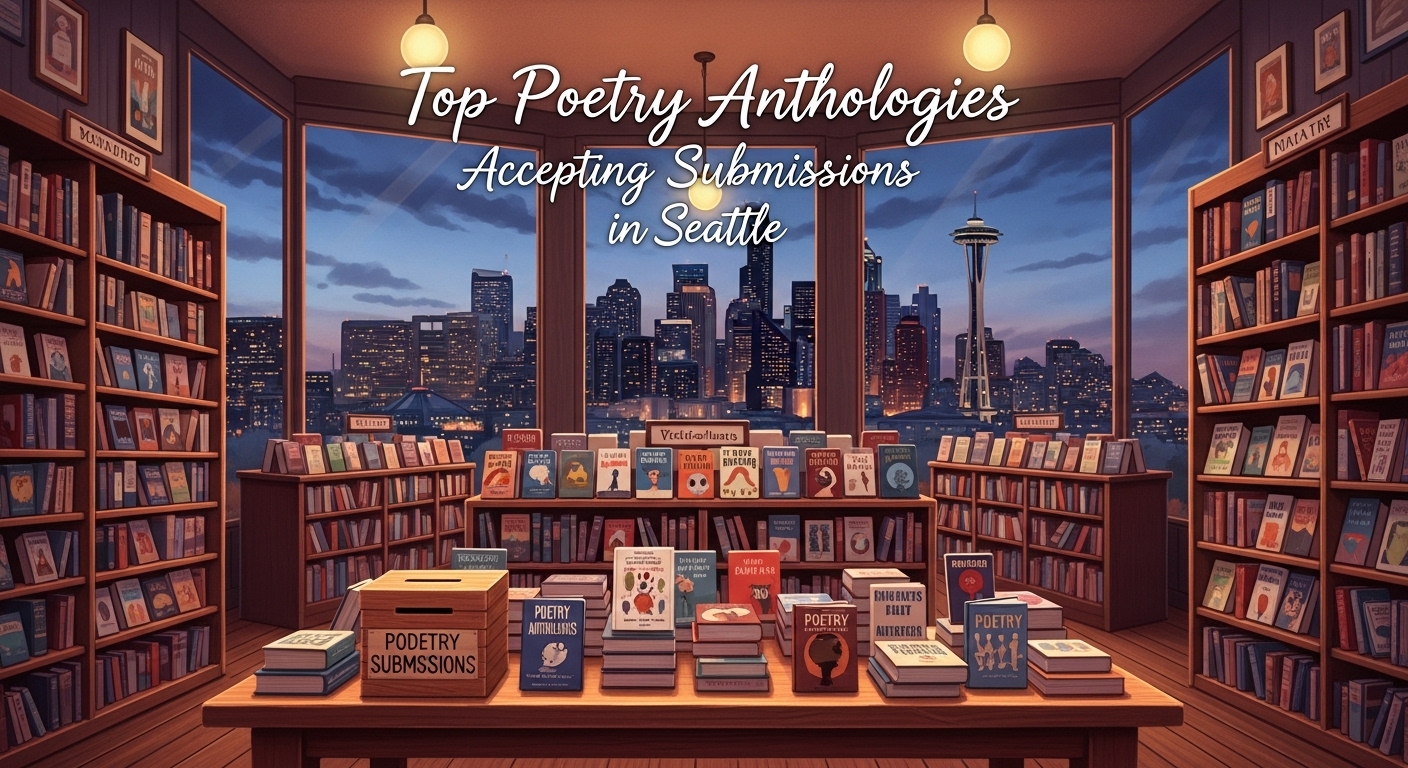
Seattle has earned a lasting reputation as one of America’s most literary cities. Known for its bookstores, coffeehouse reading culture, independent presses, and strong arts community, the city offers fertile ground for poets at every level. From emerging writers submitting their first poems to experienced voices building a publication record, Seattle remains a place where poetry is taken seriously.
For poets looking to expand their reach, anthology submissions can be one of the smartest moves. A strong anthology places your work alongside other writers, introduces you to new readers, and gives your poems the credibility of professional editing and curated publishing. Many anthologies also focus on themes, regional voices, social issues, or artistic collaboration, making them exciting opportunities for poets who want their work placed in meaningful contexts.
Seattle’s poetry landscape includes nonprofit presses, independent literary organizations, university projects, and community-driven collections. Some anthologies appear annually, while others open themed calls throughout the year. If you are searching for the best poetry anthologies accepting submissions in Seattle, this guide explores valuable opportunities, what editors often look for, and how to improve your chances of acceptance.
Why Seattle Is an Important City for Poets
Seattle’s literary identity comes from more than just books. It is a city shaped by activism, technology, migration, environmental awareness, music, and cultural diversity. Those influences create a rich backdrop for poetry. Many Seattle poets write about identity, memory, relationships, nature, urban loneliness, community, and social change.
The city also supports writers through readings, workshops, festivals, open mic nights, and arts organizations. Because of that support system, poets in Seattle often have more chances to connect with professional editors and publishers than writers in less active literary communities.
Anthologies become especially important in such a city because they gather many voices together and reflect what a literary scene looks like at a given moment.
Why Anthologies Matter for Emerging and Established Poets
A poetry anthology is more than a collection of poems. It is often a curated conversation. When editors select pieces around a theme or mission, every included poem becomes part of a larger artistic statement.
For new poets, anthology publication can provide an early credential and help build confidence. For experienced poets, it offers continued visibility and access to new readerships. Unlike a journal issue that may quickly pass, anthologies often stay on shelves for years.
Many readers discover poets through anthologies before seeking their individual books. This makes anthology publishing a powerful career tool.
Top Poetry Anthologies Accepting Submissions in Seattle
1. Stanza by Push/Pull Press
One of Seattle’s most talked-about anthology opportunities is Stanza, created through Push/Pull Press. This project is notable because it combines poetry with visual art. Selected poets are paired with artists, resulting in pages where poems and imagery work together.
For poets interested in design, collaboration, and experimental presentation, this is a valuable opportunity. Instead of appearing in a plain text-only volume, poems become part of a visually creative book.
The editorial process often emphasizes theme, originality, and how language can interact with image. Writers whose work contains strong imagery or emotional atmosphere may find this project especially rewarding.
2. WA Poets Inc Regional Collections
WA Poets Inc has long supported poetry across Washington State. While not limited only to Seattle, the organization remains highly relevant for Seattle writers. It periodically supports contests, curated collections, and projects that highlight regional voices.
These opportunities often appeal to poets who want recognition beyond city limits and hope to connect with the broader Pacific Northwest literary community. Because the organization values literary craft, careful editing and polished submissions are essential.
For poets who want credibility through respected regional publishing, these collections are worth monitoring.
3. Seattle Civic Poetry Projects
Seattle has a strong tradition of public arts programming, and poetry often becomes part of it. Civic poetry initiatives tied to city programs, transit art, libraries, and community campaigns sometimes invite open submissions.
These collections may not always appear as standard bookstore anthologies, but they function similarly by gathering selected poems around shared themes such as belonging, environment, neighborhoods, or hope.
For poets who care about reaching everyday readers rather than only literary audiences, civic projects can be especially meaningful.
4. University and MFA Anthologies
Seattle’s universities and writing programs occasionally publish anthologies featuring students, alumni, faculty, or open community contributors. These projects often bring serious editorial standards and thoughtful presentation.
Because academic environments usually value revision, clarity, and artistic intention, acceptance into these anthologies can carry strong prestige. Many poets appreciate these collections because they are often carefully edited and professionally produced.
Writers connected to workshops or graduate writing communities should always watch for such calls.
5. Independent Press Theme Collections
Seattle’s independent press scene creates space for themed anthologies throughout the year. These collections may focus on ecology, feminism, migration, race, disability, grief, speculative writing, or urban experience.
Smaller presses often bring passion and strong creative identity. While budgets may be modest, many independent publishers deliver excellent design and thoughtful editorial direction.
For poets whose work fits a niche or urgent subject matter, these anthologies may be better matches than broader calls.
6. Community and Spoken Word Collections
Seattle also has a vibrant performance poetry and spoken-word culture. Some organizations and event collectives publish anthologies featuring stage poets, youth voices, or community contributors.
These collections often prioritize voice, rhythm, authenticity, and emotional immediacy. Poets who come from live reading spaces sometimes find greater success here than in highly academic literary venues.
Such anthologies also preserve oral performance traditions in printed form, which gives them lasting cultural value.
Comparison Table of Seattle Anthology Opportunities
| Anthology Type | Best For | Editorial Style | Main Benefit |
| Art Collaboration Anthologies | Visual and lyrical poets | Creative and experimental | Strong design appeal |
| Regional Literary Collections | Washington poets | Craft-focused | Broad credibility |
| Civic Poetry Projects | Community voices | Accessible and thematic | Public exposure |
| University Anthologies | Literary writers | Rigorous editing | Prestige and quality |
| Independent Press Themes | Niche subject poets | Mission-driven | Targeted readership |
| Spoken Word Collections | Performance poets | Voice-centered | Authentic reach |
What Editors Usually Look For
Editors may differ in taste, but several qualities appear consistently across successful anthology submissions.
Strong language always matters. Poems that feel precise, memorable, and emotionally honest stand out quickly. Editors also notice originality. If a poem sounds overly familiar or imitates common styles, it may be passed over.
Fit is equally important. A powerful love poem may still be rejected from an anthology about environmental futures. Understanding the purpose of the collection can matter as much as the quality of the writing.
Professionalism matters too. Clear formatting, following guidelines, and submitting on time signal that you respect the publishing process.
How to Strengthen Your Submission
Before sending work anywhere, spend time revising deeply. Many poems improve dramatically after several rounds of editing. Read the poem aloud. Weak rhythms and unnecessary words often reveal themselves through sound.
Ask whether the opening line creates curiosity. Ask whether the ending truly lands. Remove lines that only explain what stronger lines already imply.
Also think about sequence if sending multiple poems. Editors often appreciate packets that feel balanced rather than repetitive.
Finally, write a brief and professional bio. Mention publications, awards, or community involvement when relevant, but keep it concise.
The Importance of Publishing Quality
Not every anthology offers the same long-term value. Some collections are carefully edited, beautifully designed, and actively promoted. Others are rushed and disappear quickly.
When choosing where to submit, consider the publisher’s reputation, previous books, contributor experience, and overall presentation. A well-made anthology reflects positively on everyone included.
Good publishing includes strong copyediting, thoughtful cover design, readable formatting, and distribution that helps readers actually find the book.
Why Design Matters in Poetry Books
Poetry depends heavily on space, line breaks, and pacing. Poor layout can weaken even excellent poems. That is why design is more than decoration in anthology publishing.
Readable fonts, balanced margins, elegant spacing, and strong cover aesthetics all influence how readers experience the work. Seattle’s best small presses often understand this well.
For poets, inclusion in a visually strong anthology can elevate the perception of your writing before the first line is read.
Common Mistakes Poets Make
Many poets submit too soon. A fresh draft may feel exciting, but distance often reveals flaws. Others ignore guidelines and send the wrong number of poems or incorrect formatting.
Some writers also submit the same poem everywhere without considering audience. A dense experimental poem may struggle in an anthology seeking narrative accessibility.
Another common mistake is overlooking proofreading. Even small errors in titles, punctuation, or bios can create an impression of carelessness.
Building a Reputation Through Anthologies
Repeated anthology placements can steadily build your literary profile. Editors begin recognizing names. Readers encounter your voice in different contexts. Fellow contributors may become collaborators or recommend future opportunities.
Over time, these appearances can support applications for grants, residencies, teaching roles, and book publishing opportunities.
For poets not yet ready for a full collection, anthologies offer an excellent path to growth and visibility.
Seattle’s Future as a Poetry City
Seattle continues to evolve, and so does its poetry scene. New publishers emerge, communities expand, and hybrid forms mixing text, image, sound, and performance keep growing. That means future anthology opportunities are likely to become even more diverse.
Poets willing to stay engaged with local literary culture will continue finding openings that match their voices.
Final Thoughts
Seattle remains one of the most exciting cities in the Pacific Northwest for poets seeking publication. From collaborative art books and regional literary collections to university projects and community-driven publishing, the city offers meaningful anthology opportunities for many kinds of writers.
Success comes from more than talent alone. Careful editing, thoughtful submission choices, professional presentation, and an understanding of publishing standards all make a difference. Strong design and respected editorial direction also help determine which opportunities are most valuable.
If you write consistently, revise seriously, and submit strategically, Seattle’s anthology scene can become an important part of your poetic journey.
Disclaimer: The information regarding these anthologies is a general resource. Readers must independently verify all current submission requirements, including genres and deadlines, on the official press websites. We do not guarantee the accuracy of all details or the successful outcome of any submission.