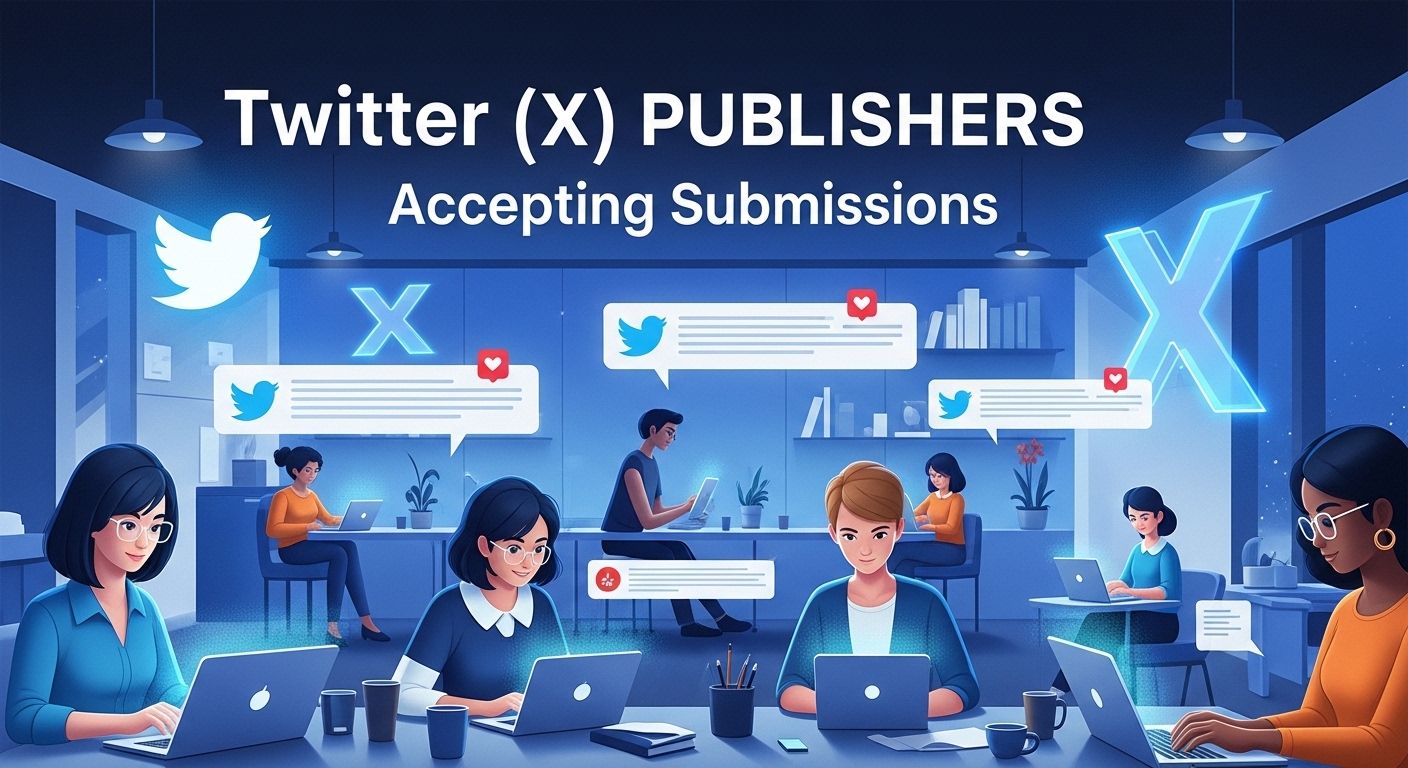
In 2026, Twitter — now known as X — continues to evolve from a microblogging platform into a dynamic space where writers, creators, and publishers converge. What began as brief thoughts in 280 characters has grown into threads, publications, and global conversations. For writers looking to be published, Twitter has become more than just a promotional tool — it’s now a destination for editors, publishers, and content curators actively seeking submissions.
This shift reflects the decentralization of traditional publishing: editors and publishers are embracing fast culture, community curation, direct engagement, and public feedback loops. Rather than submitting via email or forms buried on websites, many publishing opportunities now welcome pitches directly on Twitter (X), using tweets, threads, hashtags, or direct messages.
Whether you’re an emerging fiction writer, a thought leader with essays, a journalist with a story pitch, or a poet with performance pieces, this guide will help you understand:
- How Twitter publishers operate,
- What they look for,
- Submission etiquette,
- Top publishers actively accepting submissions in 2026.
Let’s dive in.
Why Publishers Are Turning to Twitter (X)
Twitter’s real-time conversational force has become attractive for publishers because:
- Immediate discovery: Editors can spot rising voices in real time.
- Community feedback: Writers get direct audience reactions before publishing.
- Viral potential: Exceptional work spreads fast without gatekeeping.
- Democratized pitching: Writers who may lack access to traditional publishing channels get visibility.
Because of these benefits, numerous publishers now actively solicit and accept submissions via Twitter — whether through a pinned tweet, a hashtag campaign, or personal engagement with a publisher’s account.
But before we list them, let’s briefly discuss submission best practices.
How to Pitch and Submit on Twitter (X)
1. Know Each Publisher’s Style
Different publishers seek different content. Some want concise threads, others long-form essays, poetry, or interviews. Spend time reading their posts to understand their voice and audience.
2. Use the Right Hashtags
Publishers often track hashtags like:
- #SubmissionsOpen
- #WritersWanted
- #PitchUs
Including these (when relevant) increases visibility.
3. Craft a Clear, Respectful Pitch
A strong Twitter submission often includes:
- Title or concept,
- A concise pitch or excerpt,
- Who you are (brief bio),
- Why it fits their publication.
Keep it professional, warm, and concise.
4. Respect Engagement Preferences
Some editors prefer public pitches; others request DMs. Always read the submission guidelines they tweet, and respect limits on attachments or links.
Top Twitter (X) Publishers Accepting Submissions in 2026
Below is a curated list of publishers that have publicly embraced Twitter as a submission platform — welcoming pitches, threads, and ideas directly through tweets and interactions.
Each entry follows a consistent format: About the Publisher, Submission Style, Content They Seek, and Tips to Succeed.
1. Barnett Ghostwriting
About Barnett Ghostwriting:
Barnett Ghostwriting has garnered a reputation as a premier publisher and editorial hub for narrative writers, storytellers, and creative professionals. Known for pushing the boundaries of traditional publishing, Barnett embraces storytelling that resonates with modern readers — from personal essays to short fiction, thought pieces to cultural commentary.
Submission Style:
- Accepts pitches via tweets or threads, often with a specific hashtag (#BarnettSubmissions).
- Editors engage publicly, offering feedback and asking clarifying questions.
Content They Seek:
- Creative nonfiction,
- Narrative essays,
- Serialized fiction pieces,
- Cultural critique and commentary.
Tips to Succeed:
- Craft a powerful hook in your first tweet,
- Tag the editorial account to ensure visibility,
- Keep pitch threads concise and enticing.
2. Threaded Tales Press
About Threaded Tales Press:
A publisher built around threaded storytelling, Threaded Tales emphasizes interactive narratives — stories that expand organically through threads.
Submission Style:
- Open calls appear as pinned tweets.
- Writers are invited to post the first thread and tag Threaded Tales.
Content They Seek:
- Serialized fiction,
- Micro-stories in thread form,
- Collaborative narrative experiments.
Tips to Succeed:
- Break your pitch into threadable bites,
- Engage with community responses,
- Use a consistent hashtag.
3. The Open Essay Collective
About The Open Essay Collective:
Focused on thought leadership and personal essays, this collective highlights voices from across the globe. It champions perspectives that challenge assumptions and spark conversation.
Submission Style:
- Tweets with a short pitch and a concise hook.
- Editors may request to continue the conversation in DMs.
Content They Seek:
- Cultural essays,
- Opinion pieces on current events,
- Personal narratives with broader relevance.
Tips to Succeed:
- Be bold but thoughtful in framing your ideas,
- Avoid overly promotional language,
- Prioritize clarity and depth.
4. Poetic Pulse X
About Poetic Pulse X:
A digital poetry hub celebrating diverse voices and styles. Whether you write sonnets, free verse, or spoken word, Poetic Pulse X embraces innovation.
Submission Style:
- Tweets with 4–8 lines of poetry,
- Tag the account and include creative hashtags.
Content They Seek:
- Short poems,
- Mini-spoken word clips,
- Experimental verse.
Tips to Succeed:
- Focus on impactful language,
- Use formatting to enhance rhythm,
- Interact with other poets.
5. Narrative Nexus
About Narrative Nexus:
This publisher bridges traditional long-form storytelling with tweet-native engagement. Ideal for essays with depth and narrative reporting.
Submission Style:
- Summarize your concept in a tweet,
- Editors often request longer submissions via thread continuation.
Content They Seek:
- Feature essays,
- Long-form narrative,
- Investigative pieces with human interest.
Tips to Succeed:
- Begin with a compelling premise,
- Map your structure in thread replies,
- Demonstrate narrative clarity.
6. Serial Voices Magazine
About Serial Voices Magazine:
Focused on serialized stories and ongoing creative works, this magazine promotes installments that grow over time — perfect for authors with ongoing projects.
Submission Style:
- Tweet the first installment and tag,
- Use recommended hashtag for visibility.
Content They Seek:
- Ongoing serialized fiction,
- Episodic creative works,
- Series starting points.
Tips to Succeed:
- Build anticipation in each installment,
- Keep consistent posting schedules,
- Engage with reader feedback.
7. The Short Story Sphere
About The Short Story Sphere:
Dedicated to short fiction, this publisher highlights compact storytelling that delivers emotional impact and memorable characters.
Submission Style:
- Share a 1400-character short story pitch,
- Include opening lines and a summary hook.
Content They Seek:
- Short fiction under 1000 words,
- Character-driven pieces,
- Global perspectives.
Tips to Succeed:
- Prioritize strong openings,
- Tag relevant themes,
- Engage with other writers.
8. Lens & Lines Journal
About Lens & Lines Journal:
A publication seeking hybrid content — blending imagery, text, and poetic voice into compelling multimedia storytelling.
Submission Style:
- Tweets featuring visual prompts plus short text.
- Use hashtags to indicate content type.
Content They Seek:
- Visual essays,
- Photo + narrative,
- Explorations in mixed media.
Tips to Succeed:
- Pair images with evocative writing,
- Maintain thematic coherence,
- Stay responsive to editorial cues.
9. X Fiction Forum
About X Fiction Forum:
A community and publishing arm for speculative fiction — from sci-fi to fantasy. Great for world-building lovers.
Submission Style:
- Tweet description of your world or concept,
- Include opening scenes.
Content They Seek:
- Speculative fiction,
- Character-driven plots,
- Universes with immersive detail.
Tips to Succeed:
- Make your world vivid in the first few lines,
- Tie concept to emotional stakes,
- Respond to community prompts.
10. Daily Dispatch Narratives
About Daily Dispatch Narratives:
As the name suggests, this publisher shares daily narrative highlights — profiles, stories, quick creative pieces — often curated from Twitter submissions.
Submission Style:
- Tweets with your narrative idea,
- Include why it resonates today.
Content They Seek:
- Short narratives,
- Topical stories,
- Real-world perspectives.
Tips to Succeed:
- Time your pitch to current events,
- Highlight relevance and urgency,
- Keep your writing crisp.
Comparing Twitter (X) Publishers: At a Glance
Here’s a quick table summarizing the key features of each publisher and the type of submissions they’re best known for:
| Publisher | Primary Focus | Submission Style | Best For Writers Who… |
| Barnett Ghostwriting | Narrative & essays | Tweet/thread pitches | Want editorial engagement |
| Threaded Tales Press | Threaded fiction | Threaded storytelling | Love serialized, community work |
| Open Essay Collective | Thought & cultural essays | Short pitch tweets | Write big ideas in brief form |
| Poetic Pulse X | Poetry & creative verse | Short poem tweets | Excel in compact poetic language |
| Narrative Nexus | Long-form narrative | Concept tweet + threads | Craft deep, human stories |
| Serial Voices Magazine | Serial fiction | Tweet installments | Build ongoing story arcs |
| Short Story Sphere | Short fiction | 1400-char pitches | Write impactful mini stories |
| Lens & Lines Journal | Mixed media storytelling | Image + text tweets | Blend visuals and words |
| X Fiction Forum | Sci-fi & fantasy | Concept tweets | Explore imaginative worlds |
| Daily Dispatch Narratives | Topical short narratives | Timely tweet pitches | Capture moments in story form |
Tips for Getting Published on Twitter (X)
Now that you know which publishers are accepting submissions, here’s a deeper look at how to stand out in your submissions:
1. Use Thread Mechanics Wisely
Threading isn’t just about adding extra tweets — it’s about structuring your content like chapters. Here’s a quick guideline:
- Tweet 1: Hook
- Tweet 2: Expanded context
- Tweet 3: Main idea/first paragraph
- Tweet 4: Summary or next steps
This helps editors and readers follow your logic naturally.
2. Engage Before You Pitch
Follow the publisher, like/comment on their posts, and understand their aesthetic. Many editors are more receptive when they recognize your voice within the community.
3. Keep It Professional and Polished
Although Twitter is informal by nature, your submissions should reflect professionalism. Avoid typos, keep tone consistent, and respect space limitations — think of each character as valuable real estate.
4. Leverage Threads for Longer Concepts
If your idea is complex, break it into logical chunks — like a mini outline — that editors can scan quickly.
5. Respond to Feedback
Some editors will ask questions publicly before accepting a full submission. Be prompt, gracious, and clear in your responses.
After Submission: What to Expect
Once you pitch:
- Public acknowledgement: Many publishers will reply publicly to your tweet to acknowledge they saw your pitch.
- DM Invitations: Some editors ask you to continue the pitch in DMs.
- Editorial Requests: You might be asked for a full draft, revisions, or a specific format.
- Community Interaction: Readers may respond to your pitch, offering support or commentary — engage respectfully.
Final Thoughts
Twitter (X) has transformed from quick thoughts to a vibrant publishing landscape. In 2026, writers have unprecedented opportunities to get their voices heard — without relying solely on traditional gatekeepers.
The publishers above recognize the power of conversational storytelling and community engagement. Whether you excel in short fiction, essays, poetry, or multimedia narratives, there’s a platform that aligns with your strengths.
To succeed:
- Understand each publisher’s vibe,
- Craft clear, compelling pitches,
- Respect submission etiquette,
- Dedicate time to engagement and feedback.
As you explore these opportunities, remember: Twitter’s magic lies in connection. Write for resonance, not just publication. When your work connects, it doesn’t just get accepted — it becomes part of the cultural conversation.
Disclaimer: Barnett Ghostwriting shares publisher listings for informational purposes only. We are not partnered with any of the publishers mentioned, and we do not guarantee anything related to submissions, acceptance, or publication. Our expertise lies in professional writing, editing, and book promotion services that help authors present their work effectively.