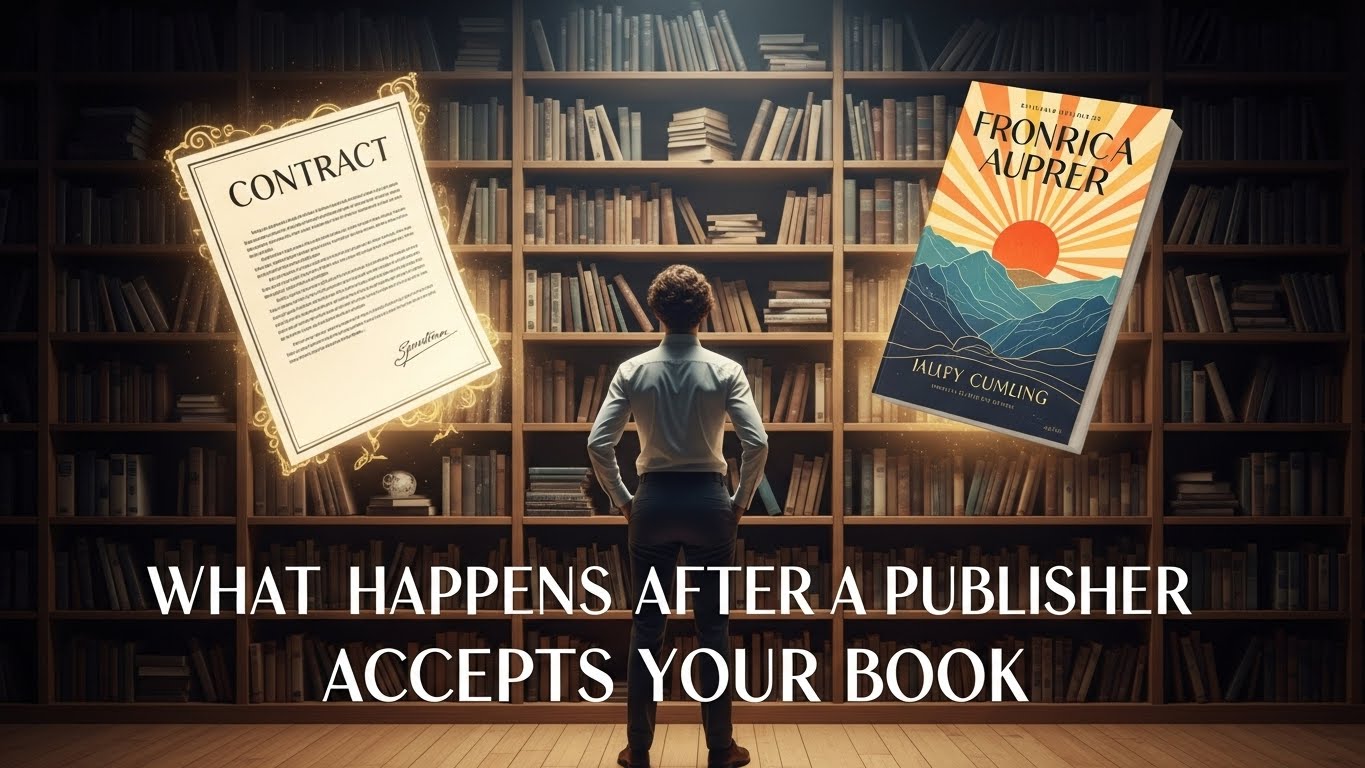
Getting that long-awaited email saying “We’re delighted to offer publication” is one of the most exciting moments in a writer’s life. After months,or even years,of drafting, editing, submitting, and waiting, your book has finally been accepted by a publisher. But while acceptance feels like the finish line, it’s actually the beginning of a new, equally important journey.
Many authors assume that once a publisher says yes, the hard work is over. In reality, a series of crucial steps follow acceptance, each shaping how your book will look, read, sell, and succeed in the marketplace. Understanding what happens next helps you prepare mentally, professionally, and creatively for the publishing process.
This guide walks you through everything that typically happens after a publisher accepts your book, from contracts and editing to marketing, distribution, and beyond.
Receiving the Acceptance Offer
Once a publisher decides to move forward with your manuscript, they will send you a formal offer. This usually arrives via email and outlines their intent to publish your book. At this stage, excitement is natural,but it’s important to slow down and read carefully.
The offer may include basic details such as:
- The format of publication (print, ebook, or both)
- A tentative publication timeline
- Any advance payment (if applicable)
- Next steps regarding contracts and revisions
This is not yet the contract itself, but rather a statement of interest and terms that will soon be formalized.
Reviewing and Signing the Publishing Contract
One of the most important steps after acceptance is reviewing the publishing contract. This document legally defines your relationship with the publisher, so it deserves careful attention.
Key elements typically included:
- Rights granted (print, digital, audio, translation, etc.)
- Royalty rates and payment schedules
- Advance payments, if offered
- Manuscript delivery deadlines
- Termination clauses
- Author obligations, such as promotional efforts
If possible, many authors choose to consult a literary agent or publishing attorney before signing. While smaller or independent publishers may have simpler contracts, it’s still essential to understand what you’re agreeing to.
Once both parties sign the contract, your book officially enters the production pipeline.
Developmental Editing Begins
After the paperwork is complete, the first major creative stage begins: editing. The initial phase is often developmental or structural editing.
At this stage, an editor focuses on:
- Overall structure and flow
- Plot consistency or argument strength
- Character development (for fiction)
- Organization and clarity (for nonfiction)
- Market positioning and audience suitability
You may receive detailed editorial notes suggesting revisions, rewrites, or expansions. This stage is collaborative rather than critical,the goal is to make your book as strong as possible.
Authors often go through multiple rounds of revisions here, and this process can take weeks or even months.
Line Editing and Copyediting
Once the big-picture issues are resolved, your manuscript moves into line editing and copyediting.
Line editing focuses on:
- Sentence flow and readability
- Tone consistency
- Word choice and style refinement
Copyediting focuses on:
- Grammar, punctuation, and spelling
- Formatting consistency
- Fact-checking (especially for nonfiction)
- Adherence to the publisher’s style guide
At this stage, your manuscript begins to look polished and professional. You’ll usually have the opportunity to review changes and approve or discuss edits with your editor.
Proofreading and Final Checks
After editing is complete, the manuscript goes through proofreading. This is the final quality-control stage before printing or digital release.
Proofreaders look for:
- Typos or formatting errors
- Incorrect page numbers
- Inconsistent headings
- Minor grammatical issues missed earlier
This stage is not meant for major rewrites. Changes here should be minimal and precise. Once proofreading is done, the text is considered “final.”
Cover Design and Interior Layout
While editing is underway, the publisher’s design team begins working on your book’s visual presentation.
Cover design
The cover is one of the most important marketing tools for your book. Designers consider:
- Genre expectations
- Target audience
- Market trends
- Typography and imagery
Publishers often share one or more cover concepts with authors for feedback, though the final decision typically rests with the publisher.
Interior layout
At the same time, the book’s interior is formatted:
- Chapter headings
- Fonts and spacing
- Page margins
- Ebook formatting compatibility
Once complete, you may receive page proofs to review how the book will look in its final form.
ISBN Assignment and Copyright Details
The publisher handles the technical and legal logistics of publication. This includes:
- Assigning ISBNs
- Registering copyright
- Listing the book in publishing databases
- Preparing metadata such as descriptions, categories, and keywords
These behind-the-scenes steps ensure your book can be properly distributed, sold, and cataloged globally.
Setting the Publication Date
After production milestones are complete, the publisher finalizes a publication date. This date is often set months in advance to allow time for marketing, distribution, and promotional planning.
During this phase, your book may be added to:
- Retailer catalogs
- Online pre-order listings
- Distributor databases
- Library acquisition systems
This is when your book officially enters the marketplace pipeline.
Marketing and Promotion Planning
Contrary to popular belief, publishers do not handle all marketing alone. Most expect authors to participate actively in promoting their books.
Publisher-led efforts may include:
- Press releases
- Listing the book on their website
- Distribution to retailers
- Sending review copies to select outlets
Author-driven efforts often include:
- Social media promotion
- Author websites and newsletters
- Book launch events
- Podcast or blog appearances
- Outreach to reviewers and influencers
The more engaged an author is, the stronger the book’s visibility tends to be.
Distribution and Retail Availability
As the release date approaches, your book is printed or digitally finalized and distributed to sales channels. This may include:
- Online retailers
- Brick-and-mortar bookstores
- Libraries
- Educational institutions
The scale of distribution depends on the publisher’s reach and the format of the book. Some publishers offer international availability, while others focus on specific regions or platforms.
Book Launch and Release Day
Release day is a major milestone. Your book officially becomes available for purchase, download, or order.
On launch day, authors often:
- Announce the release on social media
- Send newsletters to subscribers
- Host virtual or in-person launch events
- Share behind-the-scenes stories from the publishing journey
While the launch is exciting, it’s important to remember that book sales often grow over time rather than overnight.
Royalties, Sales Tracking, and Payments
After publication, the financial side of publishing begins.
Publishers typically provide:
- Sales reports on a quarterly or biannual basis
- Royalty statements detailing copies sold
- Payments once earnings exceed any advance
Sales may fluctuate, especially in the first year. Some books gain traction slowly through word of mouth, reviews, or academic adoption.
Long-Term Author–Publisher Relationship
Once your book is published, your relationship with the publisher doesn’t end. Many authors continue working with the same publisher on future projects.
A successful collaboration can lead to:
- Additional book contracts
- Expanded formats (audiobooks or translations)
- Increased marketing support
- A stronger author brand
Professional communication, meeting deadlines, and being open to feedback help maintain a positive long-term partnership.
Emotional Adjustment After Acceptance
Finally, it’s worth mentioning the emotional side of publication. Many authors experience a mix of excitement, anxiety, and even imposter syndrome after acceptance.
This is completely normal. Publishing exposes your work to public scrutiny, but it also validates your effort and creativity. Trust the process, lean on your editorial team, and remember why you started writing in the first place.
Final Thoughts
When a publisher accepts your book, it marks the beginning of a structured, collaborative, and transformative process. From contracts and editing to design, marketing, and distribution, every stage plays a role in turning your manuscript into a finished, market-ready book.
Understanding what happens after acceptance empowers you to participate confidently, communicate effectively, and make the most of your publishing opportunity. With patience, professionalism, and persistence, this journey can be one of the most rewarding experiences of your writing career.