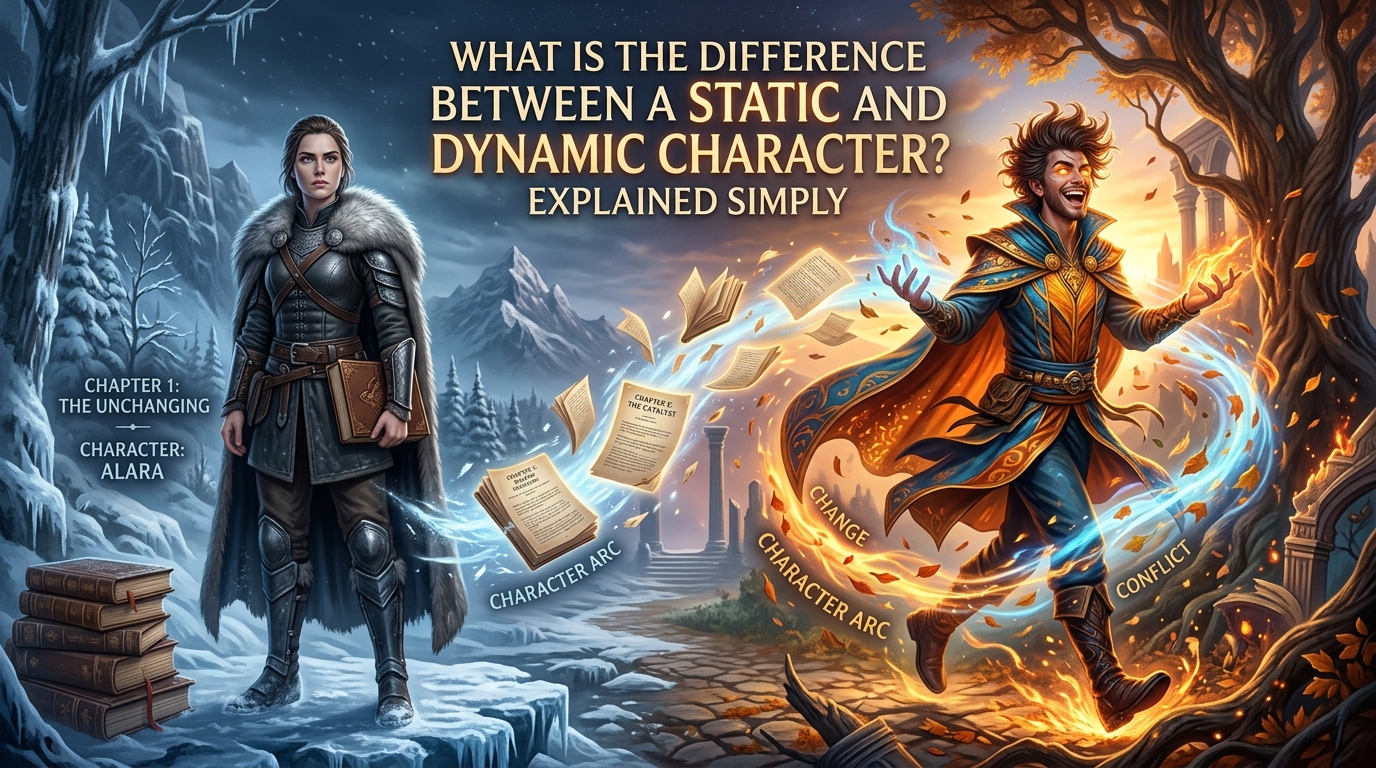
Stories are built around people. Even in fantasy worlds filled with dragons, futuristic technology, or supernatural mysteries, readers connect most deeply with characters. A plot may attract attention, but characters are what make audiences emotionally invest in a story. Some characters evolve dramatically over time, while others remain largely unchanged from beginning to end. This is where the concepts of static and dynamic characters become important.
Writers, readers, screenwriters, and filmmakers often use these terms to analyze how characters function inside a narrative. Yet many people misunderstand what they actually mean. A static character is not necessarily boring, and a dynamic character is not automatically better written. Both serve different purposes, and both can be incredibly powerful when used correctly.
Understanding the difference between static and dynamic characters helps writers create stronger stories and helps readers understand why certain fictional personalities feel unforgettable. Whether you are writing a novel, screenplay, short story, or simply studying literature, learning how these character types work can transform the way you approach storytelling.
This guide explains static and dynamic characters in a simple and practical way. It explores how they work, why they matter, where they appear in literature and film, and how writers use them to shape emotional experiences for audiences.
Understanding What a Static Character Really Is
A static character is a character who does not experience major internal change throughout the story. Their personality, beliefs, goals, or worldview remain mostly the same from beginning to end. While events may happen around them, those experiences do not fundamentally transform who they are as a person.
This does not mean static characters are shallow. In fact, some of the most iconic fictional figures ever created are static characters. Their consistency is exactly what makes them memorable. These characters often represent stability, certainty, tradition, wisdom, or unshakable determination.
A detective who always follows logic no matter how chaotic the situation becomes can be static. A superhero who never abandons their moral code despite overwhelming pressure may also be static. Some villains remain completely devoted to their destructive ideology without ever reconsidering their actions. These characters stay emotionally or psychologically consistent throughout the narrative.
Readers sometimes confuse “static” with “inactive,” but the two are completely different. A static character can still drive the entire plot. They can fight wars, solve mysteries, lead revolutions, or save worlds. The important detail is that their internal identity does not significantly shift.
Sherlock Holmes is a classic example. Across many stories, Holmes remains brilliant, analytical, emotionally distant, and committed to solving mysteries. The adventures change, but his core personality remains steady. That consistency becomes part of his appeal.
Similarly, many heroic figures in mythology and classic adventure fiction remain static because they symbolize ideals rather than transformation. Their role is often to change the world around them instead of being changed by it.
Understanding What a Dynamic Character Really Is
A dynamic character is a character who experiences significant internal change during the story. Their personality, beliefs, emotional state, perspective, or understanding evolves because of events they experience.
This change is often connected to the central conflict of the narrative. The story challenges the character emotionally, morally, or psychologically, forcing them to grow, adapt, or sometimes even fall apart.
Dynamic characters usually begin the story in one emotional state and end in another. They may overcome fear, confront trauma, abandon prejudice, gain maturity, lose innocence, or discover truths about themselves. The transformation becomes part of the emotional journey of the story.
One famous example is Ebenezer Scrooge from A Christmas Carol. At the beginning of the story, Scrooge is cold, selfish, and emotionally disconnected from others. By the end, he becomes compassionate, generous, and deeply aware of human connection. His transformation defines the entire narrative.
Dynamic characters often feel emotionally satisfying because audiences witness growth in real time. Readers see mistakes, struggles, realizations, and personal breakthroughs. This creates emotional investment because people naturally connect with stories about change.
In modern storytelling, many protagonists are dynamic because audiences enjoy watching personal evolution. Character arcs have become one of the most important elements in novels, television, and film.
The Core Difference Between Static and Dynamic Characters
The simplest difference between static and dynamic characters comes down to change.
A static character stays essentially the same internally throughout the story, while a dynamic character undergoes meaningful internal transformation.
This difference may sound small, but it shapes the entire emotional structure of a narrative. Dynamic characters create stories centered around growth and transformation. Static characters often create stories centered around action, ideals, mystery, or external conflict.
Here is a simple comparison table that explains the distinction more clearly.
| Feature | Static Character | Dynamic Character |
| Internal Change | Little or none | Significant emotional or psychological change |
| Personality | Remains consistent | Evolves over time |
| Role in Story | Often represents stability or ideals | Often represents growth or transformation |
| Reader Experience | Admiration, fascination, comfort | Emotional connection through evolution |
| Common in | Mythology, detective stories, action fiction | Coming-of-age stories, dramas, character-driven fiction |
| Character Arc | Minimal or unchanged | Strong character arc |
| Example Type | Unchanging hero or villain | Character who learns or transforms |
This distinction helps writers decide how characters should function within the narrative. Not every story requires dramatic transformation. Sometimes consistency is more powerful than change.
Why Writers Use Static Characters
Static characters are often used because they provide narrative stability. In chaotic stories filled with uncertainty, a consistent character can become an emotional anchor for readers.
Many action heroes remain static because audiences enjoy their reliability. Characters like James Bond maintain recognizable traits across countless adventures. His confidence, charm, and skill remain mostly consistent regardless of the mission. The excitement comes from the situations around him rather than personal transformation.
Static characters can also symbolize larger ideas. A morally unwavering character may represent justice, hope, discipline, or resilience. Their refusal to change becomes meaningful because it reflects strength of identity.
In some stories, the static character changes everyone else instead. Their consistent worldview influences other characters and reshapes the environment around them. This creates an interesting reversal where the protagonist remains stable while the world transforms because of them.
Static characters are especially common in serialized storytelling. Television detectives, comic book heroes, and long-running franchise characters often stay recognizable so audiences can return to familiar personalities repeatedly.
Why Writers Use Dynamic Characters
Dynamic characters create emotional depth because change mirrors real human experience. People grow, fail, heal, mature, and evolve throughout life. Stories that reflect this process often feel deeply personal to audiences.
A dynamic character allows writers to explore themes like identity, forgiveness, trauma, ambition, love, grief, and redemption. The internal transformation becomes the emotional heart of the story.
In many modern novels and films, the protagonist’s emotional journey matters just as much as the external plot. A war story may actually be about overcoming fear. A romance may secretly be about learning self-worth. A fantasy adventure may really explore responsibility and maturity.
Dynamic characters also create stronger emotional payoff. When readers witness a character struggle and eventually transform, the ending often feels earned. The audience remembers not only what happened in the plot but also how the character changed emotionally.
For example, Walter White from Breaking Bad experiences one of television’s most famous dynamic arcs. He transforms from a quiet chemistry teacher into a ruthless criminal mastermind. His changing morality becomes the center of the narrative.
Dynamic characters are powerful because they reveal how experiences reshape identity.
Static Does Not Mean Bad Writing
One of the biggest misconceptions in storytelling is the belief that static characters are poorly written. This is completely false.
Some static characters become iconic precisely because they do not change. Their consistency creates familiarity and strength. Readers know exactly what these characters stand for, and that reliability becomes emotionally satisfying.
Characters like Sherlock Holmes, Indiana Jones, and Superman remain culturally influential because their defining qualities stay recognizable.
A static character can still possess complexity, intelligence, emotional depth, and charisma. They simply do not undergo major internal transformation.
In some genres, excessive change can even damage the character. Audiences often expect certain heroes to remain morally dependable or psychologically stable. Changing them too dramatically could weaken the narrative identity that makes them appealing.
Dynamic Characters Often Carry Emotional Themes
Dynamic characters are commonly connected to stories about self-discovery and emotional struggle. Their growth usually reflects the central message of the narrative.
In coming-of-age stories, characters mature emotionally as they confront adulthood. In tragedy, characters may deteriorate psychologically or morally. In redemption stories, characters overcome destructive flaws and become better people.
For example, Elizabeth Bennet from Pride and Prejudice changes her understanding of love, pride, and judgment throughout the story. Her emotional growth is essential to the novel’s meaning.
Dynamic arcs are especially common in literary fiction because these stories often prioritize emotional realism and internal conflict.
Can a Character Be Both Static and Dynamic?
Some characters exist in a gray area between static and dynamic. Not every transformation is dramatic, and not every consistent character is completely unchanged.
A character may retain their core identity while still learning important lessons. Others may appear static externally while experiencing subtle emotional shifts internally.
For instance, a hero might remain brave and morally strong throughout a story but gradually learn to trust others emotionally. The change may be small yet still meaningful.
Modern storytelling often embraces nuanced character arcs rather than extreme transformations. This creates more realistic personalities because real people rarely become entirely different individuals overnight.
Writers sometimes use partial character arcs where change happens gradually across multiple stories instead of one narrative alone.
Static and Dynamic Characters in Film and Television
Film and television rely heavily on both character types. Different genres tend to favor different approaches.
Action franchises often feature static protagonists because consistency allows endless adventures. Audiences return for familiar personalities and predictable strengths. Characters like John Wick maintain a recognizable identity throughout intense external conflicts.
Meanwhile, prestige dramas and psychological series often emphasize dynamic characters because emotional transformation creates long-term narrative depth.
In Stranger Things, many younger characters evolve emotionally as they face trauma, friendship, fear, and maturity. Their changing relationships become as important as the supernatural plot itself.
Television is especially effective for dynamic storytelling because multiple seasons provide time for gradual character evolution.
Static and Dynamic Characters in Literature
Literature has explored these character types for centuries. Classic myths often feature static heroes who symbolize courage, honor, or destiny. Their consistency reinforces cultural ideals.
Modern literature tends to favor dynamic characters because contemporary readers often seek emotional realism and psychological complexity.
In The Catcher in the Rye, Holden Caulfield’s emotional perspective shifts as he confronts isolation and confusion. His internal struggle defines the reading experience.
Meanwhile, some literary characters remain static intentionally to emphasize philosophical themes. Their refusal to change can symbolize obsession, ideology, or emotional paralysis.
The balance between static and dynamic characterization depends heavily on the story’s purpose.
How Writers Decide Which Type to Use
Writers choose between static and dynamic characterization based on the goals of the narrative.
If the story focuses heavily on emotional growth, identity, and internal conflict, a dynamic character usually works best. Readers expect transformation because the narrative centers around personal evolution.
If the story focuses more on adventure, mystery, worldbuilding, or symbolic ideals, a static protagonist may work more effectively. Consistency allows readers to focus on external events without constantly recalibrating the character’s identity.
Many stories also combine both types. A dynamic protagonist may interact with static supporting characters who reinforce themes or provide contrast.
For example, a changing hero might be guided by a mentor who remains wise and consistent throughout the story. This contrast highlights the protagonist’s evolution more clearly.
Common Mistakes Writers Make
One common mistake is forcing unnecessary character change. Not every protagonist needs a dramatic emotional transformation. Sometimes writers add artificial growth arcs that feel unrealistic or disconnected from the story.
Another mistake is creating static characters who accidentally feel lifeless. A static character still needs personality, emotional presence, goals, and compelling behavior. Consistency should not become monotony.
Writers also sometimes confuse sudden behavior changes with genuine development. A dynamic arc requires gradual progression supported by believable experiences.
Strong character writing depends on emotional logic. Readers should understand why a character changes or why they refuse to change.
Why Readers Connect With Both Types
Readers connect with static characters because they provide familiarity, inspiration, and reliability. These characters often feel larger than life. Their consistency becomes comforting and iconic.
Readers connect with dynamic characters because transformation reflects real emotional experiences. Watching someone struggle, evolve, and overcome internal obstacles feels deeply human.
Both character types satisfy different emotional needs. One offers stability while the other offers growth.
The most memorable stories often understand exactly which type of character the narrative requires.
Final Thoughts
The difference between static and dynamic characters is ultimately about internal change. Static characters remain emotionally or psychologically consistent throughout a story, while dynamic characters experience meaningful transformation because of the events they face.
Neither approach is automatically superior. Some stories become powerful through unwavering characters who represent ideals, strength, or stability. Others achieve emotional depth through characters who grow, fail, heal, or evolve over time.
Understanding these character types allows writers to craft stronger narratives and helps readers appreciate the deeper structure behind storytelling. Every unforgettable story uses characterization intentionally, whether through transformation or consistency.
The key is not deciding which type is better. The key is understanding which type serves the story best.