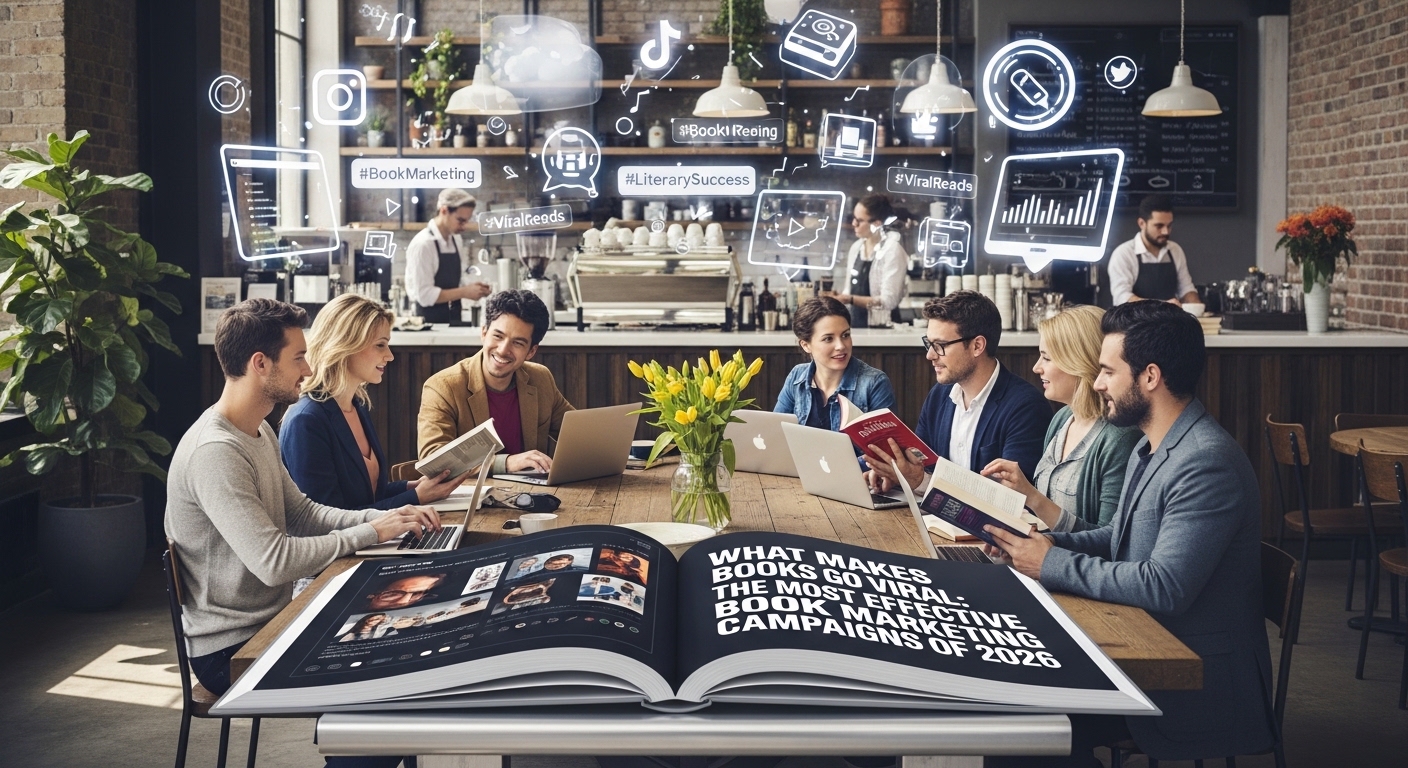
In 2026, the publishing industry is operating in a completely different environment than it did only a few years ago. Books are no longer marketed only through bookstore placements, newspaper reviews, television interviews, or expensive ad campaigns. A novel can now become a bestseller because of a passionate thirty-second reaction video, a trending quote, a fan-made character edit, or an online reading group that decides a title deserves mass attention. Virality has transformed book marketing from a controlled business strategy into a living cultural process shaped by readers themselves.
This shift matters because readers now have more influence than publishers in many cases. Traditional marketing still has value, but community momentum can outperform large promotional budgets. A campaign succeeds when it feels genuine, emotionally engaging, and easy to share. It struggles when it feels too polished, too corporate, or disconnected from real reader behavior.
The most effective book marketing campaigns of 2026 reveal one simple truth: books go viral when they become experiences people want to participate in, not just products people are asked to buy.
Reader Communities Became the New Discovery Engine
For decades, publishing relied heavily on top-down discovery. Editors selected books, marketers promoted them, retailers displayed them, and readers responded. In 2026, that process has changed dramatically. Discovery now happens horizontally through communities where readers influence one another directly.
Platforms such as TikTok, Instagram Reels, YouTube Shorts, Discord groups, Substack newsletters, podcasts, and private book clubs now shape purchasing behavior every day. A reader recommending a novel with visible excitement can create more interest than a polished advertisement.
This community-led discovery works because trust has shifted. Many readers place greater confidence in another reader’s honest reaction than in professional promotional language. When someone says a book kept them awake until dawn or made them cry on a train, that recommendation feels human and believable.
As a result, publishers in 2026 do not simply market to readers. They market through readers.
Emotion Became More Powerful Than Description
One of the clearest lessons from recent campaigns is that emotion sells faster than information. Readers often ignore formal descriptions, but they stop scrolling when they encounter intense reactions.
Instead of saying a novel has strong pacing or elegant prose, viral content focuses on emotional outcomes. People say the ending destroyed them, the romance healed them, the villain fascinated them, or the twist left them speechless. These statements trigger curiosity instantly because audiences want to experience those feelings themselves.
This explains why emotionally rich genres continue to dominate viral spaces. Romance thrives because readers love discussing chemistry and heartbreak. Thrillers thrive because shocking twists invite reaction. Fantasy thrives because readers become obsessed with worlds and characters.
In many successful 2026 campaigns, the actual plot summary becomes secondary. The emotional promise becomes primary.
Book Aesthetics Became a Marketing Asset
Covers have always mattered, but in 2026 visual identity matters more than ever. Books now compete not only on shelves but on screens. If a cover looks striking in a thumbnail, stacks beautifully in photos, or aligns with aesthetic trends, it gains an advantage.
Design choices such as foil stamping, textured jackets, sprayed edges, minimalist typography, illustrated characters, and collectible alternate covers all influence online shareability. Readers enjoy posting visually pleasing books, and every post becomes free marketing.
This is especially true among collectors. Many readers purchase multiple editions of beloved titles because the object itself has become desirable. Publishers understand this and increasingly treat physical books as premium lifestyle products.
A memorable cover can create the first click. Strong storytelling then earns the second purchase.
Merchandise Expanded the Meaning of Marketing
One of the smartest strategies of 2026 is the use of merchandise as cultural promotion. Tote bags, enamel pins, mugs, candles, apparel, bookmarks, journals, and themed accessories now help books spread beyond reading circles.
When someone carries a tote bag featuring a line from a popular romance novel or wears a shirt tied to a fantasy fandom, they advertise that title in public spaces and online photos. This creates awareness among people who may never have seen a standard book advertisement.
Merchandise works because it turns reading into identity. Readers enjoy expressing taste, belonging, and personality through the books they love. A novel becomes more than a story. It becomes part of how someone presents themselves.
Sometimes a $15 accessory can create more long-term attention than a $10,000 banner campaign.
Scarcity Still Drives Excitement
Even in a digital world of instant access, scarcity remains powerful. Limited editions, signed copies, preorder gifts, early access bundles, exclusive artwork, and bonus chapters continue to generate urgency.
When readers believe something may disappear soon, interest rises quickly. Scarcity creates deadlines, and deadlines motivate action. It also creates conversation. People share screenshots of sold-out editions, preorder confirmations, and rare copies.
This public behavior sends a signal that demand is high, encouraging others to join before they miss out. In psychological terms, scarcity combines urgency with social proof.
The most successful publishers in 2026 carefully balance access and exclusivity. They keep the core book widely available while offering special versions that create buzz.
Influencers Changed the Shape of Promotion
Influencer marketing has matured significantly. Early campaigns often focused only on follower counts. In 2026, smart campaigns focus on relevance and trust.
A romance reviewer with 30,000 loyal followers may sell more romance books than a lifestyle celebrity with millions of disengaged viewers. A fantasy podcaster with a devoted audience may outperform a mainstream entertainment account when promoting epic fiction.
Why? Because niche creators understand their audiences deeply. Their recommendations feel specific and authentic rather than transactional.
This has led publishers to invest in micro-influencer networks. Instead of relying on one giant endorsement, they send advance copies to dozens or hundreds of smaller creators whose audiences align with the genre.
When many trusted voices discuss the same book across a short period, momentum feels natural and difficult to ignore.
Backlist Titles Found New Life
One of the most important developments of the viral era is the revival of older books. A novel published five or ten years ago can suddenly return to bestseller lists because of one trending moment.
A quote may resonate during a cultural conversation. A character may become the subject of edits. A scene may inspire memes. A reader may rediscover a forgotten masterpiece and introduce it to a new generation.
This changes the economics of publishing. Older books are no longer passive catalog entries. They are living assets with recurring potential. Publishers increasingly redesign covers, reissue editions, and relaunch titles that gain fresh attention.
For authors, this means success is no longer limited to launch month. A second wave can happen anytime.
Genre Language Became Faster Than Traditional Advertising
Modern readers often shop by feeling rather than by formal category. That is why short genre phrases became central to viral campaigns.
Terms like slow-burn romance, enemies to lovers, cozy mystery, dark academia, found family, morally gray hero, small-town romance, locked-room thriller, and magical realism communicate a reading experience immediately.
These labels are powerful because they remove friction. Readers instantly know whether a book fits their preferences. They can recommend it quickly, search similar titles easily, and join discussions without needing long explanations.
In the age of rapid scrolling, clarity wins attention.
Authors Became Brands
Readers increasingly connect with authors as personalities, not just names on covers. Many successful writers in 2026 maintain active, relatable, and engaging public presences.
They share writing struggles, research adventures, cover reveals, humor, drafts, playlists, office chaos, or personal reflections. These glimpses build familiarity and loyalty.
When release day arrives, followers already feel emotionally invested. Buying the book becomes support for a creator they enjoy.
This does not mean every author must become an entertainer. It means authenticity matters. Even quiet, thoughtful authors can build strong communities if they communicate consistently and sincerely.
An engaged audience often becomes the most reliable launch team.
Video Became the Fastest Conversion Tool
Short-form video remains one of the strongest engines of book sales in 2026. It combines emotion, speed, sound, and visual storytelling in a way static ads rarely match.
A creator gasping after a twist, crying over a final chapter, flipping through a stunning edition, or acting out character tension can persuade viewers in seconds.
Video works because it compresses social proof into a highly emotional format. People witness someone else caring deeply, and that feeling becomes contagious.
The best book videos rarely feel like advertisements. They feel like excitement people happened to record.
Why Some Campaigns Fail
Not every campaign succeeds. Many fail because they misunderstand what virality actually is.
Some publishers attempt to manufacture trends through overly scripted influencer posts that sound identical. Others spend heavily on ads without understanding reader culture. Some market books with misleading tropes that create disappointment after purchase.
When readers feel manipulated, backlash spreads quickly. Trust is difficult to rebuild once lost.
Virality cannot be forced through money alone. It grows when enthusiasm is real, expectations are accurate, and the reading experience delivers.
The Psychology Behind Viral Books
Successful campaigns often activate three psychological triggers. The first is curiosity. Readers want to know why everyone is reacting strongly. The second is belonging. People enjoy participating in cultural moments others are discussing. The third is identity. Sharing a book can communicate taste, values, humor, or emotion.
When a campaign activates all three at once, momentum accelerates. Readers become buyers, buyers become advocates, and advocates become marketers.
That cycle explains why some books suddenly appear everywhere.
Table: Most Effective Book Marketing Tactics of 2026
| Marketing Tactic | Why It Works | Typical Cost Range |
| Short-form video promotion | Creates emotional urgency quickly | $500–$20,000 |
| Micro-influencer campaigns | High trust with niche audiences | $1,000–$15,000 |
| Limited special editions | Encourages urgency and collectors | $3,000–$30,000 |
| Merchandise drops | Builds fandom identity | $2,000–$25,000 |
| Community book clubs | Sustains long-term word of mouth | $500–$10,000 |
| Author personal branding | Builds loyal repeat buyers | Time investment to $12,000 |
The Future of Viral Publishing
Looking ahead, book marketing will become even more community-centered, data-aware, and multimedia-driven. Artificial intelligence may help target audiences, but human excitement will remain the core driver of success.
Readers do not go viral because of algorithms alone. They go viral because people care enough to talk.
That is the deepest lesson of 2026. Technology may distribute attention, but emotion creates it.
Final Thoughts
What makes books go viral is not mystery or luck alone. It is the combination of emotional storytelling, community trust, visual appeal, shareable moments, and smart campaign design.
The most effective book marketing campaigns of 2026 understand that readers are no longer passive consumers. They are creators, reviewers, trendsetters, collectors, and cultural amplifiers.
When a book gives people something to feel, discuss, display, and recommend, marketing becomes momentum.
And once momentum begins, a single story can reach the world.