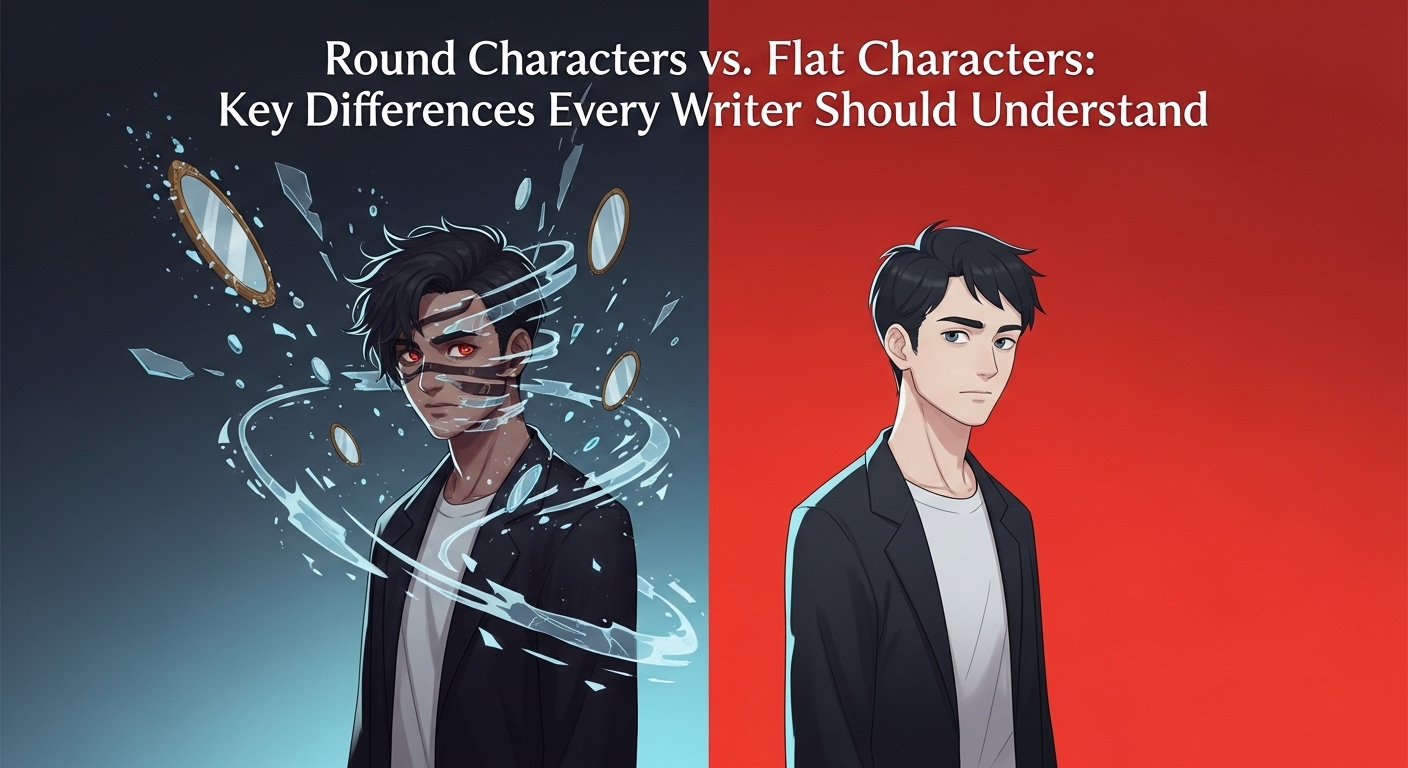
Every story, no matter how grand or intimate, rests on the shoulders of its characters. They are the vessels through which readers experience conflict, emotion, and meaning. Yet not all characters are built the same way. Some feel layered, unpredictable, and strikingly human, while others exist in simpler forms, serving a narrower narrative purpose. This distinction is often described through the terms round characters and flat characters, a concept that has shaped literary analysis and storytelling for generations. Understanding how these two types function is not just an academic exercise; it is a practical tool for writers who want to create stories that resonate.
This article explores the core differences between round and flat characters, how each contributes to storytelling, and why mastering both is essential for crafting compelling narratives.
The Origins of the Concept
The distinction between round and flat characters was first articulated by novelist and critic E.M. Forster in his work Aspects of the Novel. He described characters as either complex and capable of surprising the reader, or simple and built around a single idea. While the terminology may sound rigid, the application is far more nuanced. These categories are not value judgments but functional descriptions that help writers think more clearly about character design.
Understanding this origin is important because it frames the discussion not as a debate over which type is better, but as a study of how different types serve different narrative purposes.
What Makes a Character Round?
Round characters are defined by their complexity. They possess multiple traits, often contradictory, and they evolve over time. These characters feel psychologically real because they mirror the inconsistencies found in actual human beings. A round character might be brave in one moment and fearful in another, kind in one situation and selfish in the next.
One of the defining features of a round character is their capacity for change. This change does not always have to be dramatic or positive, but it should feel earned. The reader observes the character responding to events, making choices, and gradually transforming as a result. This process creates emotional investment, as readers begin to understand not just what the character does, but why they do it.
Another important aspect is depth. Round characters have backstories, motivations, internal conflicts, and desires that influence their actions. Even when these elements are not explicitly stated, they are implied through behavior and dialogue. This depth gives the impression that the character exists beyond the page.
What Defines a Flat Character?
Flat characters, by contrast, are built around a single defining trait or idea. They are consistent, predictable, and relatively uncomplicated. This simplicity is not a flaw; it is often a deliberate choice that serves the story.
A flat character might represent a specific role, such as the loyal friend, the strict teacher, or the comic relief figure. Their behavior rarely deviates from what the reader expects, and they typically do not undergo significant change. Because of this, they are easy to recognize and understand, which can be useful in fast-paced narratives or stories with large casts.
Flat characters often function as supporting elements that highlight or contrast with the more complex protagonists. Their consistency can provide stability in a story where other elements are shifting. In some cases, their predictability can even become a source of humor or thematic reinforcement.
The Role of Round Characters in Storytelling
Round characters are often at the center of a story. They drive the narrative forward because their decisions and transformations create momentum. When a protagonist is well-developed, the plot feels like a natural extension of their inner journey rather than a series of arbitrary events.
These characters are particularly important in character-driven stories, where the focus is less on external action and more on internal conflict. The reader becomes invested in the character’s growth, struggles, and ultimate resolution. This emotional engagement is what makes many stories memorable long after they are finished.
Round characters also allow writers to explore complex themes. Because they are capable of change and contradiction, they can embody moral ambiguity, personal dilemmas, and the nuances of human experience. This makes them ideal for stories that aim to provoke thought or challenge assumptions.
The Function of Flat Characters in Narrative Structure
Flat characters play a different but equally important role. They provide clarity and efficiency in storytelling. In a narrative filled with intricate plots and multiple characters, not everyone needs to be deeply developed. Flat characters help streamline the story by fulfilling specific functions without requiring extensive exploration.
They can serve as foils, emphasizing certain traits in round characters by contrast. For example, a consistently optimistic flat character might highlight the internal struggles of a more complex protagonist. They can also act as anchors, maintaining a sense of familiarity and stability as the story evolves.
In genres such as comedy, satire, or adventure, flat characters often contribute to tone and pacing. Their predictability can create rhythm, allowing the audience to focus on the central narrative without being overwhelmed by complexity.
Key Differences Between Round and Flat Characters
While the distinctions may seem straightforward, they become clearer when viewed side by side. The following table outlines the primary differences in a way that highlights their narrative functions.
| Aspect | Round Characters | Flat Characters |
| Complexity | Multi-dimensional with layered traits | Single dominant trait or idea |
| Development | Undergo change or growth | Remain largely unchanged |
| Predictability | Capable of surprising the reader | Highly predictable |
| Depth | Rich backstory and internal conflict | Minimal backstory or depth |
| Role in Story | Often central to the narrative | Usually supporting roles |
| Emotional Impact | Strong emotional engagement | Limited emotional depth |
| Purpose | Explore themes and character arcs | Provide structure and support |
This comparison illustrates that the difference is not about quality but about function. Both types are essential, and their effectiveness depends on how well they are used within the story.
Why Writers Need Both
A common misconception among emerging writers is that all characters should be as detailed as possible. While depth is valuable, overloading every character with complexity can make a story feel cluttered and unfocused. Not every character needs to carry emotional weight or undergo transformation.
Using a combination of round and flat characters creates balance. Round characters provide depth and emotional resonance, while flat characters offer clarity and efficiency. Together, they form a dynamic system where each type supports the other.
This balance also reflects real life. In our own experiences, not everyone we encounter is deeply understood or emotionally significant. Some people play brief, functional roles, while others shape our lives in profound ways. Mirroring this reality can make a story feel more authentic.
When Flat Characters Become a Problem
Although flat characters are useful, they can become problematic when used unintentionally or excessively. If a character who is meant to be central to the story lacks depth, the narrative may feel shallow. Readers may struggle to connect with the character, leading to a lack of engagement.
Another issue arises when flat characters rely on stereotypes. A character defined solely by a cliché trait can feel outdated or insensitive. In such cases, adding even a small layer of individuality can make a significant difference.
The key is intentionality. A flat character should be simple by design, not by oversight. When writers are aware of their choices, they can use simplicity as a strength rather than a limitation.
When Round Characters Fall Short
Interestingly, round characters can also fail if not handled carefully. Complexity without clarity can lead to confusion. If a character’s motivations are inconsistent without explanation, readers may perceive them as poorly written rather than realistically complex.
Overdeveloping too many characters can also dilute the story’s focus. When every character demands attention, the narrative can lose its central thread. This is why selective depth is important. Writers must decide which characters deserve full exploration and which are better left simple.
A well-crafted round character is not just complex, but coherent. Their actions, even when surprising, should feel grounded in their established traits and experiences.
Techniques for Writing Effective Round Characters
Creating a compelling round character requires attention to both internal and external elements. Writers often begin with a clear understanding of the character’s goals, fears, and motivations. These factors shape how the character responds to conflict and change.
Dialogue is another powerful tool. Through conversation, writers can reveal personality, background, and emotional state without explicit exposition. Subtext, in particular, allows for layered communication that reflects the character’s inner world.
Conflict is essential as well. A character becomes dynamic when they are forced to confront challenges that test their beliefs and desires. These moments of tension create opportunities for growth and transformation.
Techniques for Writing Effective Flat Characters
Writing flat characters effectively involves precision rather than depth. The key is to define the character’s role clearly and ensure that their actions align with that role. Consistency is crucial, as it reinforces the character’s purpose within the story.
Even within simplicity, small details can make a flat character memorable. A unique mannerism, a distinct way of speaking, or a recurring behavior can add personality without requiring complexity. These touches help the character stand out while maintaining their straightforward nature.
Timing also plays a role. Flat characters often appear at specific moments to support the narrative, and their impact depends on how well they are integrated into the story’s flow.
Blurring the Line Between Round and Flat
In practice, the distinction between round and flat characters is not always absolute. Some characters may begin as flat and gradually develop depth, while others may appear complex but ultimately serve a limited function. This fluidity allows writers to experiment and adapt their approach based on the needs of the story.
For instance, a minor character might reveal unexpected depth in a single scene, creating a moment of emotional resonance without becoming fully developed. Conversely, a seemingly complex character might remain static, emphasizing a particular theme or idea.
This flexibility highlights the importance of context. The effectiveness of a character depends not just on their type, but on how they interact with the broader narrative.
Conclusion
The distinction between round and flat characters is one of the most useful tools a writer can understand, not because it imposes rules, but because it clarifies intention. Round characters bring depth, transformation, and emotional weight to a story, while flat characters provide structure, contrast, and efficiency. Neither is inherently superior; both are essential components of effective storytelling.
For writers, the challenge lies in knowing when to use each type and how to balance them. A story populated only by round characters can feel overwhelming, while one filled with flat characters may lack depth. The art of storytelling emerges in the interplay between the two, where simplicity and complexity work together to create a cohesive and engaging narrative.
Mastering this balance allows writers to craft stories that are not only well-structured but also deeply human, resonating with readers in ways that linger long after the final page.