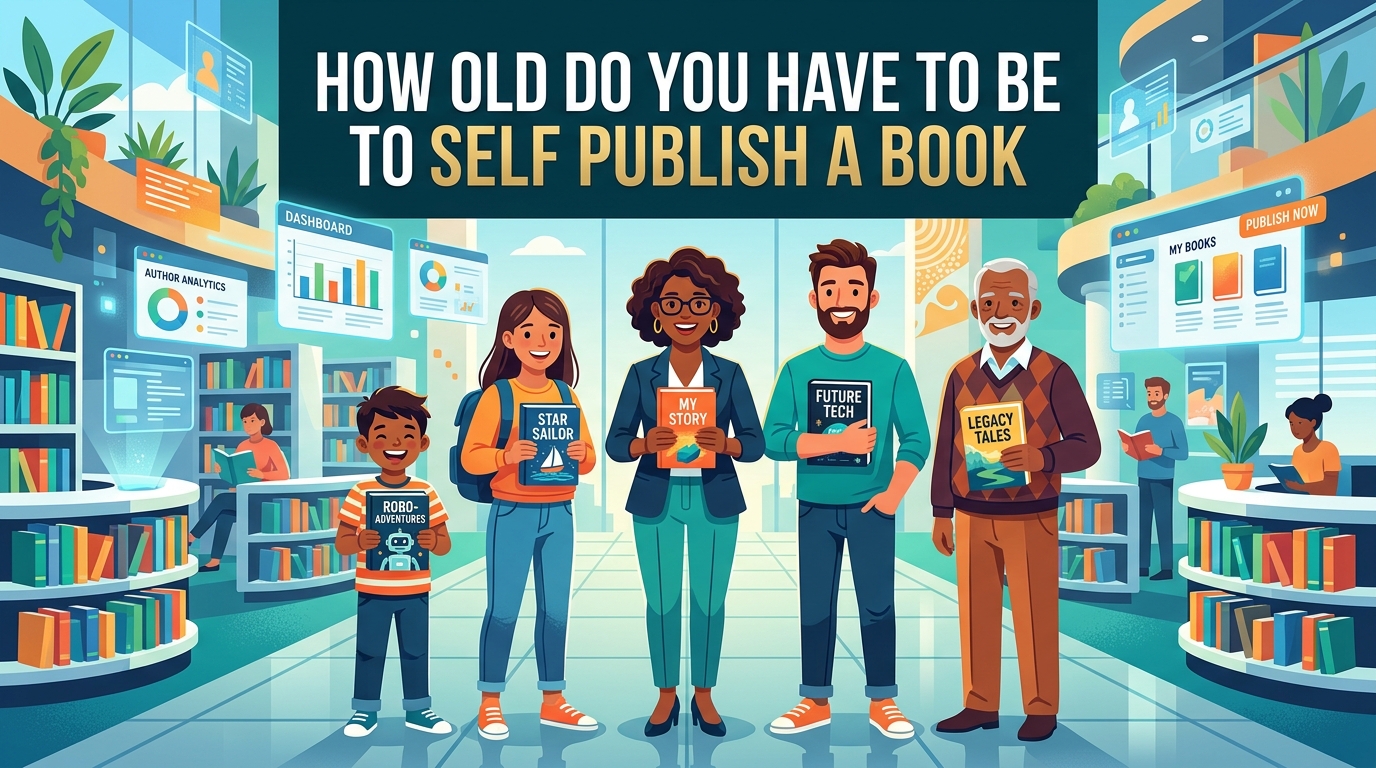
The idea of publishing a book used to feel like something reserved for adults with literary agents, publishing contracts, and years of industry experience. Today, self-publishing has completely changed that image. Teenagers are releasing fantasy novels online, children are publishing illustrated stories with help from their parents, and first-time authors are uploading books directly to digital platforms from their bedrooms. Because of this shift, one question keeps coming up among aspiring writers: how old do you have to be to self publish a book?
The short answer is that there is no official age limit for writing a book. Anyone can write one. A child, a teenager, or an adult can create a story and share it with the world. The legal complications appear when money, contracts, taxes, publishing platforms, and royalties become involved. That is where age restrictions matter.
Self-publishing platforms such as Amazon Kindle Direct Publishing, IngramSpark, Draft2Digital, and others operate as businesses. To publish independently on these platforms, authors usually need to create accounts, agree to legal terms, and receive royalty payments. In many countries, these actions require the account holder to be at least eighteen years old because publishing agreements are considered legally binding contracts.
That does not mean younger writers cannot publish. It simply means they may need the assistance of a parent or legal guardian. In reality, many young authors have successfully self-published books long before adulthood. The modern publishing world is far more flexible than many people realize.
The Difference Between Writing A Book And Publishing One
A lot of confusion comes from mixing up writing and publishing as if they are the same thing. They are connected, but legally they are very different.
Writing a book has no age restriction at all. A child can begin writing stories as soon as they learn language. There are famous examples of authors who started very young, and many schools even encourage students to create and print their own books. Creativity itself does not require permission.
Publishing, however, enters business territory. Once a book is uploaded for sale, royalties are collected, contracts are accepted, and distribution agreements are signed. Self-publishing platforms function like digital marketplaces, and those marketplaces need legally responsible account holders.
This is why many platforms require the primary account owner to be an adult. The restriction is less about the content of the book and more about financial responsibility and contract law.
A teenager might write an entire novel independently, but a parent may still need to create the publishing account, manage payment information, and approve the legal agreements attached to distribution.
Can Kids And Teenagers Self Publish Books?
Yes, absolutely. Young writers publish books every year. In fact, self-publishing has become one of the easiest ways for younger authors to share their work because it removes traditional gatekeepers.
In traditional publishing, young writers often face additional obstacles. Literary agents and publishers usually prefer dealing with adults because contracts, marketing arrangements, and royalties involve long-term legal agreements. Self-publishing bypasses much of that process.
A teenager who finishes a manuscript can technically publish through platforms like Amazon KDP with adult assistance. Amazon even openly promotes teen and young adult publishing categories for aspiring writers.
Many young authors publish:
| Age Group | What They Can Usually Do | Adult Assistance Needed |
| Under 13 | Write books, create stories, design illustrations | Usually required for all publishing accounts |
| Ages 13–17 | Write and prepare books for publishing | Usually needed for contracts, taxes, and payment accounts |
| 18+ | Independently publish and manage royalties | No legal guardian required |
| Any Age | Create manuscripts and ideas | No restrictions |
The internet has also created an audience that actively supports young creators. Readers are often fascinated by talented young authors, especially in genres like fantasy, romance, poetry, and children’s fiction.
Why Most Self-Publishing Platforms Require Adults
The legal side of publishing is often invisible to new writers. Uploading a book may feel simple, but behind the scenes there are agreements involving rights ownership, royalty distribution, tax reporting, and content policies.
Platforms such as Amazon KDP require users to agree to terms and conditions when opening accounts. Those agreements are contracts. In many legal systems, minors cannot independently enter binding contracts, which is why adults are usually required to oversee the account.
There are also payment systems involved. Royalties need bank accounts, tax information, and identification documents. In some countries, minors cannot independently manage those systems.
This is why younger authors commonly use:
Parent-Owned Publishing Accounts
A parent creates the account and manages financial information while the young author retains creative control over the book.
Family Publishing Businesses
Some families create small publishing brands or LLCs to manage royalties and future books.
Joint Creative Management
Parents help with uploading files, formatting, marketing, and publishing logistics while the young author focuses on writing.
This arrangement is extremely common and perfectly normal in the self-publishing industry.
How Amazon KDP Handles Young Authors
Amazon Kindle Direct Publishing is currently one of the largest self-publishing platforms in the world. It allows authors to publish ebooks, paperbacks, and hardcover books globally.
Amazon does not specifically ban young writers from creating books. However, the publishing account itself generally needs to be operated by someone legally able to enter agreements and receive payments.
KDP also includes age-related categories for readers. For example, children’s books and young adult novels can be assigned reading age ranges to help readers discover appropriate content.
This is separate from the author’s age. A fifteen-year-old author could publish a fantasy novel for adult readers, while a forty-year-old author might publish books intended for children.
The important thing to understand is that publishing platforms care more about account legality than the writer’s birthdate.
Famous Young Authors Who Published Early
One reason younger writers feel inspired to publish today is because there are already many successful examples.
Several authors became published while still teenagers. Some started traditionally while others moved into self-publishing later. Young writers often bring a unique emotional honesty and imagination that resonates strongly with readers their own age.
The rise of digital publishing has especially benefited teen authors in genres like:
Young Adult Fantasy
Teen authors often write with a natural understanding of emotions, school environments, friendships, and identity struggles.
Poetry
Social media and ebook platforms have made poetry publishing much more accessible for younger creators.
Children’s Books
Young illustrators and storytellers frequently collaborate with parents to publish simple picture books.
Online Serialized Fiction
Platforms like Wattpad have shown that readers care more about engaging stories than the age of the author.
The publishing industry itself has slowly become more accepting of younger voices because audiences increasingly value authenticity.
The Advantages Of Self Publishing Young
Young writers actually have several advantages that older writers sometimes overlook.
More Creative Freedom
Teen and child authors often write without overthinking market trends or industry expectations. That freedom can lead to original storytelling.
Digital Familiarity
Younger generations naturally understand social media, online communities, and internet culture. That knowledge can become a powerful marketing advantage.
Time To Build A Career Early
A young self-published author who starts building an audience at sixteen could have years of experience before turning twenty-five.
Easier Access To Global Readers
The internet allows books to reach readers worldwide instantly. Young writers no longer need permission from traditional publishing gatekeepers to share their work.
Self-publishing has essentially democratized storytelling.
The Challenges Young Authors Face
Even though young authors can publish successfully, there are still real challenges involved.
Financial Limitations
Professional editing, cover design, formatting, and marketing can become expensive. Younger writers may not have personal income to fund these services.
Limited Industry Experience
Publishing involves more than creativity. Metadata, keywords, pricing, advertising, and audience targeting all require learning.
Emotional Vulnerability
Publishing publicly means facing reviews, criticism, and rejection. Young authors sometimes struggle emotionally with negative feedback.
Time Management
School responsibilities, exams, and personal development can make long-term publishing consistency difficult.
Despite these obstacles, many young writers continue publishing successfully because self-publishing allows gradual growth instead of demanding perfection immediately.
Should Young Writers Self Publish Or Wait?
This is one of the most debated questions in modern publishing.
Some people believe young writers should wait until adulthood to publish professionally. Others believe early publishing experience is incredibly valuable.
The truth depends on the individual writer.
For some young authors, self-publishing becomes an amazing learning experience. They gain confidence, understand the industry, and improve their storytelling through real reader interaction.
For others, it may be smarter to spend more time developing writing skills privately before releasing work publicly.
The good news is that self-publishing does not require permanent commitment. Writers can update books, revise editions, redesign covers, or even unpublish projects later.
Publishing young no longer carries the same irreversible pressure it once did.
What Parents Should Know About Helping Young Authors
Parents often become essential partners in young publishing journeys.
A supportive parent can help with:
Managing Publishing Accounts
This includes handling contracts, tax forms, and royalty systems.
Protecting Creative Rights
Parents can help ensure young authors maintain ownership of their intellectual property.
Emotional Support
Publishing publicly can feel intimidating. Encouragement matters tremendously for young writers.
Budgeting For Professional Services
Good editing and design can significantly improve a book’s presentation and credibility.
Parents do not need publishing expertise to help effectively. Often, simply providing encouragement and logistical support makes a major difference.
Self Publishing Is More Accessible Than Ever
One reason age barriers feel smaller today is because publishing itself has become dramatically easier.
A writer no longer needs:
- A printing warehouse
- Thousands of dollars upfront
- Literary connections
- A publishing company office
- Large distribution networks
Digital publishing platforms now handle printing, shipping, distribution, and sales processing automatically.
This means a teenager with a laptop and a manuscript has opportunities that would have been nearly impossible twenty years ago.
The self-publishing world is far from perfect, but it has undeniably opened doors for younger voices.
The Emotional Side Of Publishing Young
For many young writers, publishing is deeply personal. Stories often become connected to identity, confidence, and self-expression.
A first published book can completely change how a young person sees themselves. It can turn writing from a private hobby into something real and meaningful.
Even small successes matter. Selling ten copies, receiving a positive review, or holding a printed book for the first time can become transformative experiences.
At the same time, young authors should understand that publishing is rarely instant success. Most writers improve gradually over years. Early projects are part of the learning process, not final definitions of talent.
That perspective matters enormously.
Building A Long-Term Writing Career Early
Young self-published authors who stay committed often gain an incredible advantage over time.
They learn:
How Readers Respond
Publishing teaches writers what emotionally connects with audiences.
How Marketing Works
Authors quickly discover the importance of covers, descriptions, keywords, and social media visibility.
How To Handle Feedback
Reader responses can sharpen storytelling instincts and improve future work.
How To Think Like Professionals
Young authors who publish early often develop discipline and long-term creative habits sooner than their peers.
A teenager who publishes one imperfect novel today may become a highly experienced author by adulthood simply because they started earlier.
Final Thoughts
So, how old do you have to be to self publish a book?
Technically, there is no age limit for writing a book. Anyone can become an author creatively. The legal restrictions mostly apply to publishing accounts, contracts, royalties, and financial systems. In most cases, independent self-publishing platforms require an adult to manage the account if the writer is under eighteen.
But age has never been the true barrier to storytelling.
What matters more is dedication, creativity, patience, and the willingness to keep improving. The publishing world today is more open than it has ever been before. Young writers now have opportunities that previous generations could barely imagine.
A twelve-year-old with a story idea, a sixteen-year-old finishing their fantasy trilogy, or a college student publishing poetry online all belong to the same evolving creative landscape. Self-publishing has made authorship accessible to almost anyone willing to put their words into the world.
And sometimes, the most powerful stories come from voices people least expect.