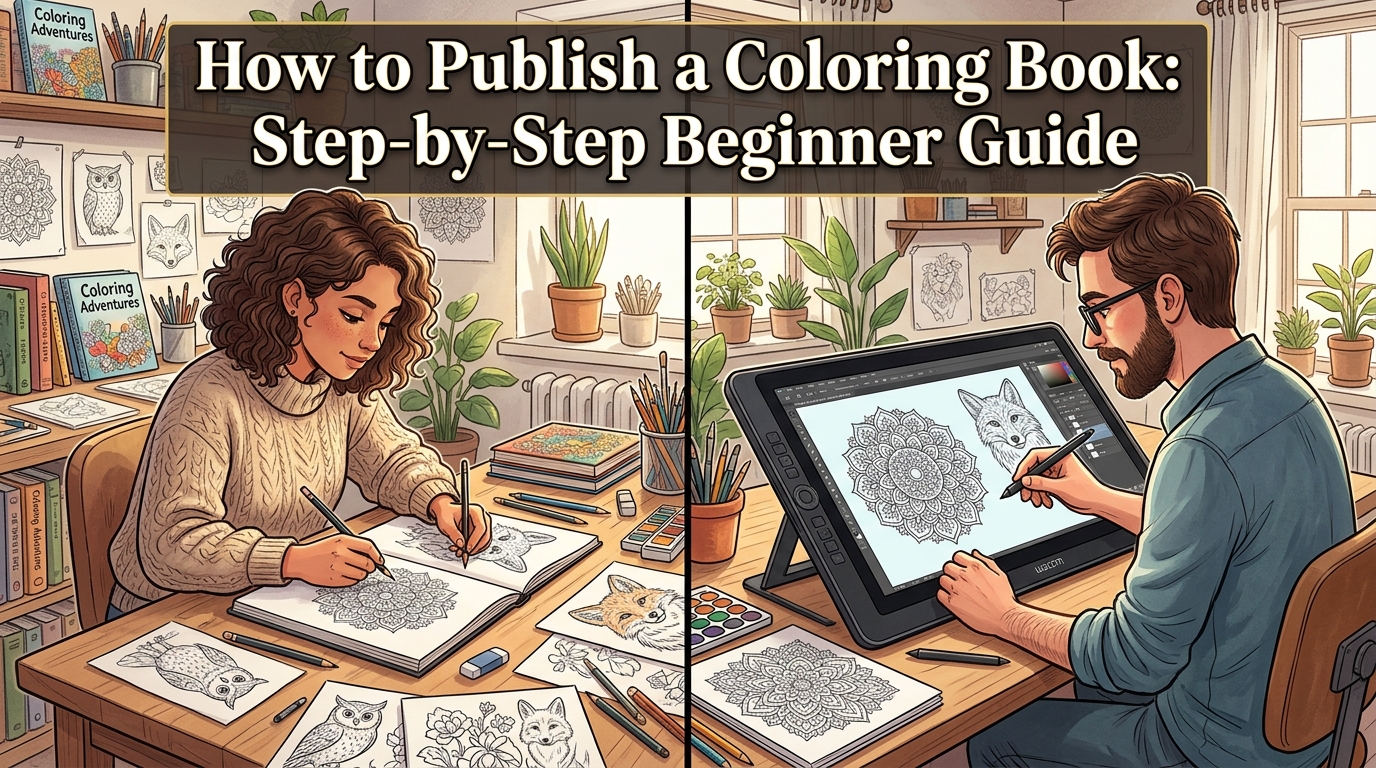
Publishing a coloring book might sound like a simple creative project, but behind every successful title is a thoughtful process that blends art, strategy, and technical preparation. In recent years, coloring books have become more than just children’s entertainment. They now serve as tools for relaxation, education, and even therapy, making them a versatile and profitable niche in publishing. From intricate mandalas designed to reduce stress to educational activity books that support early learning, the demand continues to grow across different audiences.
For beginners, the appeal lies in accessibility. Unlike traditional books that require extensive writing, coloring books focus on visuals, allowing artists, designers, and even non-artists using digital tools to enter the publishing space. However, success in this field depends on more than just drawing appealing images. It requires an understanding of audience expectations, thoughtful design decisions, and knowledge of publishing platforms. This guide takes you deeper into each step, offering a clear and practical path from idea to finished product.
Understanding the Market and Identifying Opportunities
The first and often overlooked step in publishing a coloring book is understanding the market you are entering. Coloring books are not a one-size-fits-all product. They vary widely depending on age group, purpose, and style. Children’s coloring books tend to focus on simplicity, bold lines, and familiar subjects like animals, alphabets, and everyday objects. In contrast, adult coloring books emphasize detail, complexity, and themes such as mindfulness, fantasy, or nature.
To make informed decisions, it is essential to study existing books. Browse online marketplaces and observe which types of coloring books rank highly or receive consistent reviews. Pay attention to what readers mention in their feedback. Some may appreciate thicker lines for easier coloring, while others may complain about pages that bleed through or designs that feel repetitive. These insights help you understand what works and where gaps exist.
Identifying a niche is particularly important. Instead of creating a broad and generic book, focusing on a specific theme can make your work stand out. For example, a coloring book centered on “positive affirmations for teens” or “Islamic geometric patterns” targets a clearly defined audience. A focused niche not only improves the quality of your content but also simplifies marketing later on.
Building a Clear and Cohesive Concept
Once you understand the market, the next step is to develop a concept that brings your coloring book to life. A strong concept is more than just a theme; it is a unifying idea that connects every page. It determines the tone, style, and overall experience of the book.
A cohesive concept helps readers feel like they are exploring a complete world rather than flipping through unrelated images. For instance, a book about underwater life might include coral reefs, sea creatures, and ocean landscapes, all illustrated in a consistent style. This sense of continuity enhances the user experience and increases the perceived value of your book.
While developing your concept, it is also important to think about the emotional response you want to create. Some coloring books aim to relax and calm the user, while others are designed to educate or entertain. Defining this purpose early on will guide your artistic and design choices throughout the process.
Designing High-Quality Artwork
The artwork is the foundation of your coloring book, and its quality plays a major role in how your book is received. Good coloring pages are not just visually appealing; they are also functional. The lines should be clean and well-defined, making it easy for users to color within the boundaries. The designs should feel balanced, with enough detail to engage the user but not so much that it becomes overwhelming.
If you are drawing by hand, using high-quality paper and ink can help produce sharper results. Once completed, the illustrations should be scanned at a high resolution and refined using digital tools to remove imperfections. For digital artists, illustration software provides greater control and consistency, allowing you to maintain uniform line thickness and spacing.
Another important aspect is variation. Even within a single theme, each page should offer something new. Repetition can quickly reduce the appeal of a coloring book, so aim to introduce different compositions, patterns, and levels of detail. At the same time, maintain a consistent style so the book feels unified.
It is also worth considering practical details such as margins and page layout. Leaving enough space around the edges ensures that the designs are not cut off during printing. These small adjustments contribute to a more professional final product.
Structuring and Formatting Your Book
After creating your artwork, the next step is to organize it into a cohesive book format. This involves selecting the right page size, arranging the order of pages, and preparing the file according to publishing requirements. Most coloring books are designed in standard sizes such as 8.5 by 11 inches, which is widely used and compatible with many printing services.
The structure of your book should feel intentional. The opening pages can include a title page and possibly a brief introduction, while the main content should flow smoothly from one design to the next. Some creators choose to arrange pages from simple to complex, allowing users to gradually build confidence as they progress through the book.
One-sided printing is a common choice for coloring books, especially when targeting users who prefer markers. This prevents ink from bleeding through to the next page. Adding blank pages behind each design can further enhance usability, although it increases the total page count.
Formatting also involves ensuring that your file meets technical specifications such as bleed settings, margins, and resolution. These details may seem minor, but they are essential for producing a polished and professional book.
Choosing the Right Publishing Platform
With your book formatted and ready, the next decision is where to publish it. Self-publishing platforms have made it easier than ever to bring a coloring book to market. Print-on-demand services allow you to upload your files and have books printed only when orders are placed, eliminating the need for large upfront investments.
Different platforms offer different advantages. Some provide global distribution, while others focus on specific regions or niches. When choosing a platform, consider factors such as printing quality, royalty rates, and ease of use. Reading user experiences and comparing features can help you make an informed choice.
Digital versions of coloring books are also gaining popularity. These can be sold as downloadable PDFs, allowing users to print pages at home. Offering both print and digital formats can expand your reach and appeal to different preferences.
Designing an Eye-Catching Cover
While the interior pages are important, the cover is what attracts buyers in the first place. A well-designed cover communicates the theme and quality of your book at a glance. It should be visually appealing, easy to read, and aligned with your target audience.
For children’s books, bright colors and playful fonts often work well. For adult coloring books, a more refined and artistic approach may be appropriate. The cover should also include a clear title and, if necessary, a subtitle that highlights the book’s purpose or unique features.
Investing time in cover design is crucial because it directly impacts your book’s visibility and sales. Even a high-quality interior can go unnoticed if the cover fails to capture attention.
Pricing and Positioning Your Book
Setting the right price for your coloring book requires careful consideration. Pricing too high may discourage buyers, while pricing too low can reduce perceived value. The ideal price often depends on factors such as page count, quality, and target audience.
Studying similar books in your niche can provide useful benchmarks. However, it is important to consider your own goals as well. If you are building a brand, you might focus on competitive pricing to attract more readers. If your book offers unique or premium content, a slightly higher price may be justified.
Positioning your book effectively also involves writing a compelling description. This is your opportunity to explain what makes your book special and why it is worth purchasing. Highlighting key features, such as unique designs or specific benefits, can help persuade potential buyers.
Marketing and Reaching Your Audience
Publishing your coloring book is only part of the journey. To achieve success, you need to actively promote it. Marketing can take many forms, from social media promotion to collaborations with influencers or educators.
Creating sample pages and sharing them online is an effective way to showcase your work. This allows potential buyers to experience the quality of your designs before making a purchase. Engaging with communities that share your interests can also help build awareness and trust.
Consistency is key in marketing. Regularly sharing content, updates, and new ideas keeps your audience engaged and increases the chances of long-term success. Over time, this effort can help you establish a recognizable brand in the coloring book niche.
Common Challenges and How to Overcome Them
Like any creative endeavor, publishing a coloring book comes with challenges. One common issue is maintaining originality in a competitive market. With so many books available, it can be difficult to create something truly unique. Overcoming this requires a willingness to experiment and develop your own style.
Another challenge is managing the technical aspects of publishing. Formatting, file preparation, and platform requirements can feel overwhelming at first. However, with practice and attention to detail, these tasks become more manageable.
Patience is also important. Success does not always happen immediately, but consistent effort and continuous improvement can lead to better results over time.
A Quick Overview of the Coloring Book Publishing Process
Below is a simple table that summarizes the key stages involved in publishing a coloring book:
| Stage | Description |
| Market Research | Understanding audience needs and identifying profitable niches |
| Concept Development | Creating a clear and cohesive theme for the book |
| Artwork Creation | Designing high-quality, user-friendly coloring pages |
| Formatting | Organizing pages and preparing files for publishing |
| Platform Selection | Choosing where and how to publish your book |
| Cover Design | Creating an attractive and relevant book cover |
| Pricing & Positioning | Setting a competitive price and writing a compelling description |
| Marketing | Promoting the book to reach your target audience |
Conclusion: From Idea to Published Success
Publishing a coloring book is a journey that combines creativity with strategy. It begins with understanding your audience and developing a strong concept, then moves through design, formatting, and publishing, and finally reaches marketing and growth. Each step plays a crucial role in shaping the final product and determining its success.
For beginners, the process may seem complex at first, but it becomes more manageable with experience. The key is to approach each stage with care and attention, focusing on quality and consistency. With the right mindset and effort, publishing a coloring book can be both a fulfilling creative project and a valuable source of income.