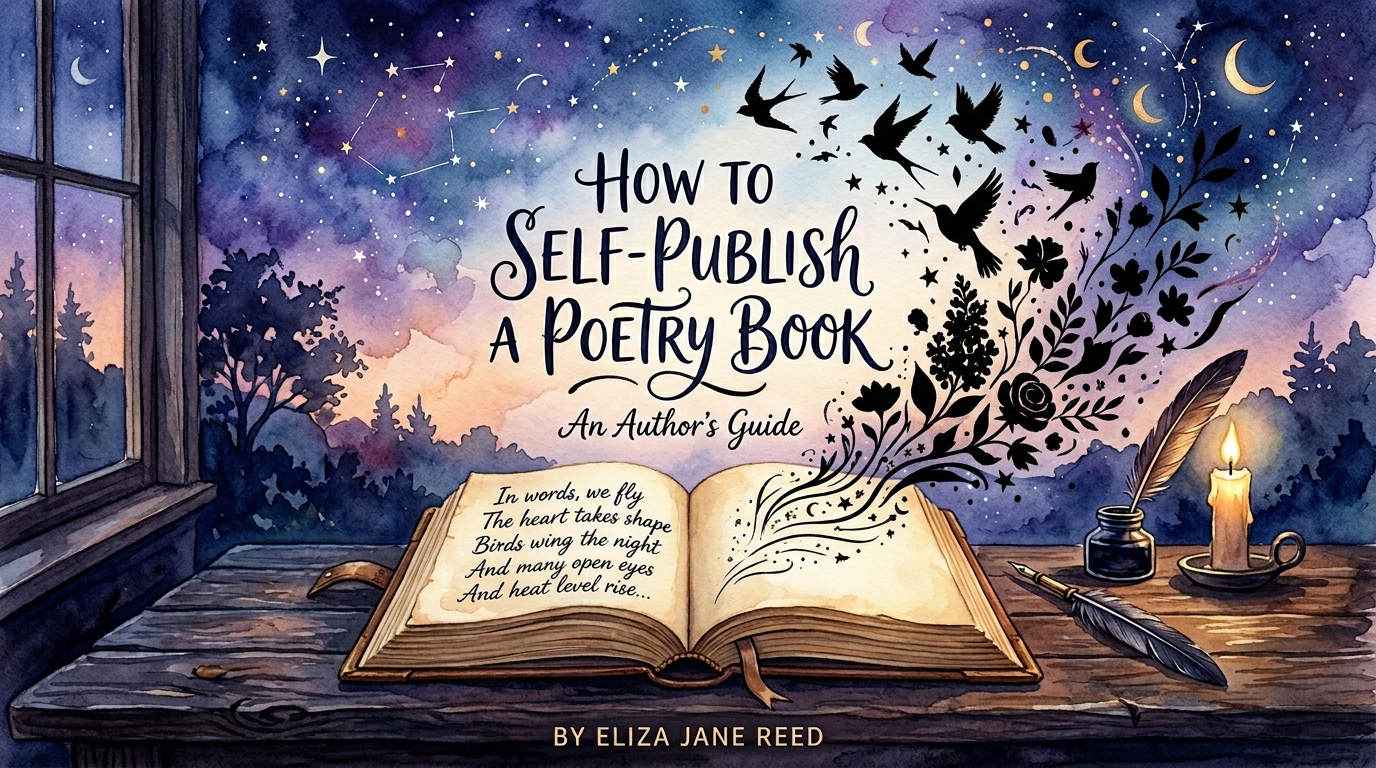
Poetry has always occupied a unique place in literature. Unlike novels, memoirs, or business books, poetry speaks through rhythm, emotion, imagery, and personal expression. For many poets, writing a collection of poems is a deeply personal achievement, but the next challenge often involves figuring out how to share that work with readers. Traditional publishing opportunities for poetry can be limited, highly competitive, and often slow-moving. As a result, many poets are turning to self-publishing as a practical and empowering alternative.
Self-publishing has transformed the literary world by giving writers direct control over the publication process. Today, poets can create professional-quality books, distribute them worldwide, and build audiences without relying on traditional publishing houses. Whether you have written a collection of contemporary poetry, spoken word pieces, free verse, haiku, sonnets, or themed poems, self-publishing offers an opportunity to bring your work to life on your own terms.
This guide explores every stage of the poetry self-publishing process, from organizing your manuscript and editing your poems to designing your book, selecting publishing platforms, and marketing your collection effectively.
What Makes Poetry Books Unique in the Publishing Industry
Publishing poetry differs significantly from publishing other genres. Poetry collections are often shorter than novels, yet they require careful attention to presentation, formatting, spacing, and visual aesthetics. Every line break, stanza, and page layout contributes to the reader’s experience.
Unlike fiction, where readers often focus on plot and character development, poetry readers pay close attention to language, structure, rhythm, and emotional impact. This means that the design and formatting of a poetry book are particularly important. A poorly formatted poetry collection can disrupt the flow and meaning of the poems themselves.
Another factor that makes poetry unique is its audience. Poetry readers are often passionate and loyal, but the market is generally smaller than that of commercial fiction. Success in poetry publishing frequently depends on building a dedicated readership rather than achieving mass-market sales.
Understanding these distinctions can help poets make informed decisions throughout the self-publishing journey.
Why More Poets Are Choosing Self-Publishing
The rise of digital publishing technology has made self-publishing more accessible than ever before. Many poets choose self-publishing because it offers complete creative freedom.
Traditional publishers may request changes to content, title selection, book design, or manuscript organization. Self-published poets retain control over every aspect of their collection, from cover artwork to pricing strategies.
Self-publishing also allows for faster publication. Traditional publishing can take years from manuscript acceptance to bookstore release. Independent poets can often publish within a few months once their manuscript is finalized.
Financial considerations also play a role. Self-published authors generally receive higher royalty percentages compared to traditionally published writers. While self-publishing requires upfront investment in editing, design, and production, many poets appreciate the potential for greater long-term earnings.
Preparing Your Poetry Manuscript
Before publication begins, poets should focus on creating a cohesive manuscript. A poetry collection is more than a random assortment of poems. The strongest collections often contain an underlying theme, emotional journey, or conceptual framework that connects individual pieces.
As you review your work, consider how each poem contributes to the overall reading experience. Some poets organize collections chronologically, while others group poems by themes, emotions, seasons, relationships, or life experiences.
Reading the manuscript from beginning to end can help identify weak sections, repetitive themes, or poems that may not fit the collection’s overall purpose.
Determining the Length of Your Collection
There is no strict rule regarding poetry book length. However, most poetry collections fall within a certain range.
| Poetry Collection Type | Approximate Word Count | Typical Page Count |
| Chapbook | 3,000 – 10,000 | 20 – 40 pages |
| Standard Poetry Collection | 10,000 – 25,000 | 60 – 120 pages |
| Full-Length Poetry Book | 25,000 – 40,000+ | 120 – 200+ pages |
| Anthology | Varies | 150 – 300+ pages |
Many first-time poets begin with a standard poetry collection of approximately 60 to 120 pages. This length is often attractive to readers and economical to print.
Editing Your Poetry Collection
Editing poetry requires a different mindset than editing prose. Every word matters. Poets often spend significant time refining language, rhythm, imagery, and emotional impact.
While self-editing is important, obtaining outside feedback can provide valuable perspective. Trusted beta readers, poetry groups, literary communities, or professional editors can help identify weaknesses that may not be apparent to the author.
Structural Editing
Structural editing examines the collection as a whole. It focuses on organization, thematic consistency, pacing, and flow. Questions to consider include whether the poems feel connected, whether the manuscript maintains reader engagement, and whether the arrangement enhances the emotional journey.
Line Editing
Line editing focuses on individual poems. Editors review word choice, rhythm, clarity, and poetic effectiveness. This stage often leads to stronger imagery and more impactful language.
Proofreading
Proofreading represents the final stage before publication. Although poetry often embraces unconventional grammar and punctuation, typographical errors should still be eliminated. Readers can quickly lose confidence in a collection that contains obvious mistakes.
Creating a Strong Title for Your Poetry Book
A title serves as the first introduction to your collection. Poetry book titles often convey mood, symbolism, or thematic significance rather than directly describing content.
Effective poetry titles are memorable, emotionally resonant, and reflective of the collection’s overall message. Some poets choose a title based on a particularly meaningful poem, recurring image, or central theme.
Spend time exploring different possibilities. A compelling title can significantly influence reader interest and discoverability.
Designing a Professional Poetry Book Cover
The cover of a poetry collection plays a crucial role in attracting readers. Poetry readers often make purchasing decisions based on visual presentation because poetry is closely associated with artistic expression.
A professional cover should align with the tone of the collection. Contemporary poetry may feature minimalist designs, while nature-inspired collections often incorporate landscapes, botanical imagery, or artistic illustrations.
Typography is particularly important in poetry publishing. Elegant, readable fonts can communicate sophistication and creativity without overwhelming the design.
Investing in professional cover design can dramatically improve the perceived quality of your book.
Formatting Poetry for Print and Digital Publication
Formatting poetry presents unique challenges compared to prose. Line breaks, indentation, spacing, and stanza arrangement must remain consistent across different publishing formats.
Poems frequently rely on visual structure to convey meaning. Therefore, formatting should preserve the author’s intended presentation.
Print Formatting Considerations
Print books offer the greatest control over visual layout. Poets can carefully position poems on pages, manage white space, and maintain precise formatting.
Popular trim sizes for poetry books include:
5 x 8 inches
5.5 x 8.5 inches
6 x 9 inches
These dimensions provide sufficient space for poetry while maintaining an elegant appearance.
Ebook Formatting Challenges
Ebooks can sometimes alter spacing and line breaks due to varying screen sizes. Poets should review digital versions carefully to ensure formatting remains intact.
Many poetry authors choose to publish both print and ebook editions to maximize accessibility while preserving artistic presentation.
Choosing the Right Self-Publishing Platform
Several publishing platforms enable poets to distribute books globally.
Amazon Kindle Direct Publishing
Amazon’s KDP platform remains one of the most popular options for self-published poets. It offers access to a massive international audience and allows authors to publish both ebooks and paperback editions.
KDP provides user-friendly tools for uploading manuscripts, setting prices, and tracking sales performance.
IngramSpark
IngramSpark is widely respected for its extensive distribution network. Through IngramSpark, poetry books can become available to bookstores, libraries, and online retailers worldwide.
Many poets use IngramSpark alongside Amazon to achieve broader distribution.
Draft2Digital
Draft2Digital specializes in ebook distribution. The platform simplifies the process of publishing across multiple ebook retailers, helping poets reach readers beyond Amazon.
Lulu
Lulu offers print-on-demand services and flexible publishing options. It is particularly useful for poets who wish to create custom editions or small print runs.
Understanding ISBNs and Copyright
An ISBN, or International Standard Book Number, serves as a unique identifier for a published book. While some publishing platforms provide free ISBNs, many authors prefer purchasing their own ISBNs to maintain complete publishing control.
Copyright protection generally exists automatically when original poems are created and fixed in tangible form. However, formal copyright registration may provide additional legal protections depending on the author’s country.
Poets should also ensure they possess rights to any artwork, photographs, or illustrations included in the collection.
Setting a Price for Your Poetry Book
Pricing requires balancing profitability with reader expectations.
Poetry books often sell within a lower price range than large nonfiction or fiction titles. Factors influencing pricing include page count, production costs, audience demographics, and comparable titles within the market.
Researching successful poetry collections can provide useful benchmarks. Competitive pricing encourages purchases while ensuring reasonable royalty earnings.
Publishing Your Poetry Collection
Once editing, design, and formatting are complete, publication becomes relatively straightforward.
Authors upload their manuscript and cover files, enter book details, select categories and keywords, determine pricing, and choose distribution options.
Before approving publication, carefully review proof copies. Examining a physical proof helps identify formatting issues that may not appear on a computer screen.
Many successful poets review multiple proof versions before finalizing publication.
Building an Author Platform Before Launch
Publishing a poetry book is only part of the journey. Building visibility before launch can significantly improve results.
An author platform consists of the online presence and audience that supports your work.
Creating a professional website allows readers to learn about your poetry, upcoming projects, and events. Social media platforms can also help poets connect directly with readers and fellow writers.
Many poets successfully grow audiences by sharing excerpts, writing reflections, behind-the-scenes content, and spoken-word performances.
Establishing connections before publication often leads to stronger launch-day engagement.
Marketing a Self-Published Poetry Book
Marketing remains one of the most important aspects of self-publishing success.
Many excellent poetry books struggle not because of quality issues but because potential readers never discover them.
Creating a Launch Strategy
A book launch creates excitement and visibility during the crucial first weeks after publication.
Poets often announce release dates in advance, share cover reveals, offer pre-orders, and engage with readers through online events.
Building anticipation can generate momentum and encourage early reviews.
Leveraging Social Media
Platforms such as Instagram, TikTok, and Facebook have become influential spaces for poetry communities.
Visual poetry content, video readings, writing insights, and personal storytelling often resonate strongly with poetry audiences.
Consistency matters more than constant promotion. Readers generally connect with authentic voices rather than aggressive sales messages.
Book Reviews and Reader Feedback
Reviews provide valuable social proof for potential buyers.
Encouraging readers to leave honest reviews on retail platforms can improve visibility and credibility.
Positive reviews often influence recommendation algorithms and purchasing decisions.
Selling Poetry Beyond Online Retailers
Many poets expand sales opportunities beyond major online bookstores.
Local bookstores frequently support regional authors and may be willing to stock independently published collections.
Poetry readings, literary festivals, art exhibitions, and community events also provide opportunities to connect directly with readers.
Some poets generate substantial sales through speaking engagements, workshops, and educational events.
Direct sales often result in higher profit margins while fostering meaningful reader relationships.
Creating an Audiobook Version of Your Poetry
Audiobooks have become increasingly popular across all publishing categories, including poetry.
Poetry naturally lends itself to spoken performance. Hearing a poet read their own work can add emotional depth and authenticity.
Recording an audiobook allows readers to experience rhythm, pacing, and emphasis exactly as intended by the author.
Many poetry enthusiasts actively seek audio versions of collections, particularly when spoken by the poet themselves.
Growing a Long-Term Poetry Career
A single poetry book can establish a foundation, but long-term success often comes from continued engagement with readers and consistent creative output.
Many successful poets publish multiple collections over time while cultivating communities around their work. Each new release strengthens visibility and expands readership.
Building a sustainable poetry career involves more than publishing books. It includes participating in literary communities, attending events, collaborating with other artists, and continuously refining craft.
Patience is especially important in poetry publishing. While some books achieve immediate recognition, many collections find readers gradually over months or years.
Common Mistakes First-Time Poetry Authors Should Avoid
Many first-time poets rush to publication before fully refining their manuscript. While enthusiasm is valuable, taking time to edit thoroughly often leads to a stronger final product.
Another common mistake involves neglecting professional design. Readers frequently judge books by their covers, particularly within artistic genres such as poetry.
Poor formatting can also diminish the reading experience. Since poetry relies heavily on visual presentation, preserving line breaks and spacing is essential.
Some authors underestimate marketing efforts and assume readers will automatically discover their books. Effective promotion remains crucial regardless of literary quality.
Finally, many poets compare their progress to others too quickly. Building a readership takes time, and consistent effort generally produces better long-term results than chasing immediate success.
Conclusion
Self-publishing a poetry book offers unprecedented opportunities for modern poets. It provides creative freedom, direct access to readers, global distribution, and full control over the publishing process. While the journey requires careful planning, editing, design, formatting, and marketing, the rewards can be deeply fulfilling.
A poetry collection represents more than a book. It captures experiences, emotions, observations, and artistic expression in a form that can resonate with readers across cultures and generations. Through self-publishing, poets no longer need to wait for gatekeepers to approve their work. They can bring their voices directly to the world.
By focusing on quality, professionalism, thoughtful presentation, and meaningful audience engagement, poets can successfully publish collections that not only reach readers but leave lasting impressions. Self-publishing has made poetry more accessible than ever, allowing writers to transform personal creativity into published works that inspire, comfort, challenge, and connect people through the power of language.