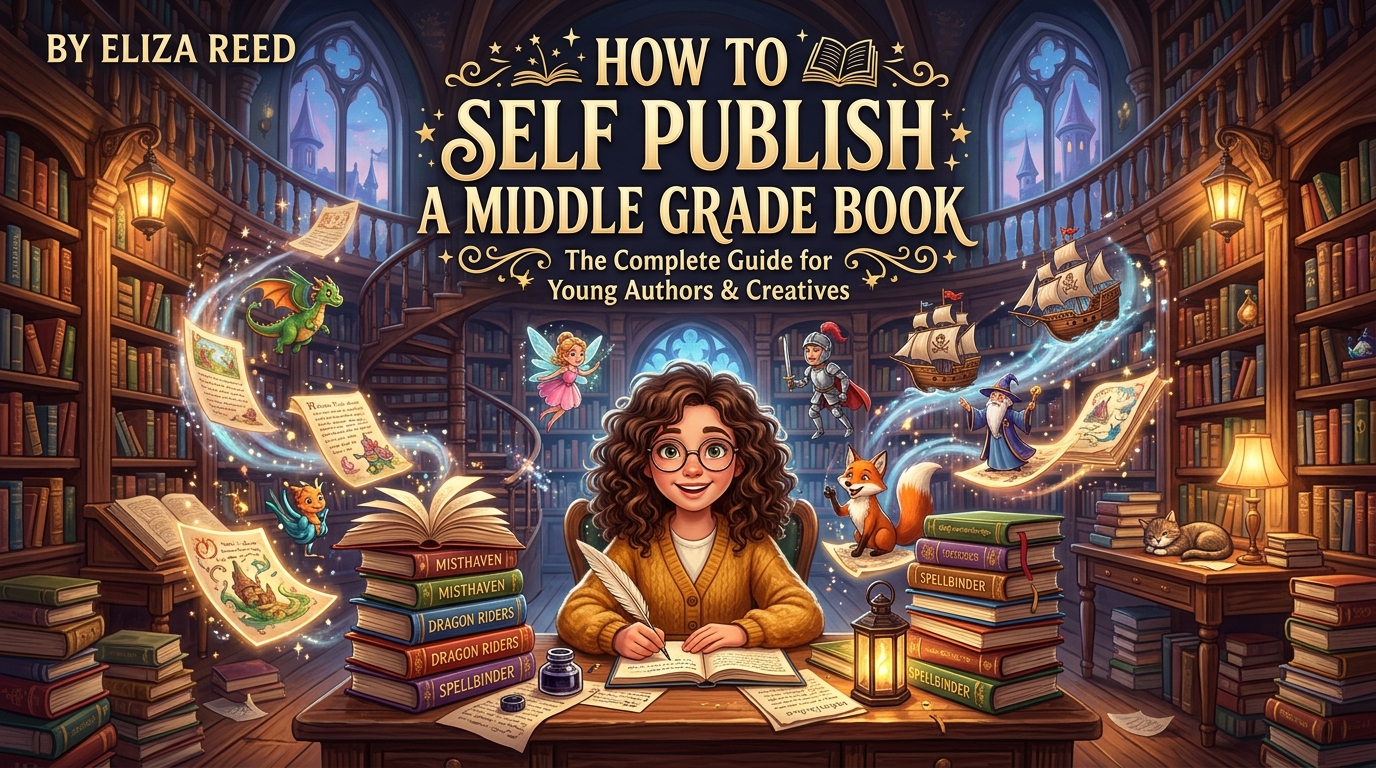
Writing a middle grade book is an exciting achievement. Whether you have created a magical fantasy adventure, a heartfelt coming-of-age story, a mystery filled with twists, or a contemporary tale about friendship and family, reaching the end of your manuscript is a major milestone. However, finishing the story is only the beginning of the publishing journey. Many aspiring authors wonder what comes next and how they can successfully bring their book to young readers without relying on a traditional publishing house.
Self-publishing has transformed the publishing industry over the last decade. It has provided authors with greater creative control, higher royalty opportunities, and faster routes to market. For middle grade authors, self-publishing offers the freedom to publish stories that might not fit traditional publishing trends while still reaching schools, libraries, parents, and young readers.
Publishing a middle grade book requires a unique approach compared to publishing for adults. The target audience, age-appropriate content, educational value, cover design, marketing strategy, and distribution channels all require careful consideration. Understanding these differences can significantly improve your chances of success.
This guide explores the complete process of self-publishing a middle grade book, from manuscript preparation to marketing and long-term growth. Whether you are publishing your first book or adding another title to your catalog, this comprehensive guide will help you navigate the journey confidently.
Understanding the Middle Grade Market
Before moving into the publishing process, it is important to understand what qualifies as a middle grade book.
Middle grade fiction generally targets readers between the ages of eight and twelve. These books bridge the gap between children’s literature and young adult novels. The protagonists are typically between ten and thirteen years old, allowing readers to see themselves reflected in the story.
Middle grade books often focus on themes such as friendship, family, identity, courage, school life, adventure, and personal growth. While serious topics can be explored, the storytelling usually remains hopeful and age-appropriate.
Popular middle grade books tend to range between 30,000 and 60,000 words, although fantasy novels may extend beyond that range. Understanding industry expectations helps ensure your book meets reader and market standards before publication.
Common Characteristics of Successful Middle Grade Books
Successful middle grade novels often feature relatable characters, fast-paced storytelling, engaging dialogue, and emotionally meaningful experiences. Young readers are particularly drawn to stories that allow them to experience adventure, solve mysteries, or navigate challenges alongside memorable protagonists.
Unlike young adult novels, middle grade stories generally avoid mature romantic content, excessive violence, and adult themes. The focus remains on the child’s perspective and emotional journey.
Preparing Your Manuscript for Publication
Many first-time authors rush into publishing after completing their first draft. However, the quality of your manuscript will largely determine how readers perceive your work.
A well-prepared manuscript stands out in a crowded market and generates stronger reviews, recommendations, and word-of-mouth promotion.
Revising Your Story
Revision is where a good story becomes a great one. During this stage, focus on character development, plot consistency, pacing, dialogue, and emotional impact.
Middle grade readers have limited patience for slow beginnings. Ensure your opening chapters immediately capture attention and introduce a compelling conflict. Every chapter should move the story forward while maintaining reader engagement.
It is often beneficial to set the manuscript aside for several weeks before beginning revisions. Returning with fresh eyes allows you to identify weaknesses more effectively.
Working With Beta Readers
Beta readers provide valuable feedback before professional editing begins. Ideally, choose readers who are familiar with middle grade literature, including parents, teachers, librarians, and avid readers within the target age range.
Their insights can reveal confusing scenes, pacing issues, character inconsistencies, and areas where the story may not resonate with young readers.
Feedback from multiple perspectives often strengthens the final manuscript considerably.
Investing in Professional Editing
Professional editing remains one of the most important investments in self-publishing.
Editing generally occurs in multiple stages. Developmental editing focuses on story structure and overall content. Copy editing addresses grammar, sentence structure, and consistency. Proofreading catches final errors before publication.
A professionally edited manuscript immediately improves credibility and reader satisfaction. Poor editing is among the most common reasons self-published books receive negative reviews.
Creating a Professional Book Design
Readers often judge books by their covers, especially in the children’s and middle grade market. A professional appearance helps establish trust and encourages purchases.
Designing an Effective Cover
Your cover serves as your most important marketing tool. It communicates genre, tone, and quality within seconds.
Middle grade covers often feature vibrant illustrations, engaging typography, and visual elements that reflect the story’s central themes. Since parents, teachers, librarians, and children all influence purchasing decisions, the cover should appeal to multiple audiences simultaneously.
Hiring an experienced book cover designer familiar with middle grade publishing is usually worthwhile.
Interior Formatting
Formatting affects readability and overall reader experience.
Middle grade books require clean layouts, appropriate font sizes, comfortable spacing, and chapter designs that appeal to younger readers. If your story includes illustrations, maps, or decorative elements, they should integrate seamlessly into the layout.
Professional formatting ensures your book appears polished in both print and digital formats.
Choosing Between Print and Ebook Formats
Modern self-publishing allows authors to distribute books in multiple formats simultaneously.
Ebook Publishing
Ebooks offer affordability and global accessibility. Readers can purchase and download books instantly, making ebooks an effective option for reaching international audiences. Publishing digitally also reduces production costs because there are no printing expenses.
However, younger readers often consume books under parental supervision, and many families still prefer physical books for middle grade reading.
Print Publishing
Print books remain highly popular within the middle grade market. Parents frequently purchase physical copies for their children, and schools and libraries primarily acquire print editions.
Paperback editions are often the preferred choice because they balance affordability and durability. Many successful self-published authors release both ebook and print editions to maximize reach.
Understanding ISBNs and Copyright
Legal and publishing details are essential parts of the self-publishing process.
Do You Need an ISBN?
An ISBN, or International Standard Book Number, serves as a unique identifier for your book.
While some publishing platforms provide free ISBN options, purchasing your own ISBN gives you greater control over your publishing imprint and distribution channels.
Authors planning a long-term publishing career often choose to own their ISBNs.
Protecting Your Copyright
In most countries, copyright protection automatically applies once an original work is created and recorded.
However, registering your copyright can provide additional legal benefits if disputes arise in the future.
Keeping organized records of manuscript drafts and publication details further strengthens ownership protection.
Selecting a Self-Publishing Platform
Several publishing platforms allow authors to distribute books independently. The right choice depends on your publishing goals, preferred formats, budget, and the audience you want to reach. Some platforms focus on online retail sales, while others specialize in broad distribution through bookstores, libraries, and educational institutions. Understanding the strengths of each platform can help you create a publishing strategy that maximizes visibility and sales.
Amazon Kindle Direct Publishing (KDP)
Amazon Kindle Direct Publishing (KDP) is the most widely used self-publishing platform and is often the first choice for new authors. It provides access to Amazon’s enormous global marketplace, allowing books to reach millions of readers worldwide. Authors can publish ebooks and paperbacks, set their own prices, and earn royalties while retaining complete ownership of their work. The platform is user-friendly and requires no upfront publishing fees, making it an accessible option for writers who want to publish quickly and efficiently. For many self-published authors, KDP serves as the foundation of their publishing journey.
IngramSpark
IngramSpark is known for its extensive distribution network that reaches bookstores, libraries, schools, and academic institutions. This broader reach makes it particularly valuable for authors who want their books available beyond online retailers. IngramSpark offers professional printing options, including hardcover formats, and supports global distribution. While the setup process can be more detailed than KDP, many authors appreciate the platform’s ability to place books in channels commonly used by educators, librarians, and independent bookstores.
Draft2Digital
Draft2Digital is a popular ebook distribution platform that simplifies the process of publishing across multiple online retailers. Instead of uploading a book separately to various stores, authors can use Draft2Digital to distribute their work to platforms such as Apple Books, Kobo, Barnes & Noble, and several international ebook retailers. The platform is known for its ease of use, automated formatting tools, and streamlined royalty management. For authors looking to expand their ebook reach beyond Amazon, Draft2Digital provides a convenient and effective solution.
Pricing Your Middle Grade Book
Pricing significantly impacts sales performance and reader perception.
The ideal price depends on factors such as book length, production costs, genre, and market competition.
Typical Pricing Guidelines
| Format | Common Price Range |
| Ebook | $2.99 – $6.99 |
| Paperback | $7.99 – $14.99 |
| Hardcover | $14.99 – $24.99 |
| School Editions | Varies by order quantity |
| Signed Copies | Premium pricing possible |
Researching similar middle grade books can help determine a competitive price point.
A balance must be struck between profitability and accessibility for families, schools, and young readers.
Building an Author Platform Before Launch
Successful self-publishing begins long before publication day.
Creating an author platform helps generate interest and establish credibility.
Developing Your Author Website
An author website functions as your online headquarters.
It should include information about you, your books, contact details, blog content, and purchasing links. Parents, educators, librarians, and media professionals often visit author websites before making recommendations or purchases.
A professional website enhances your visibility and authority.
Growing an Email List
Email marketing remains one of the most effective tools available to authors.
Unlike social media platforms, email lists provide direct access to interested readers and supporters. Regular newsletters can share updates, book announcements, behind-the-scenes content, and launch information.
Building an email audience before publication can significantly improve launch-day sales.
Launching Your Middle Grade Book
A successful launch creates momentum that can influence long-term performance.
Planning your launch several months in advance allows time to build awareness and generate anticipation.
Gathering Early Reviews
Reviews play a major role in reader purchasing decisions.
Advance Review Copies (ARCs) can be distributed to book bloggers, educators, librarians, and reviewers before publication. Early reviews provide social proof and increase trust among potential buyers.
Positive reviews can also improve visibility within online marketplaces.
Creating Launch Buzz
Generating excitement around your launch involves consistent promotion across multiple channels.
Author interviews, guest articles, social media campaigns, virtual events, and newsletter announcements can all contribute to increased awareness.
Rather than concentrating all marketing efforts on a single day, successful authors often extend launch activities across several weeks.
Marketing a Middle Grade Book Successfully
Publishing the book is only part of the journey. Ongoing marketing is essential for sustained sales.
Reaching Parents and Educators
Parents and educators are often the primary purchasers of middle grade books.
Content that highlights educational themes, reading benefits, and positive messages can resonate strongly with these audiences.
Blog articles, teaching resources, discussion guides, and classroom activities can help position your book as a valuable reading choice.
Connecting With Schools
School visits remain one of the most effective promotional opportunities for middle grade authors.
Whether conducted in person or virtually, author presentations can introduce your story directly to young readers. Interactive sessions often encourage students to explore books independently.
Building relationships with educators can create long-term opportunities for book sales and future events.
Working With Libraries
Libraries serve as important discovery channels for middle grade readers.
Submitting your book to local libraries, participating in library events, and providing review copies can increase visibility and readership.
Many librarians actively seek quality independent books that appeal to younger audiences.
The Importance of Reviews and Word-of-Mouth
Word-of-mouth marketing remains one of the most powerful promotional tools in children’s publishing.
When children enjoy a book, they frequently recommend it to friends, classmates, siblings, and teachers. This organic sharing can lead to steady sales growth over time.
Encouraging reviews from readers, parents, educators, and librarians helps strengthen credibility and increase discoverability.
Books with consistent positive feedback often gain momentum months or even years after publication.
Creating a Series for Long-Term Success
Many successful middle grade authors build readership through series rather than standalone titles.
Young readers often become attached to favorite characters and eagerly seek additional adventures.
A series also provides multiple entry points for discovering your work while increasing lifetime reader value.
When planning a series, ensure each book delivers a satisfying story while leaving room for future development.
Managing Expectations as a Self-Published Author
Success rarely happens overnight.
Many authors expect immediate sales after publication and become discouraged when results develop slowly. In reality, building a readership often requires patience, persistence, and continuous improvement.
Each book contributes to your overall author brand. Skills improve with experience, audiences grow over time, and marketing efforts become more effective through consistent application.
Viewing self-publishing as a long-term career rather than a single project often leads to better outcomes.
Conclusion
Self-publishing a middle grade book offers authors an exciting opportunity to bring stories directly to young readers while maintaining creative control over every aspect of publication. From manuscript development and professional editing to cover design, distribution, marketing, and school outreach, every step contributes to the book’s success.
The middle grade market presents unique opportunities because readers at this age are actively discovering the joy of literature. A well-crafted story has the potential to inspire imagination, build confidence, encourage empathy, and create lifelong memories.
While self-publishing requires dedication and effort, it also allows authors to shape their publishing journey according to their own vision. By focusing on quality, professionalism, and reader engagement, independent authors can successfully publish middle grade books that reach families, classrooms, libraries, and readers around the world.
The journey from manuscript to published book may seem complex at first, but with careful planning and commitment to excellence, self-publishing can become a rewarding path that brings your stories to the readers who need them most.
Frequently Asked Questions
Q1. How long should a middle grade book be?
Most middle grade books range between 30,000 and 60,000 words. Fantasy and adventure novels can sometimes be longer, while contemporary stories are often shorter.
Q2. Can I self-publish a middle grade book without an agent?
Yes. Self-publishing allows authors to publish independently without securing a literary agent or traditional publishing contract.
Q3. Do middle grade books need illustrations?
Not necessarily. While some middle grade books include illustrations, many successful titles are text-only. Illustrations are more common in younger middle grade novels.
Q4. What is the best platform to self-publish a middle grade book?
Many authors use Amazon Kindle Direct Publishing (KDP) for ebooks and paperbacks, while IngramSpark is often used for wider bookstore and library distribution.
Q5. How can I market my middle grade book?
Effective marketing strategies include school visits, library events, author websites, email newsletters, social media promotion, and obtaining reviews from educators, parents, and book bloggers.