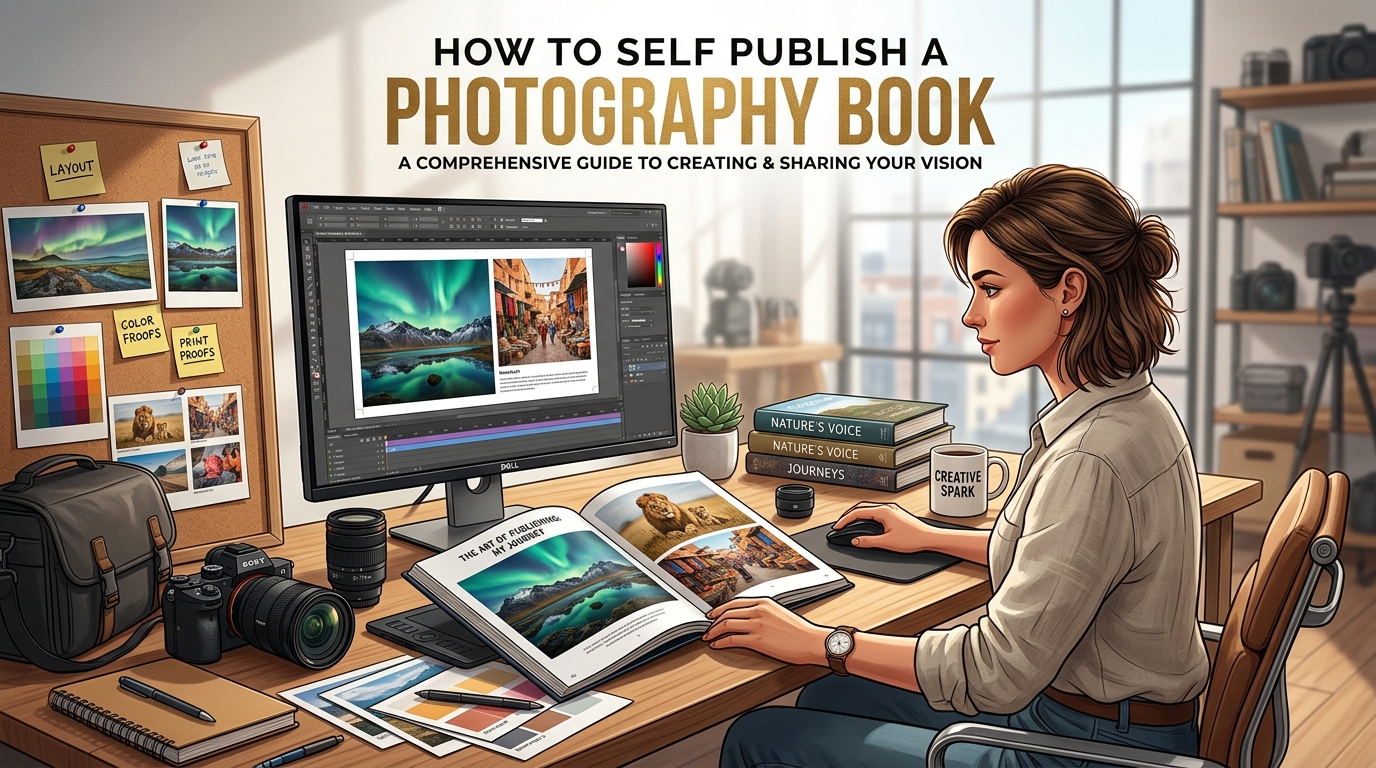
Photography has always been more than a visual art form. It is a way of preserving memories, documenting cultures, expressing creativity, and telling stories that words alone often cannot capture. In an era where digital galleries and social media platforms dominate how images are shared, the photography book remains one of the most powerful and respected ways to showcase photographic work. A well-designed photography book transforms a collection of images into a cohesive narrative, creating a lasting experience for readers that goes far beyond scrolling through a screen.
For photographers, self-publishing has opened new opportunities that were once reserved for those who could secure traditional publishing deals. Today, photographers can maintain complete creative control over their projects while reaching audiences around the world. Whether you are a professional photographer looking to showcase a portfolio, a travel enthusiast documenting years of adventures, a wildlife photographer preserving remarkable encounters, or an artist creating a conceptual visual story, self-publishing allows you to bring your vision to life on your own terms.
This guide explores everything you need to know about how to self-publish a photography book, from developing a concept and selecting images to designing layouts, choosing printing methods, and marketing the finished publication.
How Photography Books Bring Stories to Life
A photography book is much more than a collection of images placed between two covers. It serves as a carefully curated presentation of a photographer’s work and artistic perspective. Unlike digital portfolios that can be viewed in any order, a photography book allows creators to control the viewer’s journey from beginning to end.
Photography books often become important professional tools. Many photographers use them to attract clients, present work to galleries, enter competitions, or build credibility within the industry. Others create books simply to preserve personal projects and memories in a format that can be enjoyed for generations.
The physical nature of a book adds a level of permanence that digital media often lacks. A beautifully printed photography book can become a treasured keepsake, a coffee table centerpiece, or even a collector’s item.
Why Self-Publishing Has Become the Preferred Choice
Traditional publishing can be difficult for photographers to navigate. Publishers often prioritize projects that promise significant commercial returns, leaving many talented photographers struggling to secure contracts. Even when a publishing deal is obtained, creative decisions regarding image selection, layout design, cover design, and production quality may ultimately rest with the publisher.
Self-publishing changes this dynamic entirely. Photographers maintain ownership of their work and retain complete control over every aspect of the project. They can choose the paper quality, book dimensions, image placement, printing specifications, and distribution strategy.
The rise of print-on-demand technology and digital publishing platforms has made self-publishing more accessible than ever. What once required substantial financial investment can now be accomplished with relatively manageable costs and global distribution capabilities.
Defining the Purpose of Your Photography Book
Before selecting images or designing pages, it is essential to establish the purpose of the book. Every successful photography book begins with a clear objective.
Some photography books are designed as professional portfolios. These books showcase a photographer’s best work and often target potential clients, agencies, or galleries. Others focus on a specific theme such as street photography, wildlife, architecture, travel, portraiture, or documentary storytelling.
Certain projects aim to preserve personal memories, while others explore social issues, historical events, or artistic concepts. Defining the purpose of the book provides direction for every decision that follows, from image selection to design and marketing.
A photography book with a clear vision tends to resonate more strongly with readers because it presents a unified narrative rather than a random assortment of images.
Curating Your Best Images
One of the most challenging aspects of creating a photography book is deciding which images to include. Many photographers become emotionally attached to their work, making objective selection difficult.
A strong photography book focuses on quality rather than quantity. Every image should contribute to the overall story or theme. Including weaker photographs simply to increase page count can diminish the impact of stronger images.
When reviewing potential photographs, consider how they work together as a collection. Look for visual consistency, emotional progression, and narrative flow. Pay attention to color palettes, subject matter, composition, and mood.
Professional photographers often spend months refining image selections before finalizing a book. Seeking feedback from trusted colleagues, editors, or photography communities can provide valuable perspectives and help identify the strongest images.
Building a Narrative Through Visual Storytelling
The most memorable photography books do more than display beautiful pictures. They tell stories.
Visual storytelling involves arranging images in a sequence that guides readers through an emotional or thematic journey. The order of photographs influences how viewers interpret the work and experience the narrative.
A photography book may begin with an image that establishes context, followed by photographs that deepen the story, introduce conflict or contrast, and eventually lead to a satisfying conclusion. Even abstract or artistic projects benefit from thoughtful sequencing.
Transitions between images should feel natural and intentional. Variations in scale, perspective, color, and subject matter can create rhythm and maintain reader engagement throughout the book.
Choosing the Right Book Format
The format of a photography book significantly affects how images are presented and perceived.
Large-format books often provide the most impactful viewing experience because they allow photographs to be displayed at greater sizes with enhanced detail. However, they can also be more expensive to print and ship.
Smaller formats offer greater portability and affordability while still providing a professional presentation. Square formats are particularly popular among photographers because they accommodate both landscape and portrait-oriented images effectively.
The choice of format should align with the nature of the photography. Landscape photographers often prefer wider dimensions, while portrait and documentary projects may benefit from vertical or square layouts.
Popular Photography Book Formats
| Format Type | Common Size | Best For |
| Square Format | 10″ x 10″ | Mixed photography collections |
| Landscape Format | 11″ x 8.5″ | Nature and travel photography |
| Portrait Format | 8.5″ x 11″ | Portrait and fashion photography |
| Large Coffee Table Book | 12″ x 12″ or larger | Fine art and exhibition-quality projects |
| Compact Portfolio Book | 8″ x 8″ | Personal portfolios and gifts |
Designing a Professional Layout
Design is one of the defining elements of a successful photography book. Even exceptional photographs can lose impact when presented in a poorly designed layout.
The design should complement the images rather than compete with them. Clean, minimalist layouts often work best because they allow photographs to remain the primary focus.
White space plays an important role in photography book design. Generous margins and uncluttered pages create breathing room that enhances image presentation and improves readability.
Consistency throughout the book is equally important. Typography, page numbering, captions, and spacing should follow a cohesive visual system that reinforces the book’s overall identity.
Writing Supporting Text
While photography books are primarily visual, written content can add valuable context and depth.
An introduction may explain the inspiration behind the project, the circumstances under which the photographs were created, or the broader themes being explored. Captions can provide information about locations, subjects, or historical significance.
The key is maintaining balance. Excessive text can distract from the images, while too little information may leave readers disconnected from the story.
Many successful photography books use concise, thoughtful writing that complements the visual experience without overwhelming it.
Selecting Paper and Print Quality
Print quality is especially important for photography books because images are the central focus of the publication.
Paper choice directly influences color accuracy, contrast, sharpness, and overall presentation. Matte paper creates a sophisticated appearance and minimizes glare, while glossy paper enhances color vibrancy and detail.
Premium photography books often use heavier paper stocks that provide durability and a luxurious feel. The choice depends on the project’s goals, target audience, and budget.
Before committing to a full print run, ordering a proof copy is highly recommended. Reviewing a physical proof allows photographers to evaluate image quality, color reproduction, layout accuracy, and binding before final production.
Understanding Common Paper Options
| Paper Type | Characteristics | Ideal Use |
| Matte Paper | Soft finish with minimal glare | Fine art photography |
| Glossy Paper | Vibrant colors and sharp details | Travel and commercial photography |
| Satin Paper | Balanced finish between matte and glossy | Mixed photography projects |
| Premium Art Paper | Museum-quality texture and durability | Collector editions |
| Recycled Paper | Environmentally friendly option | Documentary and sustainability projects |
Choosing Between Print-On-Demand and Offset Printing
The printing method you select will influence both production costs and inventory management.
Print-on-demand services produce books only when orders are placed. This approach minimizes financial risk because there is no need to invest in large inventories. It is particularly suitable for first-time self-publishers and niche photography projects.
Offset printing involves producing larger quantities at once. While the upfront investment is higher, the cost per book decreases significantly as volume increases. Offset printing often provides superior color accuracy and customization options.
Photographers expecting substantial sales may benefit from offset printing, while those testing a market may prefer print-on-demand solutions.
ISBNs and Copyright Protection
Publishing a photography book professionally often involves obtaining an ISBN, which serves as a unique identifier for the publication. ISBNs facilitate distribution through bookstores, libraries, and online retailers.
Copyright protection is equally important. In most countries, photographers automatically own copyright to their original images upon creation. However, formally registering copyright can provide additional legal protection and strengthen claims in case of infringement.
Including copyright notices within the book reinforces ownership and helps safeguard intellectual property.
Creating an Effective Cover Design
A photography book’s cover serves as its first impression. Readers frequently make purchasing decisions based on visual appeal alone.
The cover should accurately represent the content while creating curiosity and emotional connection. Selecting a compelling image that captures the essence of the project is often the most effective approach.
Typography should remain clear and unobtrusive. The title, author name, and any additional text should support rather than overshadow the visual elements.
Professional cover design can significantly enhance the perceived value of a photography book and improve sales potential.
Publishing and Distribution Options
Once the book is complete, the next step is making it available to readers.
Self-publishing platforms have simplified global distribution. Many services offer direct access to online marketplaces, allowing photographers to sell books internationally without managing complex logistics.
Some photographers choose to sell directly through personal websites, galleries, exhibitions, and photography events. Direct sales often generate higher profit margins while strengthening relationships with audiences.
Combining multiple distribution channels typically provides the greatest reach and flexibility.
Pricing Your Photography Book
Pricing requires balancing profitability with market competitiveness.
Factors influencing pricing include production costs, page count, paper quality, binding type, shipping expenses, and target audience expectations. Premium photography books generally command higher prices due to their production value and artistic significance.
Researching comparable photography books within your niche can help establish realistic pricing strategies. Readers interested in specialized photography often understand and appreciate the costs associated with producing high-quality visual publications.
Marketing Your Photography Book
Even the most stunning photography book requires promotion to reach its audience.
Marketing begins long before publication. Sharing behind-the-scenes content, preview images, and project updates helps generate anticipation. Social media platforms remain valuable tools for building awareness and connecting with potential readers.
Photography blogs, podcasts, magazines, exhibitions, and online communities can also provide opportunities for exposure. Interviews, guest articles, and virtual book launches often attract attention from photography enthusiasts and industry professionals.
The most successful marketing strategies focus on storytelling. Readers are often as interested in the journey behind the photographs as they are in the images themselves.
Building a Long-Term Photography Brand
A photography book can serve as more than a standalone project. It can become a cornerstone of a photographer’s professional brand.
Many photographers use books to establish authority within specific genres, attract speaking engagements, secure gallery exhibitions, and create additional revenue streams. A well-executed publication demonstrates professionalism, commitment, and artistic vision.
Over time, multiple books can form a cohesive body of work that documents a photographer’s creative evolution and strengthens their reputation within the industry.
Common Mistakes to Avoid
Many first-time self-publishers focus exclusively on image quality while overlooking other critical elements. Poor sequencing, inconsistent design, inadequate proofreading, and insufficient marketing can undermine an otherwise excellent project.
Another common mistake is rushing the production process. Creating a photography book requires patience, refinement, and attention to detail. Taking the time to evaluate every aspect of the project often leads to significantly better results.
Ignoring the target audience can also limit success. Understanding who the book is intended for helps guide creative, production, and marketing decisions.
The Future of Self-Published Photography Books
The future of photography publishing remains bright. Advances in digital printing technology continue to improve quality while reducing production costs. Global distribution networks make it possible for independent photographers to reach readers worldwide.
At the same time, growing appreciation for tangible experiences has increased interest in printed books. In a digital world filled with fleeting content, photography books offer permanence, craftsmanship, and meaningful engagement.
As self-publishing tools become increasingly sophisticated, photographers have more opportunities than ever to create professional-quality books without relying on traditional publishers.
Conclusion
Self-publishing a photography book is both a creative and entrepreneurial endeavor. It requires careful planning, thoughtful image selection, strong visual storytelling, professional design, and strategic marketing. While the process can be demanding, it offers unmatched creative freedom and the opportunity to share your work exactly as you envision it.
A photography book transforms individual images into a lasting narrative that readers can experience repeatedly over time. Whether your goal is artistic expression, professional advancement, personal preservation, or commercial success, self-publishing provides a practical and rewarding path for bringing your photographic vision into the world. By focusing on quality, storytelling, and presentation, you can create a photography book that not only showcases your work but also leaves a lasting impression on every reader who turns its pages.