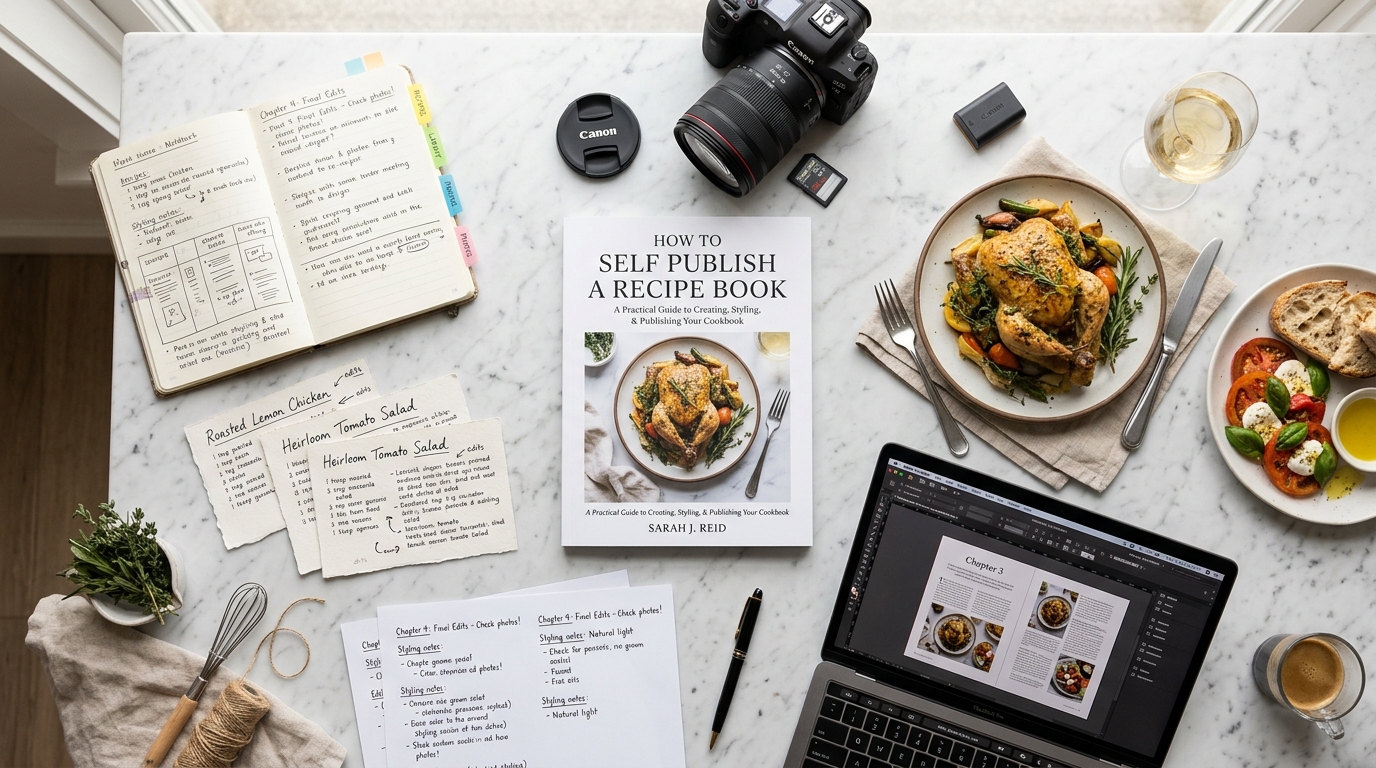
Self-publishing a recipe book is no longer something reserved for professional chefs or traditional publishing houses. Today, anyone with a collection of well-tested recipes and a clear culinary voice can turn their kitchen knowledge into a published book that reaches readers around the world. What makes this especially powerful is that recipe books are not just content—they are experiences. People don’t only read them; they cook from them, learn from them, and sometimes even build memories around them.
However, turning recipes into a polished, market-ready cookbook is far more complex than simply compiling dishes into a document. A successful self-published recipe book requires structure, testing, photography, editing, branding, and a strong understanding of how readers interact with food content. Unlike other book genres, cookbooks must function perfectly in real time in a kitchen environment, where clarity, precision, and usability matter just as much as creativity.
This guide walks through the full journey of self-publishing a recipe book, from the earliest idea to final launch and long-term success, with a focus on practical execution and modern publishing strategies.
Understanding the Real Purpose Behind Your Recipe Book
Before writing anything, the most important step is understanding why you are creating a recipe book in the first place. This purpose is not just motivational; it becomes the foundation that shapes your tone, structure, audience, and even your marketing strategy later on.
A recipe book can serve many different roles. For some authors, it is a way to preserve family traditions and pass down cultural heritage that might otherwise be lost over time. For others, it is a professional branding tool that establishes authority in a niche such as baking, plant-based cooking, or fitness-focused nutrition. Many food bloggers and content creators use cookbooks as an extension of their online presence, turning digital audiences into long-form readers and customers. There are also authors who create cookbooks as commercial products, building a steady income stream through self-publishing platforms.
Once the purpose is clear, everything becomes easier to align. A heritage cookbook will naturally include storytelling and emotional context, while a business-driven cookbook will focus more on consistency, usability, and scalability. Without this clarity, the book risks becoming a random collection of recipes rather than a meaningful and structured experience.
Choosing a Strong and Focused Cookbook Concept
The cookbook industry is highly competitive, and general recipe collections rarely perform well unless they have a strong brand or celebrity backing. This is why choosing a focused concept is essential. Readers today are not just looking for food; they are looking for solutions, lifestyles, and identities reflected in food.
A strong concept could revolve around a specific dietary need, such as gluten-free baking or high-protein meals. It could focus on a lifestyle such as quick meals for busy professionals or budget-friendly family dinners. It could also highlight a cultural identity, such as regional cuisine or fusion cooking that blends two traditions. The more specific the idea, the easier it becomes to attract a dedicated audience.
Market research plays a huge role here. Looking at bestselling cookbooks, reading customer reviews, and identifying gaps in existing content can help you understand what readers feel is missing. Sometimes the opportunity lies not in inventing something completely new, but in presenting familiar recipes in a clearer, more approachable, or more visually appealing way.
A focused concept also makes branding easier. It helps define the tone of writing, photography style, book cover design, and even pricing strategy. Without a clear concept, marketing becomes scattered and less effective.
Planning the Structure of Your Cookbook
Once the concept is finalized, the next stage is building a structure that supports both readability and usability. A cookbook is not meant to be read from beginning to end like a novel. Instead, it is used as a reference guide, often while cooking. This means the structure must allow readers to quickly find what they need without confusion.
Different structuring approaches create different user experiences. Some cookbooks are organized by meals such as breakfast, lunch, and dinner. Others are grouped by ingredients like chicken, vegetables, or grains. Some focus on cooking techniques, while others follow dietary categories or difficulty levels.
The table below shows how different structures influence reader experience and usability.
| Structure Type | Best Suited For | Reader Experience |
| Meal-Based Organization | Everyday cookbooks | Simple daily navigation |
| Ingredient-Based Chapters | Pantry-focused cooking | Flexible recipe selection |
| Technique-Based Structure | Skill-building cookbooks | Learning progression |
| Dietary Categories | Vegan, keto, gluten-free | Health-focused clarity |
| Regional Cuisine Layout | Cultural cookbooks | Story-driven exploration |
| Skill Level Progression | Beginner cookbooks | Step-by-step growth |
A strong structure prevents repetition, maintains balance between recipe types, and ensures that the cookbook feels intuitive rather than overwhelming. At this stage, authors often create a full blueprint of the book before writing begins, mapping out each recipe’s placement and supporting content such as tips or notes.
Writing Recipes That Actually Work in Real Kitchens
Writing recipes for a cookbook is a technical skill that requires clarity, precision, and empathy for the reader. Unlike casual cooking instructions shared online, cookbook recipes must work consistently for strangers who may have completely different cooking environments, equipment, and ingredient brands.
Each recipe must be written in a way that leaves no room for confusion. Ingredients should be listed in the order they are used, and instructions should follow a logical cooking sequence. Measurements must remain consistent throughout the entire book, and terms should be standardized so readers are never uncertain about meaning.
Good recipe writing anticipates problems before they occur. It explains texture expectations, cooking signs, and alternative options when ingredients are unavailable. It also avoids unnecessary complexity while still providing enough detail for success.
Ultimately, a strong recipe builds confidence. When readers succeed on their first attempt, they are far more likely to trust the entire cookbook and recommend it to others.
Recipe Testing as the Core of Quality Control
Recipe testing is one of the most critical stages in cookbook creation because it determines whether the book will actually work in real-world conditions. Even experienced cooks cannot rely on memory alone when preparing a cookbook, because small assumptions can easily lead to errors when instructions are written down.
Testing involves preparing each recipe exactly as a reader would, often without prior knowledge of the dish. This helps identify missing steps, unclear instructions, incorrect timing, or unrealistic expectations. Ideally, recipes should be tested multiple times, sometimes by different individuals, to ensure accuracy across different cooking styles and environments.
This process can feel repetitive, but it is essential for building credibility. A cookbook that consistently delivers successful results becomes trustworthy, while one with inconsistent outcomes quickly loses reader confidence. Testing is what separates professional cookbooks from amateur collections.
Adding Storytelling and Personal Identity
Modern cookbooks are no longer just instructional manuals; they are also personal narratives. Readers want to understand the person behind the recipes, not just the steps involved in cooking. This is where storytelling becomes a powerful tool.
Stories can explain where a recipe came from, how it evolved over time, or why it holds emotional significance. They might describe family traditions, travel experiences, cultural influences, or personal challenges that shaped the author’s relationship with food.
When used correctly, storytelling transforms a cookbook into an experience rather than just a reference guide. However, balance is essential. Stories should enhance the recipes, not overshadow them. The reader’s primary goal is still to cook, so narrative content must support usability rather than interrupt it.
The Role of Food Photography in Cookbook Success
Food photography is one of the most influential elements of a recipe book because it directly affects purchasing decisions and user engagement. People often judge cookbooks visually before they even read a single recipe, which makes imagery a critical part of marketing and usability.
Good food photography should make dishes look appealing but also realistic. Over-styled images can create unrealistic expectations that lead to disappointment when readers attempt the recipe. Natural lighting, simple backgrounds, and consistent styling are often more effective than heavily staged visuals.
Even self-published authors can produce high-quality images using modern smartphones and basic photography knowledge. However, consistency across all images is more important than technical perfection. A unified visual style helps the cookbook feel professional and cohesive.
Designing a Cookbook That Feels Easy to Use
Design plays a crucial role in how readers interact with a cookbook during actual cooking. Unlike other books, cookbooks are often used in fast-paced environments where readers need to quickly scan instructions while handling ingredients.
Typography must be clear, spacing must support readability, and the layout must separate ingredients from instructions in a visually intuitive way. Overcrowded pages can create confusion, especially when readers are multitasking in the kitchen.
Good design also ensures consistency across all pages, so readers always know where to find information. A well-designed cookbook reduces cognitive load and makes cooking smoother and more enjoyable.
Editing and Refining the Manuscript
Editing a cookbook requires a higher level of precision than most other book genres because small mistakes can completely change the outcome of a recipe. Editing must ensure that grammar, structure, measurements, and instructions are all accurate and consistent.
A professional editing process usually involves multiple layers, including content editing, copyediting, and final proofreading. Each layer focuses on different aspects of quality, from overall structure to sentence-level clarity and final error correction.
Because cookbooks are practical tools, accuracy is more important than stylistic writing. Even a minor error in measurement or timing can lead to reader frustration and negative reviews.
Choosing Print, Digital, or Both Publishing Formats
Self-published cookbook authors must decide whether to release their book in print, digital, or both formats. Print cookbooks are often preferred because they are easy to use in kitchens and provide a tactile experience that digital formats cannot replicate. However, they are more expensive to produce due to color printing and physical distribution costs.
Digital cookbooks are more affordable and accessible, allowing instant global distribution and easy updates. They are also convenient for readers who use tablets or phones while cooking.
Many successful authors choose a hybrid model, offering both versions to reach a wider audience and maximize revenue potential.
Publishing Platforms and Distribution Strategy
Self-publishing platforms act as the bridge between authors and readers. Platforms like Kindle Direct Publishing allow authors to publish globally without large upfront costs, especially through print-on-demand services.
Choosing the right platform involves evaluating print quality, royalty structure, distribution reach, and formatting requirements. Since cookbooks rely heavily on visuals, print quality is especially important.
A strong distribution strategy ensures that the cookbook is available where the target audience already shops and reads.
Final Thoughts
Self-publishing a recipe book is both an artistic and technical journey that blends creativity, precision, and strategy. It requires careful planning, strong recipe development, thorough testing, visual storytelling, and thoughtful design. Unlike many other book genres, cookbooks must succeed not just on paper but in real kitchens, where readers judge them through experience rather than theory.
When done properly, a self-published recipe book becomes more than a collection of meals. It becomes a personal brand, a cultural archive, and a long-lasting contribution to the way people cook and experience food.