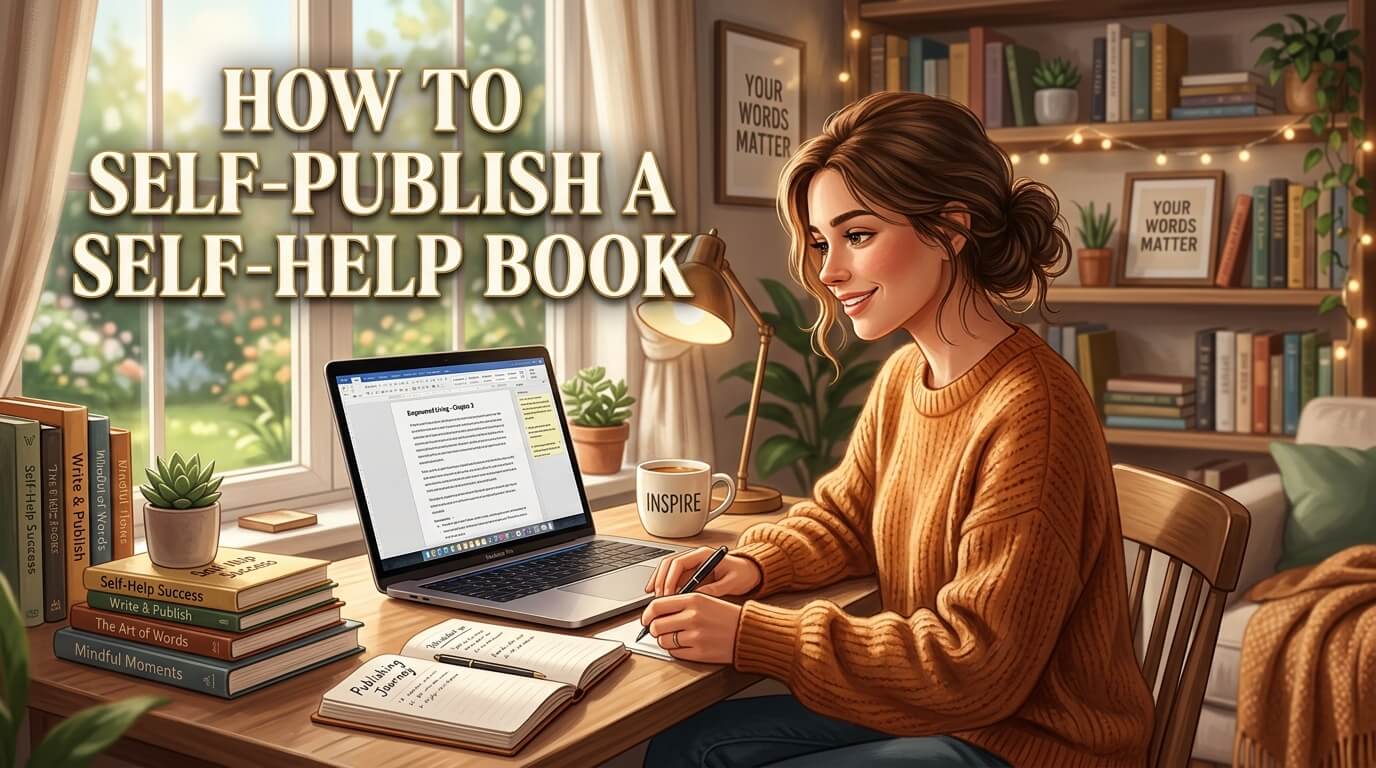
Self help books have become one of the most influential and commercially successful categories in modern publishing. Their appeal lies in their promise of transformation. Readers do not pick them up casually; they seek them out during moments of change, confusion, or ambition. Whether someone is trying to overcome anxiety, build discipline, improve relationships, or find direction in life, self help books offer structured guidance and emotional reassurance.
In the past, publishing a self help book required approval from traditional publishing houses, which acted as gatekeepers of credibility and distribution. Today, self publishing has completely changed that landscape. Writers no longer need permission to share their ideas with the world. Platforms now allow authors to publish globally within days. However, this accessibility has also created intense competition. Thousands of self help books are released every year, which means success depends not only on writing quality but also on strategy, positioning, and execution.
This guide explores the complete process of self publishing a self help book in depth, from idea development to marketing, ensuring that you understand both the creative and commercial sides of the journey.
Getting to Know the World of Self-Help Books
Self help books operate in a unique psychological space. Unlike fiction or academic writing, they are directly tied to the reader’s personal life. This means expectations are higher and emotional engagement is deeper. Readers are not just looking for information; they are looking for change.
A successful self help book must therefore do more than explain concepts. It must create a sense of identification. The reader should feel that the author understands their struggle on a personal level. This emotional connection is what keeps them reading and ultimately applying the content.
The market itself is divided into several subcategories, including productivity, mental health, financial success, relationships, spirituality, and habit formation. Each of these areas has a large audience, but also significant competition. What separates successful books from unsuccessful ones is not necessarily originality of topic but clarity of promise and depth of insight.
Modern readers are also more skeptical than before. They have read multiple books, watched countless videos, and consumed endless advice online. Because of this, vague or repetitive guidance is no longer effective. They expect structured, practical, and experience-backed knowledge.
Finding a Strong and Marketable Book Idea
The foundation of a successful self help book begins with the idea itself. Many new authors make the mistake of choosing overly broad themes such as “success” or “happiness.” While these topics are popular, they are too general to compete effectively in a saturated market.
A strong self help book idea is always specific. It targets a defined problem experienced by a clearly identified audience. For example, instead of writing about general productivity, a more focused approach might explore how remote workers can overcome procrastination and isolation. Instead of general confidence advice, the book might focus on helping young adults overcome social anxiety in professional environments.
Specificity is powerful because it creates emotional relevance. When readers feel that a book is speaking directly to their situation, they are more likely to engage with it deeply.
Idea development also involves observing real-world patterns. Many authors draw inspiration from personal experience, coaching sessions, or recurring problems they see in communities. Others study online reviews of existing books to identify what readers feel is missing. These gaps are extremely valuable because they reveal unmet expectations in the market.
At this stage, validation is important. Writers often test their ideas through smaller content formats such as blog posts or social media discussions. If an idea consistently resonates with readers, it has strong potential for expansion into a full-length book.
Structuring a Self Help Book for Maximum Impact
Structure is what transforms a collection of ideas into a meaningful reading experience. Without structure, even powerful insights can feel disconnected and overwhelming.
A self help book typically follows a psychological progression. It begins by helping the reader recognize and understand their problem. It then explores the deeper causes behind the issue. Finally, it provides actionable strategies for change. This progression mirrors how people naturally approach self-improvement.
Within this framework, each chapter should serve a clear purpose. Instead of repeating similar ideas, chapters should gradually guide the reader through stages of awareness and transformation. This creates momentum and keeps the reader engaged.
Storytelling is another important structural tool. Personal experiences, case studies, or relatable scenarios help ground abstract ideas in reality. However, storytelling should always support the lesson rather than dominate it. The goal is not entertainment alone but understanding.
Even authors who prefer intuitive writing benefit from having a loose structural blueprint. It prevents the book from becoming repetitive or drifting off-topic.
Writing the Manuscript with Clarity and Depth
Writing a self help book is fundamentally about clarity of thought. The reader should never struggle to understand what is being communicated. Unlike fiction, where ambiguity can be artistic, self help writing demands precision.
Each idea must be fully developed before moving on to the next. Many weak self help books fail because they introduce concepts without fully explaining how they work in real life. Readers want depth, not just inspiration.
Depth comes from specificity. Instead of saying “develop discipline,” a strong manuscript explains how discipline is built through daily routines, environmental design, emotional regulation, and consistent reinforcement. The more concrete the explanation, the more valuable it becomes.
Tone also plays a significant role. The most effective self help books maintain a balance between authority and relatability. The writer should feel like a knowledgeable guide who understands the reader’s challenges without sounding distant or overly academic.
Writing without strict outlines is possible for some authors, but even then, mental structure is essential. Each section should contribute to a larger transformation journey that the reader is experiencing through the book.
Editing and Refining for Professional Quality
Editing is often the stage that determines whether a self help book feels amateur or professional. A first draft usually contains raw ideas, but those ideas need refinement to become impactful.
The first priority in editing is clarity. Sentences must be simple enough to be understood immediately. If a reader needs to reread a sentence multiple times, the flow of the book is disrupted.
The second priority is elimination of redundancy. Writers often repeat similar ideas in slightly different ways, thinking it strengthens the message. In reality, excessive repetition weakens impact and makes the book feel longer without adding value.
Editing also improves emotional rhythm. A well-edited self help book alternates between explanation, reflection, and application. This balance keeps readers engaged and prevents cognitive fatigue.
Professional editing can also identify structural issues that the author may overlook. Sometimes ideas are strong individually but do not transition smoothly. Editing ensures that the entire manuscript feels cohesive and purposeful.
Positioning and Branding Your Self Help Book
Positioning determines how your book is perceived before it is even read. It influences whether a reader feels curious enough to purchase it.
A strong position clearly communicates the transformation the book offers. Readers should immediately understand what problem the book solves and what outcome it delivers. Ambiguity reduces conversion because readers are unsure of what they are getting.
Branding also plays a subtle but important role. The author’s identity, tone, and personal story contribute to credibility. Readers often connect more deeply with authors who share relatable experiences or demonstrate authentic understanding of the subject.
Even elements such as title, subtitle, and cover design are part of positioning. These elements should align with the emotional promise of the book. A mismatch between content and presentation can reduce trust and engagement.
Choosing the Right Self Publishing Platform
Self publishing has been revolutionized by digital platforms that allow authors to distribute books globally without traditional publishers. One of the most widely used systems is Amazon Kindle Direct Publishing, which enables authors to publish both digital and physical formats with worldwide reach.
These platforms provide significant advantages. Authors retain creative control, set their own pricing, and earn higher royalties compared to traditional publishing models. Books can be updated easily, and distribution is often instant.
However, the ease of publishing also creates saturation. Millions of books exist on these platforms, which means visibility becomes the biggest challenge. Without proper optimization, even high-quality books can remain unnoticed.
This is why metadata, keywords, categories, and descriptions are essential. They determine how easily readers can discover your book in search results.
Full Self Publishing Process for a Self Help Book
| Phase | Focus Area | Description | Outcome |
| Idea Formation | Problem Identification | Define specific reader struggle | Clear book direction |
| Market Research | Competitive Analysis | Study existing books and gaps | Validated opportunity |
| Planning | Structure Development | Design transformation flow | Logical chapter roadmap |
| Writing | Manuscript Creation | Develop full content | Complete draft |
| Editing | Refinement & Clarity | Improve structure and language | Professional manuscript |
| Design | Visual Presentation | Cover and interior formatting | Market-ready book |
| Publishing | Platform Distribution | Upload to publishing platforms | Global availability |
| Optimization | SEO & Metadata | Keywords and categories | Improved discoverability |
| Marketing | Audience Growth | Promotion and engagement | Sales and visibility |
Marketing a Self Help Book Successfully
Marketing is one of the most important yet underestimated parts of self publishing. A book does not succeed simply because it is well written. It succeeds when it reaches the right audience.
Effective marketing often begins before publication. Many authors build anticipation by sharing ideas related to their book topic through online platforms. This helps establish authority and creates early interest.
Content marketing is particularly powerful in the self help genre. Articles, videos, and insights that align with the book’s theme help attract readers who are already interested in self improvement.
Email marketing is another long-term strategy. It allows authors to maintain direct communication with their audience, independent of social media algorithms.
Reviews also play a critical role in visibility. Early feedback helps build credibility and influences future readers’ purchasing decisions. Encouraging genuine reviews can significantly improve a book’s performance in the early stages.
Common Mistakes in Self Publishing
Many first-time authors fail not because of poor ideas but because of poor execution. One of the most common mistakes is writing without clarity of audience. When a book tries to appeal to everyone, it loses emotional power.
Another mistake is focusing too much on inspiration and not enough on application. Readers want practical tools they can use, not just motivational ideas.
Neglecting marketing is also a major issue. Many authors assume that publishing alone will bring readers, but in reality, visibility must be actively built.
Poor positioning can also weaken even strong books. If the promise of the book is unclear, readers will not feel compelled to buy it.
Final Thoughts
Self publishing a self help book is both a creative and strategic process. It requires more than just writing ability; it demands clarity of purpose, understanding of audience psychology, and awareness of market dynamics.
The most successful self help books are those that combine emotional understanding with practical transformation. They speak directly to the reader’s struggles while offering a clear path forward.
When done correctly, self publishing is not just a method of releasing a book. It becomes a way of sharing meaningful ideas, building authority, and creating real impact in the lives of readers.
Frequently Asked Questions (FAQs)
Q1: What is the first step in self publishing a self help book?
A: The first step is identifying a clear problem and defining the specific audience your book will serve.
Q2: Do I need a traditional publisher to publish a self help book?
A: No, self publishing platforms allow you to publish and distribute your book globally without a traditional publisher.
Q3: How long does it take to self publish a self help book?
A: It can take anywhere from a few weeks to a few months depending on writing, editing, design, and publishing stages.
Q4: What makes a self help book successful?
A: A successful self help book clearly solves a real problem and provides practical, actionable solutions for readers.
Q5: Is marketing necessary after publishing a self help book?
A: Yes, marketing is essential because it helps your book gain visibility and reach the right readers.