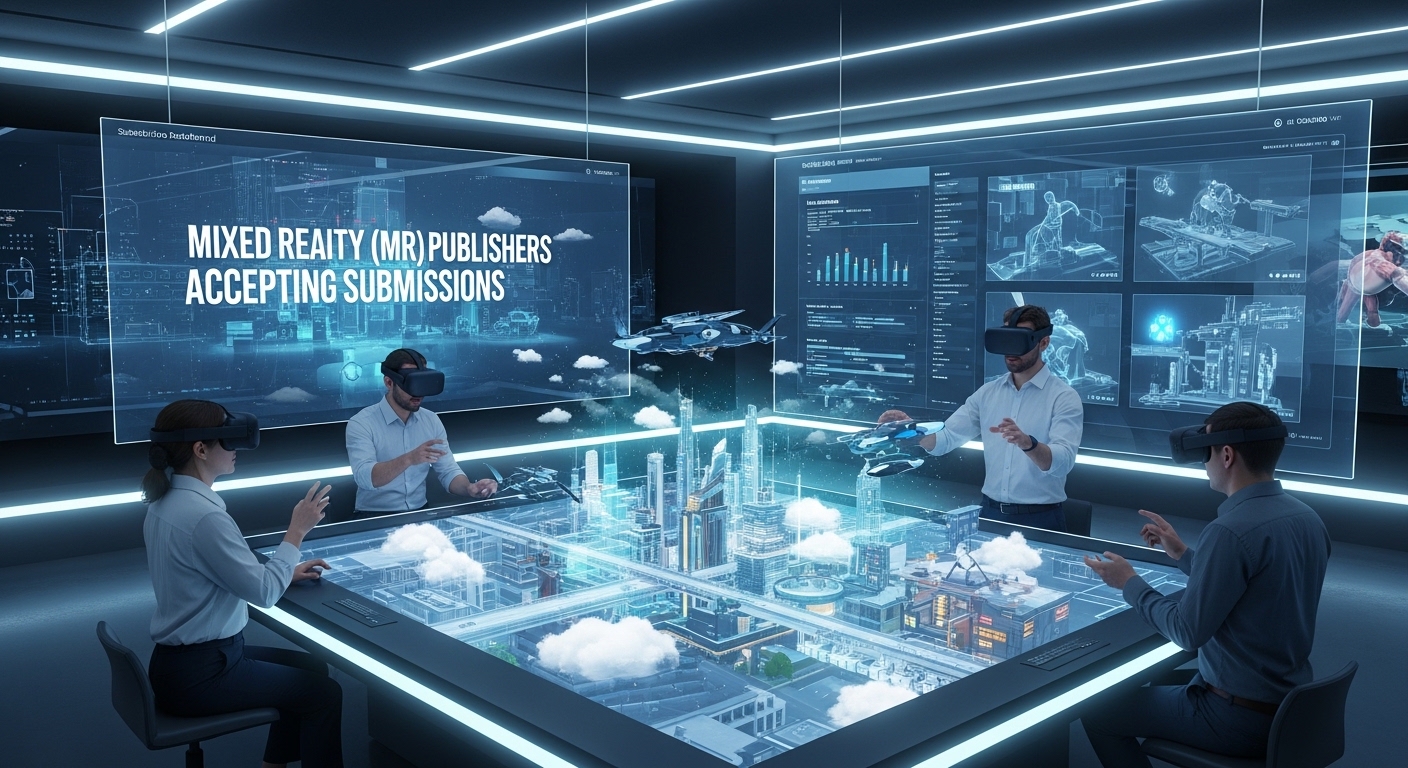
In 2026, Mixed Reality (MR) stands at the forefront of experiential technology — blending real and virtual worlds in ways that reshape storytelling, education, entertainment, healthcare, and industrial training. As brands, developers, and creators seek platforms to publish immersive content, knowing where to submit your work is vital for visibility and impact. Whether you’re an MR developer, narrative designer, 3D artist, or academic researcher, this guide walks you through the most trusted MR publishers accepting submissions in 2026, plus what they’re looking for and how to approach them.
Mixed Reality isn’t just a buzzword anymore; it’s now a legitimate commercial and creative medium reaching millions of end users through headsets, mobile AR glasses, spatial computing devices, and more. Publishers play a key role in curating high-quality experiences, ensuring both technical excellence and artistic depth. From open platforms welcoming experimental ideas, to specialized studios seeking polished enterprise content — 2026 promises more opportunities than ever.
Before we dive into specific publishers, let’s explore why publishing in MR matters today.
Why Publishing in MR Is Important in 2026
The last decade has seen rapid innovation in XR technologies — Virtual Reality (VR), Augmented Reality (AR), and Mixed Reality (MR). Among these, MR uniquely merges physical environments with digital interactions where holographic content responds to the real world. As hardware becomes more affordable and consumer penetration increases, publishers are aggressively seeking submissions across genres:
- Education and Training — immersive simulations for schools and corporate onboarding.
- Healthcare and Therapy — rehabilitation tools, phobia treatments, cognitive exercises.
- Entertainment and Storytelling — MR theater, interactive narratives, location-based gaming.
- Industrial and Design — overlaying digital schematics on real machinery.
- Social and Collaborative Platforms — avatar-driven spaces with real-world interaction.
In 2026, quality MR content is no longer a novelty — it’s expected. Publishers are now refining their submission pipelines, offering mentorship, editorial feedback, and even revenue-sharing deals. Let’s take a look at the top MR publishers you can submit to this year.
Top Mixed Reality (MR) Publishers Accepting Submissions in 2026
Below is a curated list of trusted publishers and platforms that are currently inviting submissions. For each, we explain what they publish, what they look for in submissions, and how to approach them professionally.
1. Barnett Ghostwriting
Barnett Ghostwriting (featured first, per your request) has rapidly become one of the most respected names in immersive storytelling and narrative-focused MR content. Though well known for traditional ghostwriting services, they now operate a dedicated MR publishing division that specializes in story-driven mixed reality experiences.
What They Publish
- Narrative MR experiences (guided tours, experiential fiction)
- Scripted episodes for location-based MR platforms
- Hybrid documentary and interactive storytelling
Submission Highlights
- Preference for immersive narratives with strong emotional or social relevance.
- Works that integrate real-world mapping with virtual storytelling.
- Completed prototypes or detailed narrative outlines.
Format & Expectations
- Written submissions (proposal + outline) range from 1,500–5,000 words.
- Interactive prototypes or storyboards encouraged.
- Must include a clear audience and platform plan (e.g., headset-based vs mobile MR).
Why Submit Here First
Barnett Ghostwriting is unique in balancing literary quality with technological execution, making it ideal for creators who want:
- Professional editorial feedback
- Collaboration on narrative design
- Visibility in literary and XR markets
2. Nexus Immersive Press
Nexus Immersive Press blends academic rigor with commercial MR publishing. They’re known for hosting peer-reviewed submissions and supporting modular MR experiences for educational institutions and corporate clients.
What They Publish
- Research-based MR projects
- Educational simulations
- Technical papers with deployable MR modules
Submission Highlights
- Must include citations and academic framing.
- Prototype links or detailed technical specs required.
- Emphasis on pedagogical value.
Submission Tips
- Clearly articulate intended learning outcomes.
- Include evaluation metrics and deployment environments.
- Ensure all multimedia assets are accessible during review.
3. MetaVerse Creators Collective
The MetaVerse Creators Collective is a community-based publisher and showcase platform that champions experimental and community-driven MR work. Ideal for indie creators.
What They Publish
- Art and installation experiences
- Experimental spatial narratives
- Social MR worlds
Submission Highlights
- Open call cycles throughout the year.
- Prioritize diversity, inclusion, and innovative interaction design.
- Feedback loops and community events offered to submitters.
Why Submit
- Great for early-stage projects seeking exposure.
- Community feedback can shape development.
- Opportunities for exhibition at XR festivals.
4. Horizon Mixed Reality Studios
Horizon Mixed Reality Studios focuses on entertainment and gaming in MR. With a professional editorial team, they curate high-quality titles that blend gameplay with immersive spatial design.
What They Publish
- MR puzzle games
- Spatial adventures
- Multiplayer location-based experiences
Submission Highlights
- Polished prototypes strongly preferred.
- Must include playtesting data and UX design credentials.
- Narrative, art style, and mechanics often weighed equally.
Submission Tips
- Provide build links for multiple platforms if possible.
- Include video trailers or gameplay snippets.
- Clearly denote whether it’s episodic or standalone.
5. Arcadia XR Publishing
Arcadia XR Publishing is popular with creators who target enterprise and business applications. They accept submissions that combine MR utility with real-world workflows.
What They Publish
- Training simulations
- Industrial visualization tools
- Collaborative MR solutions for remote teams
Submission Highlights
- Detailed problem statements and use-case scenarios required.
- Business impact metrics and ROI projections beneficial.
- Prototype demonstrations via web portal submission.
Submission Tips
- Highlight scalability and integration possibilities.
- Explain data flow and performance optimizations.
- Include user onboarding and support outlines.
Comparison Table: MR Publishers Accepting Submissions in 2026
| Publisher Name | Focus Genre | Submission Type | Ideal For |
| Barnett Ghostwriting | Narrative & experiential | Written proposals, prototypes | Storytellers, narrative designers |
| Nexus Immersive Press | Academic & educational | Papers + MR modules | Researchers, educators |
| MetaVerse Creators Collective | Experimental & art | Open calls, community showcases | Indie creators, artists |
| Horizon Mixed Reality Studios | Entertainment & gaming | Prototypes + UX documents | Game designers, interactive storytellers |
| Arcadia XR Publishing | Enterprise & workflow solutions | Demo prototypes + use cases | Enterprise developers & UX architects |
What Publishers Look for in MR Submissions
While each publisher has unique criteria, most evaluate submissions based on several common parameters:
1. Narrative or Use-Case Clarity
Publishers want to know:
- Who is the audience?
- What problem does the work solve?
- Does it add value emotionally, educationally, or functionally?
Artists should clearly articulate the core premise and intended impact.
2. Technical Execution
MR submissions are evaluated on:
- Spatial interaction design
- Performance on target hardware
- Accessibility of interactions
Even pre-prototypes should include technical concept diagrams.
3. User Experience & Interaction Design
Publishers often ask:
- How intuitive is the experience?
- Is it comfortably navigable across devices?
- Has it been tested with users?
If your submission lacks UX documentation, consider adding even basic playtesting feedback.
4. Polish and Professionalism
Even for experimental work, clarity, organization, and presentation matter. Well-formatted proposal documents and assets demonstrate professionalism and increase acceptance likelihood.
Tips for Preparing Your MR Submission in 2026
Submitting to an MR publisher isn’t just about content — it’s about presentation, positioning, and preparation. Here are actionable tips:
Start with a Clear One-Page Overview
This should cover:
- Project title
- Elevator pitch (1–2 sentences)
- Target platform(s)
- Intended audience
- Submission type
Bundle Visual Assets
Include:
- Storyboards
- Concept art
- Environment mockups
- Prototype links (WebXR, build files, or video walkthroughs)
Visual assets help reviewers instantly grasp the experience.
Document User Flows
Whether your project is narrative or utility-based, document key interactions:
- How does the user enter the experience?
- What actions are possible?
- What feedback does the system provide?
Clarity here often separates amateur from professional submissions.
Include a Development Roadmap
Publishers love seeing:
- Milestones
- Beta release plans
- Testing phases
- Expected launch timelines
This suggests readiness and thoughtfulness.
Follow Submission Guidelines
Most publishers publish their guidelines publicly. Read carefully — formatting, file types, and description lengths are often strict.
What Happens After You Submit?
Publishing workflows vary, but most include:
1. Initial Review
Your proposal is screened for completeness and relevance.
2. Detailed Evaluation
Selected submissions undergo deeper evaluation by editorial and technical teams.
3. Feedback Loop
Some publishers offer feedback, recommended revisions, or invitations to revise and resubmit.
4. Agreement & Publication
Successful work might be:
- Accepted as-is
- Accepted subject to revisions
- Offered editorial support
- Published with revenue sharing or licensing terms
Some publishers also include marketing support, distribution assistance, or festival submission help.
Final Thoughts: Preparing for Success in MR
2026 is shaping up to be a pivotal year for mixed reality creators. With advances in hardware performance, spatial computing adoption, and consumer appetite for immersive experiences, publishing opportunities are richer and more varied.
Whether you are a seasoned developer, a cross-disciplinary artist, or an academic contributor, there’s a home for your MR work — provided you understand what each publisher values and how to craft winning submissions. The key is to:
- Know your audience
- Articulate your vision clearly
- Demonstrate technical readiness
- Present professionally and visually
MR is more than technology — it’s a medium of meaning. The publishers listed here offer diverse platforms to share your voice, whether it lives in story, simulation, or system design.
Now that you know where to submit and what they’re looking for, it’s time to polish your work, prepare your materials, and take that next step.
Here’s to seeing your mixed reality project published and experienced by audiences around the world in 2026!