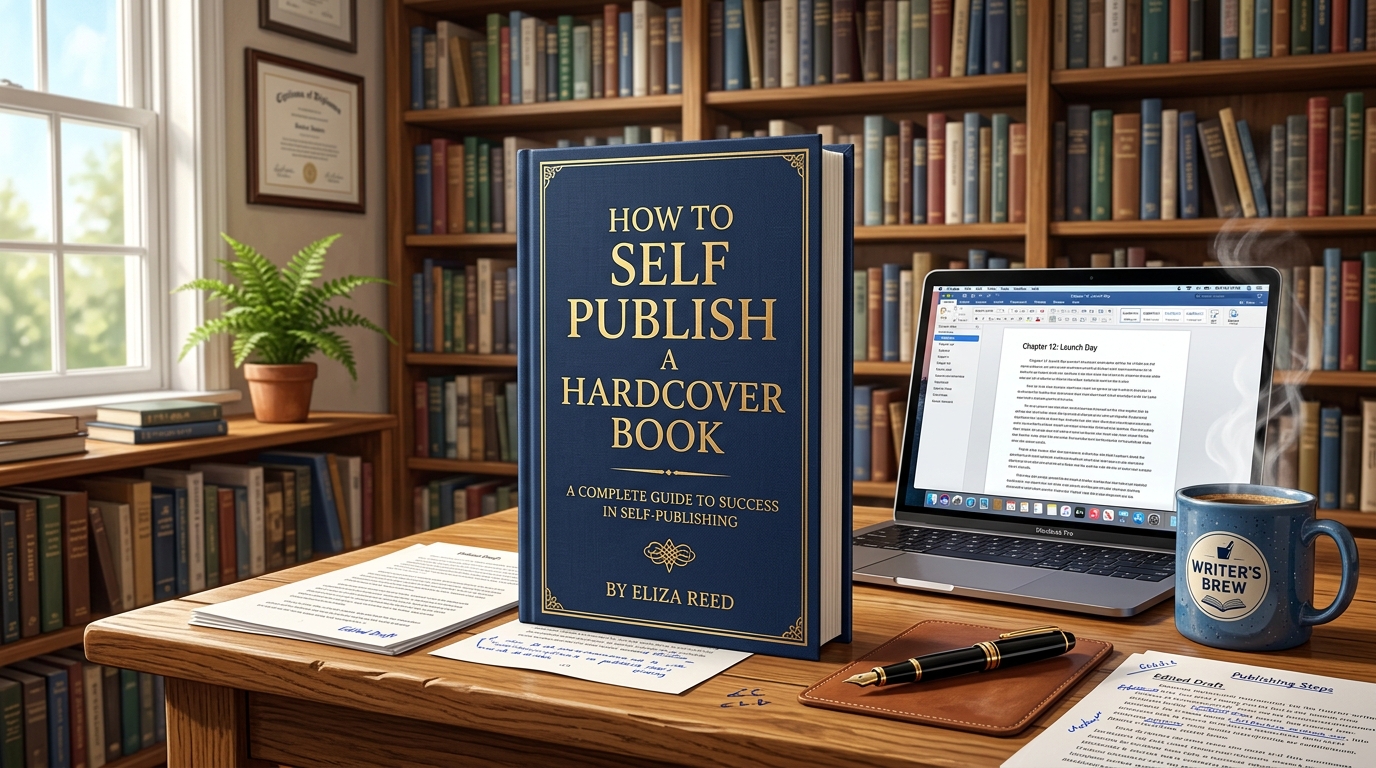
Publishing a hardcover book was once a privilege reserved almost exclusively for authors who secured traditional publishing contracts. The process involved literary agents, publishing houses, large print runs, and significant upfront investments. Today, however, the publishing landscape has changed dramatically. Independent authors now have access to professional printing technologies, global distribution networks, and publishing platforms that make hardcover publishing more accessible than ever before.
For many writers, releasing a hardcover edition represents more than simply printing a book. It symbolizes achievement, credibility, and permanence. A hardcover book often carries a sense of prestige that readers associate with quality and professionalism. Whether you are publishing a memoir, novel, business book, biography, children’s book, or educational resource, a hardcover edition can enhance your book’s value and create a stronger impression among readers.
Self-publishing a hardcover book involves several important stages, from manuscript preparation and editing to cover design, formatting, printing, distribution, and marketing. Understanding each step helps ensure that the finished product meets professional standards and provides readers with an exceptional experience.
This guide explores everything you need to know about how to self-publish a hardcover book successfully.
Understanding Hardcover Self-Publishing
Before diving into the publishing process, it is important to understand what hardcover publishing actually involves.
A hardcover book typically features a rigid protective cover made from thick cardboard wrapped in printed paper, cloth, or other materials. Unlike paperback books, hardcovers offer greater durability and often include premium design features such as dust jackets, foil stamping, embossing, or case laminate finishes.
In self-publishing, authors maintain complete control over their projects. This means they make decisions regarding editing, design, printing specifications, pricing, and marketing strategies. While this requires more involvement than traditional publishing, it also allows authors to retain creative freedom and a larger share of royalties.
The rise of print-on-demand technology has made hardcover publishing significantly easier. Authors no longer need to order thousands of copies upfront. Instead, books can be printed individually as customer orders arrive, reducing financial risk while maintaining professional quality.
Why Many Authors Choose Hardcover Editions
A hardcover edition often elevates the perceived value of a book. Readers frequently associate hardcover books with premium publishing standards, making them particularly attractive for special releases, collector’s editions, memoirs, and professional publications.
Hardcover books also tend to have longer shelf lives. Their sturdy construction helps them withstand repeated use, making them ideal for libraries, schools, and readers who prefer physical collections.
For nonfiction authors, a hardcover edition can strengthen authority and credibility. Business leaders, consultants, educators, and thought leaders often publish hardcover versions because they create a stronger visual impression during presentations, speaking engagements, and professional events.
Novelists may choose hardcover publishing because dedicated readers appreciate collectible editions. A well-designed hardcover can become a keepsake that readers proudly display on their bookshelves.
Preparing Your Manuscript for Publication
The foundation of every successful hardcover book begins with a polished manuscript. Many new authors underestimate the importance of preparation before publication. While finishing a manuscript is a major accomplishment, professional publishing requires multiple stages of refinement.
The editing process typically begins with developmental editing, where the overall structure, organization, pacing, and content are evaluated. This stage focuses on improving the book’s effectiveness rather than correcting grammar. Once developmental revisions are complete, copy editing addresses sentence structure, consistency, grammar, punctuation, and style. Finally, proofreading serves as the last quality-control stage before publication.
Hardcover books often carry higher reader expectations than digital editions. Readers paying premium prices expect professional-quality writing. Investing time and effort into editing helps ensure your book meets those expectations.
Choosing the Right Hardcover Format
One of the most important decisions involves selecting the physical specifications of your book.
Different genres often benefit from different trim sizes. A memoir may work well in a 6″ x 9″ format, while children’s books often require larger dimensions to accommodate illustrations. Coffee table books typically use oversized formats that showcase visual content effectively.
The following table highlights common hardcover book formats and their typical uses.
| Trim Size | Common Uses | Reader Experience |
| 5″ x 8″ | Fiction novels, personal memoirs | Compact and portable |
| 5.5″ x 8.5″ | General nonfiction | Balanced and comfortable |
| 6″ x 9″ | Business books, biographies, self-help | Professional appearance |
| 7″ x 10″ | Educational books | More space for visuals |
| 8.5″ x 11″ | Workbooks, manuals | Large reading area |
| 11″ x 8.5″ | Coffee table and photography books | Visual presentation focus |
Selecting the right trim size affects production costs, cover design, reader comfort, and overall market positioning.
Understanding Hardcover Binding Options
Hardcover books are available in several binding styles, each offering different benefits. Case laminate hardcover books feature artwork printed directly onto the cover surface. This option eliminates the need for a separate dust jacket and offers excellent durability. Many self-published authors choose case laminate designs because they are cost-effective and practical.
Dust jacket hardcovers include a removable paper cover wrapped around the book. This traditional publishing style is commonly used by major publishers and creates a premium appearance. Dust jackets also provide additional space for marketing copy, author biographies, and endorsements. Some premium editions include cloth-bound covers, foil stamping, embossed titles, or specialty finishes that further enhance the book’s presentation.
The binding style should align with your publishing goals, target audience, and budget.
Creating a Professional Interior Layout
Formatting is one of the most overlooked aspects of self-publishing. Even an expertly written manuscript can appear amateurish if the interior layout lacks professionalism. Readers may not consciously notice excellent formatting, but they quickly recognize poor design.
The interior layout includes typography, margins, chapter headings, page numbering, line spacing, and visual hierarchy. Hardcover books often benefit from slightly larger margins because the binding affects readability near the spine. Choosing appropriate fonts also contributes significantly to the reading experience. Traditional serif fonts remain popular for printed books because they improve readability during long reading sessions.
A professionally formatted manuscript ensures consistency, improves readability, and enhances the overall appearance of the finished hardcover.
Designing a Hardcover Cover That Sells
Book cover design remains one of the most influential factors in purchasing decisions. Readers often form impressions within seconds of seeing a book. A compelling hardcover design communicates professionalism, genre expectations, and value before a single page is read.
Unlike ebook covers, hardcover designs must account for multiple elements. Designers create the front cover, spine, back cover, and sometimes dust jacket flaps. Accurate measurements are essential because spine width depends on page count and paper type. Successful cover design combines strong typography, strategic imagery, balanced composition, and genre-appropriate aesthetics. A thriller should create suspense, while a romance novel should evoke emotion and connection.
Professional cover design is often one of the most worthwhile investments an independent author can make.
Obtaining ISBNs and Copyright Protection
Every professionally published hardcover book requires proper identification and legal protection. An ISBN, or International Standard Book Number, serves as a unique identifier for your book. Retailers, libraries, distributors, and wholesalers use ISBNs to track and catalog publications.
Many publishing platforms provide free ISBNs, but purchasing your own ISBN offers greater control and allows you to list yourself or your publishing imprint as the publisher. Copyright protection generally exists automatically when original work is created. However, formal copyright registration can provide additional legal advantages in certain jurisdictions. Taking these administrative steps ensures that your book is positioned for professional distribution and long-term protection.
Selecting a Hardcover Printing Method
Modern self-publishing offers two primary printing approaches. Print-on-demand technology allows books to be printed individually whenever customers place orders. This method minimizes inventory costs and eliminates the need for large upfront investments. Offset printing involves producing large quantities at once. Although offset printing typically reduces the per-unit cost, it requires substantial initial investment and storage space.
The following comparison illustrates the differences between these approaches.
| Factor | Print-on-Demand | Offset Printing |
| Upfront Cost | Low | High |
| Inventory Requirements | None | Significant |
| Per-Book Cost | Higher | Lower |
| Risk Level | Low | Higher |
| Ideal for New Authors | Yes | Sometimes |
| Bulk Orders | Less Efficient | More Efficient |
Most first-time self-published authors choose print-on-demand because it provides flexibility and reduces financial risk.
Choosing the Right Self-Publishing Platform
Several publishing platforms now support hardcover publishing. Each platform offers different printing options, distribution networks, royalty structures, and production capabilities. The ideal choice depends on your goals, audience, and preferred level of control. Some platforms focus heavily on online retail distribution, while others specialize in bookstore access, premium printing, or author services. Before selecting a platform, evaluate factors such as hardcover availability, print quality, international distribution, royalty percentages, and customer support. Many successful authors publish through multiple channels to maximize reach and availability.
Setting the Right Price for Your Hardcover Book
Pricing plays a crucial role in profitability and market positioning.
Hardcover books naturally command higher prices than ebooks and paperbacks because production costs are greater. However, pricing should still align with reader expectations within your genre.
A business book offering professional expertise may justify a premium price, while fiction readers often compare pricing against competing titles within the same category.
When calculating prices, authors should consider printing expenses, distribution fees, retailer discounts, and desired profit margins.
The goal is to find a balance between profitability and competitiveness while ensuring readers perceive sufficient value.
Uploading and Reviewing Proof Copies
Before releasing a hardcover book publicly, ordering proof copies is essential. Digital previews can identify some issues, but physical proofs reveal problems that may not appear on a screen. Colors, image quality, paper stock, alignment, and spine text often look different when printed.
Reviewing a proof copy allows authors to inspect every detail from a reader’s perspective. This stage often uncovers formatting inconsistencies, typographical errors, or design adjustments that improve the final product. Taking the time to thoroughly evaluate proof copies can prevent costly mistakes and negative reader experiences.
Creating a Marketing Strategy Before Launch
Many authors focus heavily on publishing and overlook marketing until after release. Successful book launches typically begin months before publication. Building anticipation allows authors to establish an audience ready to purchase on launch day.
A strong pre-launch strategy may involve developing an author website, growing an email list, sharing behind-the-scenes content, collecting advance reviews, and engaging with readers through social media. Hardcover editions particularly benefit from visual marketing because readers enjoy seeing physical books. Professional photography, unboxing videos, and cover reveals can generate excitement and increase visibility.
Marketing should not begin after publication; it should begin during the publishing process itself.
Expanding Distribution Opportunities
One of the greatest advantages of modern self-publishing is access to global markets.
Hardcover books can reach readers through online retailers, independent bookstores, libraries, educational institutions, and international distribution networks. Authors who understand distribution opportunities often achieve greater long-term success. Wide distribution increases discoverability and allows readers to purchase books through their preferred channels.
Libraries and schools may represent particularly valuable markets for hardcover editions because durability is often a key purchasing factor. Expanding distribution gradually can help authors build sustainable readership over time.
Building an Author Brand Around Your Hardcover Book
Publishing a hardcover book is rarely a one-time event. It often serves as the foundation for a broader author career. Readers increasingly connect with authors rather than individual books. Building a recognizable brand helps establish trust and encourages repeat purchases.
An effective author brand includes a consistent visual identity, professional online presence, clear messaging, and ongoing engagement with readers. Whether you write fiction, memoirs, educational content, or business books, your hardcover publication can become a powerful tool for establishing credibility and attracting future opportunities.
Common Mistakes New Self-Publishers Should Avoid
Many first-time authors rush through the publishing process because they are eager to see their books in print. Skipping professional editing often leads to poor reviews and reduced credibility. Neglecting cover design can significantly impact sales. Failing to review proof copies may result in costly production errors. Another common mistake involves unrealistic pricing. Setting prices too high may discourage buyers, while pricing too low can reduce perceived value and profitability.
Some authors also underestimate marketing requirements. Publishing a book does not automatically generate visibility. Consistent promotion remains essential for long-term success. Understanding these challenges beforehand can help authors avoid frustration and create a more successful publishing experience.
Conclusion
Self-publishing a hardcover book has never been more achievable. Modern technology, print-on-demand services, and global distribution platforms have opened opportunities that were once available only through traditional publishing houses. While the process involves careful planning, editing, design, formatting, printing, and marketing, the rewards can be significant.
A professionally produced hardcover book offers more than a reading experience. It creates a lasting representation of an author’s work, expertise, and creativity. Whether you are publishing your first novel, sharing your life story, launching a business book, or preserving family history, a hardcover edition can elevate your project and leave a lasting impression on readers.
By approaching each stage thoughtfully and maintaining professional standards throughout the process, you can successfully transform your manuscript into a high-quality hardcover book that readers will be proud to own and display.
Frequently Asked Questions
Q1. How much does it cost to self-publish a hardcover book?
The cost varies depending on editing, cover design, formatting, and printing choices. Many authors spend anywhere from a few hundred to several thousand dollars to produce a professional hardcover edition.
Q2. Can I self-publish a hardcover book without ordering bulk copies?
Yes. Most modern publishing platforms offer print-on-demand services, allowing books to be printed only when a customer places an order.
Q3. How long does it take to self-publish a hardcover book?
The process can take anywhere from a few weeks to several months, depending on the editing, design, formatting, and review stages.
Q4. Is a hardcover book more profitable than a paperback?
Hardcover books usually have higher production costs, but they can also be sold at a higher price, potentially increasing profit per copy.
5. Do I need an ISBN for my hardcover book?
While some platforms provide free ISBNs, having your own ISBN gives you greater control and allows you to list yourself or your publishing imprint as the publisher.